


The Role of Variable Message Signs in Enhancing Public Safety

Can Your Signs Keep Up With an Emergency?
Push closures, hazard warnings and evacuation routes to drivers in minutes, without a site visit.
Public safety on the road comes down to timing: drivers must get the right instruction before they reach the point where they have to act. A crash ahead, a flooded underpass or an evacuation route that has just changed only becomes safer when drivers learn about it in time.
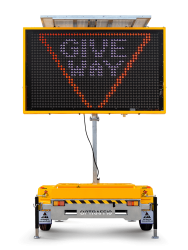
Variable Message Signs close that gap by displaying hazard warnings, closures and evacuation routing that authorities can update remotely as conditions change. For police, government agencies and emergency responders, they form one layer of wider intelligent public safety solutions.
Key Takeaways
- Optraffic’s Variable Message Signs use 4G web control, so agencies can change closure, hazard and evacuation messages without a site visit.
- The Optraffic Web System pushes template-based updates to every connected sign within seconds.
- The same platform monitors each sign’s power, temperature, GPS location and network status, and sends an alert before a failure occurs.
- Tiered access controls and a complete audit log keep emergency message approval with authorized staff.
- Solar and backup battery systems keep Optraffic signs running when the power grid fails.
- Trailer-mounted portable units with 360-degree display rotation can be turned to face traffic at each new incident site.
- At Qatar’s FIFA Arab Cup 2025, Optraffic signs held over 99.9% uptime and improved command response speed by over 90%.
Why Public Safety Messaging Is a Timing Problem for Variable Message Signs
Every public safety message has a deadline. It must reach drivers before the exit, the merge or the closed lane. A warning read after that point cannot change what the driver does.
Two things decide whether a sign meets that deadline:
- Where the sign stands. It must sit far enough upstream for drivers to read the message and react safely.
- How fast the message changes. Incidents and evacuations evolve by the minute. A message that was correct an hour ago may now send drivers into danger.
Message content matters just as much. In the United States, the MUTCD 11th Edition sets the rules for changeable message signs in Chapter 2L. States had to adopt the 11th Edition by January 18, 2026. FHWA then issued Revision 1, effective March 5, 2026. Agencies now plan public safety messaging under these updated rules, which favor short, clear wording over clever or humorous phrasing. The key points are covered in electronic highway message board regulations.
How Variable Message Signs Prevent Secondary Crashes at Incident Scenes
The first crash is rarely the last risk at an incident scene. FHWA defines a secondary crash as one that occurs within the incident scene or within the queue, including the opposite direction, as a result of the original incident. Drivers who meet a sudden queue without warning are the main exposure.
A message sign placed upstream gives drivers that warning early. It can show a lane closure, a reduced speed or a detour before drivers reach the back of the queue. Placement follows the same advance-distance logic as work zones; see portable message board placement for MUTCD spacing by speed.
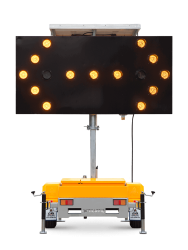
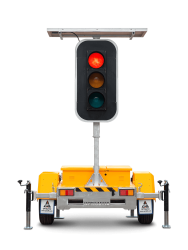
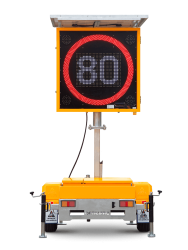
Response time is the hard part. Permanent overhead signs cover fixed locations only, and crashes happen everywhere else. Optraffic’s Portable Traffic Message Signs solve this gap: crews tow a unit to the scene, raise and rotate the display toward approaching traffic, and the incident commander updates the message remotely as lanes reopen.
For construction site traffic control, check our blog post, “Why Variable Message Signs Are a Key Construction Tool.”
Variable Message Signs for Disaster Evacuation and Road Closures
Evacuations create the fastest-changing messaging conditions any agency faces. A route that is open at noon may be flooded or blocked by fire by mid-afternoon. Every sign on that route must change at once, or drivers receive conflicting instructions.
Central control solves the coordination problem. Through the Optraffic Web System, operators select a preset template or write custom content, then update every connected sign within seconds. Tiered permissions decide who can publish, and the audit log records each change. This matters because most jurisdictions require approved emergency wording rather than messages composed in the moment.
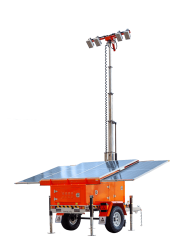
Power is the second weak point. Disasters often take down the grid exactly when messaging matters most. Optraffic signs pair solar panels with backup batteries, so they keep displaying evacuation routes through extended outages. Sizing that power system for remote sites is covered in off-grid VMS deployment. The broader emergency playbook is covered in traffic messages in emergency situations.
Variable Message Signs for Major Public Events: The Qatar FIFA Arab Cup 2025 Deployment
Large public events concentrate crowds, vehicles and road closures into a few hours. Qatar faced this ahead of the 2025 FIFA Arab Cup:
- hundreds of thousands of international fans,
- extreme heat,
- multi-language guidance,
- and dynamic road closures around core venue areas.
Any command error risked congestion or safety incidents.
Qatar’s government and lead contractor Lysys Qatar WLL chose the OPTRAFFIC VMS traffic solution for the Qatar FIFA Arab Cup 2025. It combined portable variable message signs with the Optraffic Web System central management platform. The deployment had to meet four demands:
- Coordination: multiple parties issued traffic instructions in real time from one command platform.
- Heat and sand: signs rated for −40°C to +60°C, with IP65 protection, ran around the clock.
- Visibility: displays stayed readable from 200–400 meters under high brightness.
- Language: custom Arabic fonts displayed correct right-to-left text on every sign and terminal.
The results: all deployed devices held over 99.9% uptime during the event, with no command interruption caused by equipment failure. The command center improved its city-wide response speed by more than 90% compared with manual sign updates.
Public Safety Scenarios Compared: What Each Variable Message Sign Deployment Needs
| Scenario | Main risk | What the sign must do | Optraffic capability that addresses it |
|---|---|---|---|
| Highway crash or incident | Secondary crashes in the queue | Warn upstream drivers within minutes | Towable portable trailer, 360-degree display rotation, 4G remote updates |
| Flood, fire or storm evacuation | Conflicting or outdated routing | Change every sign on a route at once | Web System template updates within seconds, tiered permissions, audit log |
| Grid failure during a disaster | Signs go dark when needed most | Keep running without mains power | Solar panels with backup batteries |
| Major public event | Crowd surges and dynamic closures | Coordinate many signs across a city | Central management with real-time monitoring of power, temperature, GPS and network |
| Multi-language destinations | Visitors misread instructions | Show correct non-Latin scripts | Custom font support, proven with Arabic right-to-left display in Qatar |
Conclusion
Public safety messaging fails in a predictable way: the sign is there, the message is displayed, and drivers do not act on it. The causes are almost always operational rather than technical — the message was too long to read at speed, the board was placed past the decision point, or nobody could change the content once conditions shifted.
What separates a board that works in an emergency from one that does not:
| Requirement | Why it decides the outcome |
|---|---|
| Remote message control | Conditions change faster than a crew can drive to the site; a stale message is worse than none |
| Message length discipline | A driver must read the full message twice before passing it, or the information is not received |
| Placement ahead of the decision point | A warning read after the exit has passed cannot be acted on |
| Independent power | Grid failure is common in exactly the emergencies that need messaging most |
| Legibility in degraded conditions | Fog, rain, and smoke are when the message matters and when it is hardest to read |
For agencies and contractors building this capability, the specification that matters is not display size but response time: how quickly a board can be deployed to a new location, and how quickly its content can change once it is there. Optraffic’s variable message signs are built around both — trailer-mounted units for rapid relocation, with 4G web-based control so message updates require no site visit.
Frequently Asked Questions
How are variable message signs used in emergency response?
They carry evacuation routing, road closures, shelter direction, and hazard warnings at points where drivers make decisions. The operational requirement is speed of change rather than message sophistication: an evacuation route that shifts because a road becomes impassable has to be reflected on the board within minutes, which is why remote control matters more than display capability in this application.
Who operates variable message signs during a public safety incident?
Operation typically sits with the road authority or the agency managing the incident, with content authority defined in advance. Most jurisdictions restrict what may be displayed on a traffic control device and require that emergency messaging be approved rather than composed ad hoc. Confirming the content approval chain before an incident is as important as having the equipment available.
Can the same message signs be used for both traffic control and emergency alerts?
Yes, and most fleets are used for both. The constraint is regulatory rather than technical — devices deployed for temporary traffic control must comply with the applicable standard for message content and format, and general public information messaging is subject to different limits in different jurisdictions. Check the local rules on non-traffic content before planning for dual use.
What happens to message signs when the power grid fails?
Solar-powered units continue operating, which is why they are specified for emergency preparedness. Grid-dependent installations fail alongside the network they depend on, typically during the exact event that requires messaging. Battery autonomy determines how long a unit runs through an extended outage with reduced solar generation.
How quickly can a portable message sign be deployed to an incident site?
Deployment time is dominated by travel, not setup. A trailer-mounted unit is towed to the location, positioned, and raised — the on-site portion is short, and single-operator setup is feasible with a manual winch and stabilising legs. The practical planning question is where units are staged relative to likely incident locations, since that distance sets the actual response time.
Planning Public Safety Messaging for Your Agency?
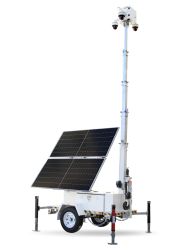
Message signs plus traffic and surveillance systems for police and emergency responders.
Facebook
Twitter
LinkedIn
Email
Newsletter
Subscribe to our Newsletter & Event right now to be updated.
Latest Posts


Latest Posts
What to Check Before Buying 500 Portable Changeable Message Signs: 7 Batch Delivery Checks for Rental Fleets
What to check before buying 500 portable changeable message signs: one build across batches, spares, DDP delivery and per-shipment tests.
2026-11-11
How to Plan Message Signs for Weekend Highway Closures: Lessons from Atlanta’s I-285 Westside Closures
How to plan message signs for weekend highway closures: 5 steps, a 48-hour checklist and fleet control lessons from Atlanta’s I-285 closures.
2026-11-11
Does EN 12966 Apply to LED Modules? What the Standard Covers and What a Datasheet Cannot Prove
Does EN 12966 apply to LED modules? See what the standard covers, what a module datasheet proves and 5 questions to ask a supplier.
2026-11-10
Build vs Buy a Vehicle-Mounted Message Sign: What Fleets and Integrators Should Check
Build vs buy a vehicle-mounted message sign? Compare compliance, controls, mounting and support before you choose.
2026-11-10
Work Zone Speed Feedback Trailer Placement: Where to Set It Up and When to Move It
Work zone speed feedback trailer placement explained: where DOT rules and research say to set the trailer, when to move it and what fleets must log.
2026-11-05
WZDx Device Feed Requirements: What Work Zone Contractors and Hire Fleets Must Supply
WZDx device feed requirements explained for contractors and hire fleets: what the feed holds, what DOT specs ask for and how to prepare equipment.
2026-11-04