

How OPTRAFFIC Message Boards Connected to Mooven for IKEA’s First New Zealand Store Opening
Integrating Portable Message Signs with Third-Party Software in 2–3 Weeks Before Opening Day
With IKEA’s first New Zealand store opening on 4 December 2025, Auckland faced heavy traffic pressure around Sylvia Park:
- 11,500 to 16,000 visitors expected each day for the first four months
- A store beside the SH1 motorway off-ramps, in an area already congested at peak times
- Worst-case modelling showing northbound queues of up to 7 km and delays of over an hour
- Peak journey times on Mt Wellington Highway that could rise from 12 to 39 minutes
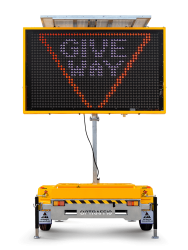
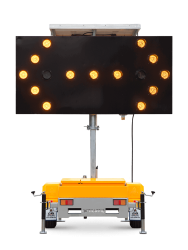
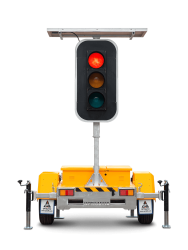
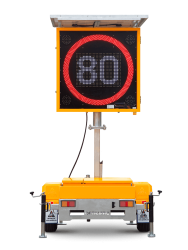
A traffic management contractor on the opening needed a large fleet of variable message signs that could show live travel times to drivers. The message sign strategy of the Auckland Transport Operations Centre (ATOC) called for real-time travel information from several locations, and Mooven’s system already had this function. So every board had to work with Mooven as well as our own Web System, and be ready before opening day.
For rental fleets, this is a growing challenge. More projects now specify the software, not just the signs.
Few companies in New Zealand could put that many message boards on the road at once. Impact Traffic, a traffic equipment hire company, had the scale, and that scale was built on OPTRAFFIC boards. So when IKEA’s first New Zealand opening needed a large fleet, an OPTRAFFIC fleet answered. When the project also needed a new platform, our R&D team delivered that too.
Project Overview: Live Traffic Messaging for a Major Retail Opening
| Project Overview | Specific Content |
|---|---|
| Client | Impact Traffic (End Customer), New Zealand |
| Core Need | To connect an existing OPTRAFFIC fleet to Mooven, whose system already had the functions ATOC required for the IKEA Sylvia Park opening. |
| Main Challenges | 1. Heavy Traffic: 11,500 to 16,000 visitors a day expected, with worst-case queues of up to 7 km; 2. Required Functions: ATOC required certain functions that Mooven’s system already had; 3. Display Rules: Every message had to match ATOC’s requirements; 4. Tight Timeline: Only one month remained before the 4 December 2025 opening, with no room for delay. |
| OPTRAFFIC Solution | Our in-house R&D team opened an API so Portable Traffic Message Signs could take commands from Mooven, then matched every display to ATOC’s rules. |
| Key Results | 1. Traffic Outcome: Against worst-case modelling of 7 km queues and 1-hour-plus delays, the city-to-Sylvia Park drive took about 13 minutes at opening time; 2. Live Driver Information: 35 OPTRAFFIC message boards served as the mobile VMS on the motorway and main arterials in IKEA’s approved traffic management plan; 3. Development Speed: Custom system integration completed in 2–3 weeks and delivered on time; 4. Wider Compatibility: OPTRAFFIC boards now work with Mooven, a platform widely used in Australia and New Zealand, so existing customers can take on Mooven projects without buying a new fleet. |
The Core Challenges: Making One Fleet Work on a New Platform
❗ A large fleet, all at once: The contractor needed dozens of traffic message boards in place for a single project, from one supplier.
❗ Two control platforms: The boards normally run on the OPTRAFFIC Web System. For this project, they also had to take live commands from Mooven.
❗ Strict display rules: Each message format had to match ATOC’s display requirements before the boards went live.
❗ A tight development timeline: Only one month remained before the opening. The integration had to be finished before opening day, with no room for delay.
The OPTRAFFIC Solution: One Fleet, Two Control Platforms
In-House R&D Made the API Possible
Custom solutions are a core part of how OPTRAFFIC works. When a project needs a function our boards do not yet have, our R&D team builds it.
OPTRAFFIC boards normally run on the OPTRAFFIC Web System. It comes with the hardware at no extra software cost. For this project, ATOC’s required functions already existed in Mooven. So the boards also needed to accept commands from Mooven.
We design both the boards and their control system in our own factory. So our R&D team could open an API without waiting on an outside software vendor. Mooven then pushed live content straight to the fleet.
How the Boards Worked with Mooven
Mooven builds journey time and delay data from sources such as Google and TomTom. It sends rule-based messages to connected message boards. Through our API, OPTRAFFIC boards displayed these live travel times as traffic changed. Placed on the motorway and main arterials ahead of Mt Wellington, the boards gave drivers this information early enough to change route before reaching the bottleneck.
What the Integration Changed for Each Party
| Party | Before the Integration | After the Integration |
|---|---|---|
| Traffic management contractor | Needed a large fleet that worked with Mooven | Got a full fleet that runs on Mooven |
| Impact Traffic (rental fleet) | Its OPTRAFFIC boards ran on the OPTRAFFIC Web System | Its fleet now also works on Mooven projects |
| ATOC | Needed live, accurate travel information for drivers | Got messages checked against its display rules |
Reliable Boards for a Long Opening Period
Crowds were expected for weeks, so the boards had to keep running. OPTRAFFIC LED modules pass strict quality checks in our own factory. That means low maintenance and high uptime for rental fleets like Impact Traffic.
The Integration Process: From First Contact to Opening Day
The contractor and Impact Traffic introduced Mooven to our team. Moving from focused technical work to full system integration took only 2–3 weeks.
- Requirement review: Mooven’s technical staff shared the functions and message formats the project needed.
- API development: Our R&D team opened the interface for Mooven.
- Specification check: We checked each display specification against ATOC’s requirements, item by item.
- Communication and debugging: We kept working with Mooven and the customer, testing and adjusting each display until it met the expected result.
- Go-live: The boards were ready before IKEA opened on 4 December 2025.
OPTRAFFIC boards were operational around Sylvia Park during the opening period.
Results: On Time for Opening Day, Ready for the Next Project
✅ More visitors than forecast, without the feared gridlock
- Auckland Transport reported that IKEA visitation numbers exceeded forecast.
- Yet RNZ reported that for much of opening day, the feared traffic jams did not eventuate.
- StopPress reported that as the store opened, Google Maps showed a 13-minute drive from the city to Sylvia Park, faster than a good traffic day.
✅ Live travel times where they mattered most
IKEA’s traffic management plan, released by Auckland Transport, placed mobile variable message signs (VMS) on the motorway and main arterials well before Mt Wellington. These were the approaches to the corridor where modelling warned journey times could triple.
Those signs were 35 OPTRAFFIC boards, all supplied through Impact Traffic. They warned drivers of high congestion early, so drivers could choose alternative routes.
Auckland Transport later explained that its worst-case model left out these mitigations, and that the mitigations used had a significant impact on what actually occurred.
✅ Built in 2–3 weeks, delivered on time: Our R&D team completed the custom system integration in 2–3 weeks. Every board met ATOC’s display requirements before IKEA opened.
✅ More projects, no new fleet: Mooven is widely used across Australia and New Zealand. Existing OPTRAFFIC customers can now take on Mooven projects without buying a new fleet, just as Impact Traffic did with boards it already owned.
✅ Proof of our software compatibility: Our R&D team made OPTRAFFIC boards compatible with a third-party traffic platform, alongside the OPTRAFFIC Web System. It shows our boards can adapt to the software a project specifies, for engineering and municipal projects alike.
Why OPTRAFFIC Could Integrate Fast: Hardware, Software and R&D Under One Roof
🚚 A large OPTRAFFIC fleet already in New Zealand: Impact Traffic could supply a fleet this size for one project. Few local suppliers could match it.
🛠️ One manufacturer for hardware and software: We build the boards and the control system. Integration work stays in one team, with no third-party markups.
🔬 Ongoing R&D, not fixed products: Our R&D team keeps adding new products and functions based on what customers need on site. Custom solutions are part of how we work.
💻 Free fleet software: The OPTRAFFIC Web System comes with every board, with no subscription fees to manage the fleet.
🏟️ Major event experience: OPTRAFFIC has supplied message boards for large events, including the FIFA Arab Cup Qatar 2025.
🌏 Local partners: OPTRAFFIC works with distributors around the world, including in New Zealand and Australia.
Frequently Asked Questions
Can OPTRAFFIC message boards work with third-party traffic software?
Yes. For the IKEA Auckland opening, OPTRAFFIC opened an API so Mooven could control the boards. Read more about remote VMS control and traffic software integration.
Can OPTRAFFIC boards be used on projects that run Mooven?
Yes. OPTRAFFIC boards connected to Mooven for IKEA’s Auckland opening in December 2025. Contractors who use Mooven can include OPTRAFFIC boards in their fleet.
How long does a VMS software integration take?
It depends on the platform and the project’s needs. For Mooven, the custom system integration took 2–3 weeks.
My fleet runs on a different platform. Can OPTRAFFIC help?
Our R&D team reviews each request case by case. Tell us which platform or equipment you use. We will assess what the compatibility work involves and how long it may take.
Does Your Project Also Need Message Signs That Work With Your Platform?
The custom integration capability behind IKEA’s Auckland opening can support your next demanding project:
🛍️ Major Retail Openings & Large Event Traffic Management
🔌 Projects That Specify Mooven for Live Travel Times
🚛 Rental Fleets Facing Tenders That Specify the Software
🏙️ Municipal & Engineering Projects Needing Custom Functions
Ready to Connect Your Fleet to Your Project’s Platform?
Does your next tender specify a software platform? Does your fleet run on mixed systems? Tell us what you use, and our R&D team will review how OPTRAFFIC boards can work with it.
Get a Free Quote →