Work Zone Speed Feedback Trailer Placement: Where to Set It Up and When to Move It
A speed feedback trailer in the wrong spot does little. Drivers slow at the sign, then speed up before they reach the crew. This guide explains work zone speed feedback trailer placement. It covers where DOT rules and research put the trailer, when to move it and what to log. It also shows where a message board with a radar module fits.
Speeding is a daily risk on construction projects, from highway rebuilds to night resurfacing. Crews work close to live lanes, so small speed cuts protect them.
Key Takeaways
Specification-led builds: Reviews threshold, message and data rules in each project specification before quoting.
One fleet platform: Shows location and status for radar signs, message boards, arrow boards, light towers and camera towers.
Field-proven LED modules: Keep speed numerals and warnings readable through long work zone hire periods.
Optional radar module: Adds an overspeed warning to Optraffic message board trailers already in the hire fleet.
Radar speed sign data logging: Records approaching vehicle speeds for contract reporting and threshold reviews.
Work Zone Speed Feedback Trailer Requirements by State
Radar Speed Feedback Signs in Work Zones: What Fleets Must Supply
The InTrans survey found 19 state DOTs with trailer policies. The most common feature is a flashing display above a threshold, usually 0 to 4 mph over the limit. Iowa blanks the display instead. MDOT flashes the speed at 60 to 70 mph. It alternates the speed with SLOW DOWN above 70 mph. One factory setting rarely fits every contract.
Build to specification: The Optraffic R&D team reviews threshold, message and data rules in a project specification before quoting.
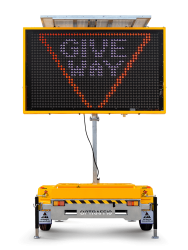
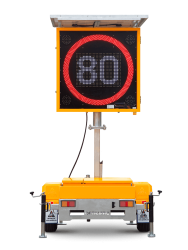
Overspeed warning on message boards: Optraffic message board trailers take an optional radar module. Above the set speed, the board shows an overspeed warning instead of the speed. Where a manual calls for steady numerals, use a radar speed sign.
Speed data: DelDOT asks for counts and speeds by direction for 15 days. Optraffic radar speed signs log approaching vehicle speeds. Ask any supplier for the log period, direction split and export method.
LED reliability: Projects run for months. Field-proven LED modules keep numerals and warnings readable with low maintenance.
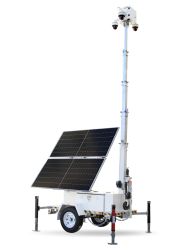
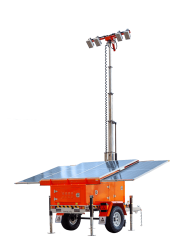
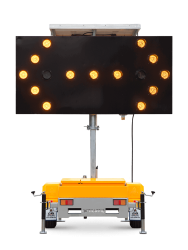
One platform: Radar signs, message boards, arrow boards, light towers and camera towers share the Optraffic Web System. Optraffic supplies it with the hardware and no software subscription.
Factory-direct supply: Optraffic builds its range in its China factory, so fleets avoid trading-company markups when adding trailers.
Work Zone Speed Feedback Support in North America
United States: Advanced Government Services (AGS) in Tacoma, Washington, supplies Optraffic message boards, arrow boards and light towers.
Canada: ATS Traffic carries Optraffic equipment in Western Canada.
Radar options: Contact the Optraffic team to confirm radar options for a project.
Checklist Before Supplying Speed Feedback on a Work Zone Contract
Display rules: Read the threshold, message and static sign requirements.
Duration triggers: Check minimum project lengths, such as DelDOT’s 30 days.
Data log: Confirm the log period and export method.
Relocation plan: Decide who moves and records each trailer.
Adopted edition: Check your state’s MUTCD edition.
Outside the US, UK crews work under Traffic Signs Manual Chapter 8. Australian crews follow AS 1742.3.
Work zone speed feedback trailer placement decides whether drivers slow down where crews stand. Research favours positions close to the work, spaced about half a mile apart. States differ on thresholds, displays and data logs.
Optraffic supports hire fleets with radar signs, optional radar modules and one tracking platform. The Optraffic R&D team reviews each specification before quoting.
Supplying speed feedback for a work zone contract? Contact the Optraffic team with the specification and your fleet mix.
FAQ
Where should a speed feedback trailer go in a work zone?
Set it near the work, on a straight road section. The InTrans report favours about 200 ft before active work. Iowa DOT allows 500–2,500 ft. Follow the contract distance first.
How often should you relocate a speed feedback trailer?
Move it as the work area advances. DelDOT asks for monthly relocation on long-term units.
Do work zone speed feedback trailers need to log data?
Some states ask for it. DelDOT requires counts and speeds by direction for at least 15 days. Check the work zone speed feedback trailer data logging period and export method with your supplier.
Where can North American fleets source Optraffic work zone speed feedback equipment?
Optraffic supplies US and Canadian fleets. Local support comes through distributors such as AGS in Washington State. Contact the Optraffic team for radar options.