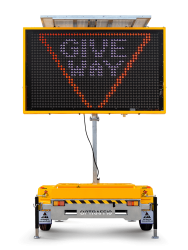
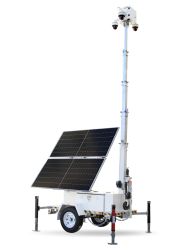
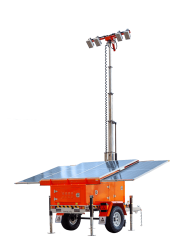
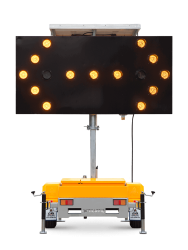



The first major fire of the season closes a highway. Councils, road authorities and traffic management contractors all ring for signs on the same afternoon. Fleets that ordered early have units to send. Fleets that waited are ordering stock that lands after the peak. So when should you order VMS trailers for bushfire season? Place custom orders about two months before your region’s peak, then plan local stock top-ups for the surge. This guide sets out the order-by month for each region and shows where Optraffic solar VMS trailers fit.
Key Takeaways
- Australian local stock: Supplies standard VMS trailers in about one to two weeks when fire-season demand spikes.
- Factory custom builds: Deliver specified units in about six weeks, sea freight included, ahead of a region’s peak.
- Bundled fleet software: Changes closure and detour messages remotely, with no subscription fee, keeping crews away from fire zones.
- Five-colour LED option: Displays the green, yellow, orange and red Fire Danger Rating colours that amber-only boards cannot.
- Regional distributors: Supply parts and servicing through the season via Jaybro on the East Coast and OPTraffic WA.
Bushfire Season by Region in Australia: Why There Is No Single Deadline
Bushfire season by region in Australia runs on different clocks. The Bureau of Meteorology notes that it is always fire weather season somewhere across the country. Its peak fire danger map groups the country into broad bands.
| Region (BOM grouping) | Peak fire danger | Order custom units by | Stock top-up window |
|---|---|---|---|
| Northern Australia | June to November; far north and north-west peak nearer winter | April | June to November |
| Central latitudes | Mid-October to mid-January | Mid-August | October to January |
| Victoria, Tasmania, southern NSW, most of SA | December to February | Early October | December to February |
The order-by month allows about six weeks for a custom build, plus a two-week buffer for set-up. Fire seasons can also run beyond the months shown. Treat the table as the latest safe date, not the ideal one.
A national fleet therefore never has one deadline. It has a rolling cycle, with one region entering its peak as another leaves it. That cycle is also why cross-hire gets tight: when two regions overlap, both call on the same spare units.
Check Each Seasonal Outlook Before You Commit
AFAC and the Bureau release seasonal bushfire outlooks through the year. Each one flags regions with above-normal fire potential. The Spring 2026 outlook, for example, flagged above-average risk in six states and territories. When a region you serve turns red, bring its order date forward.
VMS Trailer Lead Time Before Fire Season: Custom Builds or Local Stock
The VMS trailer lead time before fire season decides which units you can deploy on day one. Two routes cover the need.
| Route | Lead time | Best for |
|---|---|---|
| Factory custom build | About 6 weeks, sea freight included | Planned fleet growth: extra five-colour boards, radar units, a second size class |
| Australian distributor stock | About 1–2 weeks | Unplanned demand: a second fire front, a long detour, a damaged unit |
Custom builds suit units you know you need. Freeze the specification first, as the bulk VMS trailer purchase guide sets out. The full comparison of both routes sits in how long it takes to get a VMS trailer in Australia.
Which VMS Trailer Specification Suits Bushfire Season?
Order timing only helps if the units suit fire work. Four specification choices matter most.
Five-Colour VMS for Fire Danger Ratings
A five-colour VMS for Fire Danger Ratings can show the national rating colours. The Australian Fire Danger Rating System uses four levels: Moderate (green), High (yellow), Extreme (orange) and Catastrophic (red). A white “No rating” level covers minimal-risk days. The NSW Rural Fire Service confirmed the ratings appear on roadside signs as well as apps and websites.
An amber-only board can spell out the rating in words. It cannot show the colour drivers already recognise. Whether a sign displays a rating at all is the fire agency’s decision, so confirm the agency’s display rules first.
| Specification | Why it matters in fire season | What to ask the supplier |
|---|---|---|
| Five-colour LED face | Shows rating colours, pictograms and closure symbols | Which colours the face renders, and in which size classes |
| Large size class | Longer reading distance on rural roads at speed | Face dimensions and character height |
| Remote management | Changes messages without sending crews near the fire | Software fees per sign, and on-site control when 4G fails |
| Solar and battery autonomy | Smoke haze cuts solar charging for days | Battery capacity and autonomy with no sun |
| AS 4852.2:2019 | The current edition, not the older 2009 text | Written conformity against the 2019 edition |
Some supplier material still quotes the 2009 edition of AS 4852.2. Ask for confirmation against AS 4852.2:2019.
Local Stock VMS Trailers for Bushfire Response: Set Up the Top-Up Early
Local stock VMS trailers for bushfire response work best when the fleet prepares before the season. Waiting until a fire starts puts every fleet in the same queue.
Three steps make a stock top-up faster when it counts:
- Agree the standard configuration you will accept from stock, such as amber-only in your main size class.
- Confirm account and delivery details with your regional distributor in advance.
- Pre-register the software set-up so new units go live on arrival.
A fleet that has done this orders by phone and dispatches within days. A fleet that has not spends the first week on paperwork.
Pre-Season VMS Fleet Checks Before Your Region’s Peak
Pre-season VMS fleet checks catch faults that otherwise appear on the first callout. Run them about a month before your region’s peak.
| Check | What to confirm | Why it matters in fire season |
|---|---|---|
| Battery health | Full charge holds overnight | Signs on closed roads may run unattended for days |
| Solar panels | Clean, undamaged, correctly angled | Smoke haze already cuts charging |
| Remote connection | Each unit reports location and battery online | Crews cannot drive into a fire zone to check a sign |
| Message library | Closure, detour and reopening messages loaded | Operators pick approved wording instead of typing under pressure |
| Display | Every module lit, brightness adjusting | Smoke reduces visibility for drivers |
| Trailer | Tyres, lights, brakes and registration current | A failed tow ends the deployment before it starts |
| Spares | Panels, controller and modem on hand | Local parts turn a fault into a short repair |
Message wording must follow the approving agency’s rules. Agency roles differ by state. See solar VMS trailers for bushfire evacuation routes in NSW and Victoria.
Remote VMS Message Control During Fires
Remote VMS message control during fires keeps people out of danger. A fire front can shift direction within hours. Each shift can change which road is closed and which detour applies.
Sending a crew to retype a sign puts that crew in smoke. Remote control changes the message from a depot or a phone. It also shows whether a sign is still powered and where it sits.
Plan for three connection problems:
- Weak rural coverage. Many fire-prone areas already sit at the edge of mobile coverage.
- Damaged infrastructure. Fire can take mobile sites offline during the event.
- Congested networks. Evacuations load local networks heavily.
On-site control remains the fallback. A handheld controller lets a crew update the sign from a safe position when remote access fails.
Some agencies also pair signs with mobile CCTV trailers at road closures. A camera lets controllers confirm a closure is holding without a site visit.
The same approach carries into storm and flood season. The guide to flood response traffic management equipment in Queensland covers the wet-season version of this problem.
VMS Fleet Planning for Fire Season: Where Australian Fleets Source Units
VMS fleet planning for fire season depends on where stock and parts sit before demand starts. Optraffic supplies Australian fleets through two regional distributors. Jaybro covers the East Coast. OPTraffic WA, Optraffic’s Western Australian distributor, covers WA from Maddington, Perth. Both hold local stock and spare parts.
Optraffic team tests every VMS trailer in-house before it leaves the factory. Custom builds take about six weeks, sea freight included. The Optraffic Web System comes with each trailer at no subscription fee. It shows location, battery state and the live message for the whole fleet from one login. An optional handheld tablet gives crews on-site control where coverage fails.
For the national checklist, see the buyer’s guide to what to check before buying a VMS trailer in Australia. Broader emergency equipment planning sits in the public safety industry guide.
FAQ
When should hire fleets order VMS trailers for bushfire season?
Place custom orders about two months before your region’s peak. That covers the six-week build and a set-up buffer. Bushfire season by region in Australia decides the date.
When is bushfire season in southern Australia?
For Victoria, Tasmania, southern NSW and most of SA, peak fire danger runs December to February. Order custom units by early October to meet the VMS trailer lead time before fire season.
Do we need a five-colour VMS trailer for bushfire season?
Only if you need colour. A five-colour VMS for Fire Danger Ratings shows the green, yellow, orange and red rating colours. Amber-only boards handle text closures and detours. Optraffic offers both.
What if we need extra VMS trailers after the season starts?
Order standard units from local stock. Local stock VMS trailers for bushfire response arrive in about one to two weeks. Jaybro supplies the East Coast and OPTraffic WA supplies Western Australia.
What should we check on our VMS fleet before fire season?
Check batteries, solar panels, remote connections, message libraries, displays, trailers and spares. Run pre-season VMS fleet checks about a month before your region’s peak.
Can we change VMS messages without sending crews near a fire?
Yes. The Optraffic Web System changes messages remotely at no subscription fee. Remote VMS message control during fires keeps crews out of smoke, with handheld on-site control as a backup.
Conclusion
Fire season arrives at different times across Australia, so ordering must follow the map, not the calendar. Order custom units about two months before each region’s peak. Set up stock top-ups with your distributor, and check every unit a month ahead. Then remote control keeps crews safe once fires start. Optraffic supplies VMS trailers through Jaybro on the East Coast and OPTraffic WA in Western Australia. The Optraffic Web System comes included at no subscription fee. Contact your regional distributor before your next region’s order-by month.


What to Check Before Buying 500 Portable Changeable Message Signs: 7 Batch Delivery Checks for Rental Fleets
What to check before buying 500 portable changeable message signs: one build across batches, spares, DDP delivery and per-shipment tests.
How to Plan Message Signs for Weekend Highway Closures: Lessons from Atlanta’s I-285 Westside Closures
How to plan message signs for weekend highway closures: 5 steps, a 48-hour checklist and fleet control lessons from Atlanta’s I-285 closures.
Does EN 12966 Apply to LED Modules? What the Standard Covers and What a Datasheet Cannot Prove
Does EN 12966 apply to LED modules? See what the standard covers, what a module datasheet proves and 5 questions to ask a supplier.
Build vs Buy a Vehicle-Mounted Message Sign: What Fleets and Integrators Should Check
Build vs buy a vehicle-mounted message sign? Compare compliance, controls, mounting and support before you choose.
Work Zone Speed Feedback Trailer Placement: Where to Set It Up and When to Move It
Work zone speed feedback trailer placement explained: where DOT rules and research say to set the trailer, when to move it and what fleets must log.
WZDx Device Feed Requirements: What Work Zone Contractors and Hire Fleets Must Supply
WZDx device feed requirements explained for contractors and hire fleets: what the feed holds, what DOT specs ask for and how to prepare equipment.