


When a Message Sign Trailer Needs a Speaker: Audio for Evacuation, Events and Work Zones
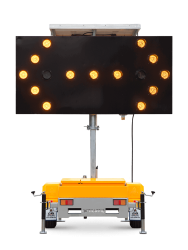
A stadium concourse starts to clear the wrong way. The screen at the north gate is showing a clear instruction and a directional arrow.
Roughly half the crowd is facing away from it. Some are looking at phones. Some are behind a group of people taller than they are. The message is correct, legible and reaching nobody who needs it in the next thirty seconds.
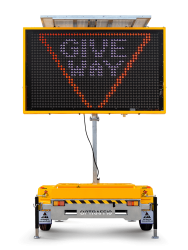
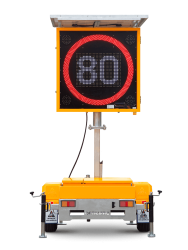
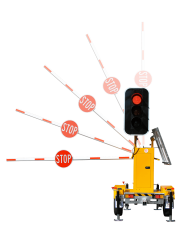
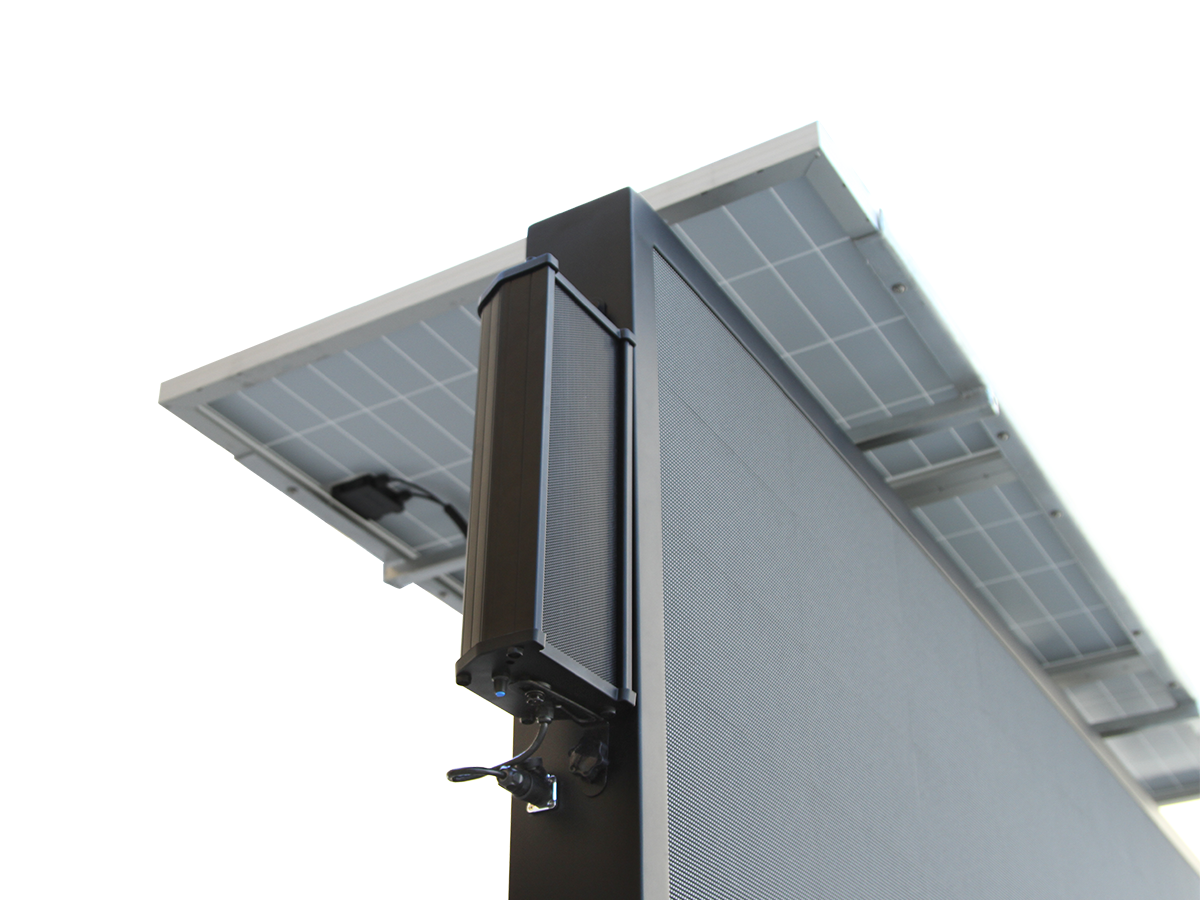
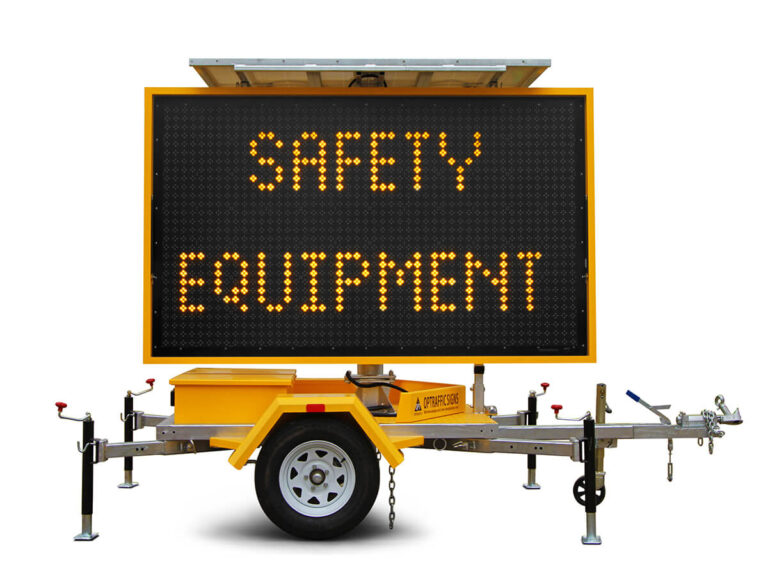
That is the gap a speaker closes. Knowing when a message sign trailer needs a speaker matters because the answer is neither “always” nor “never” — it depends on whether your audience is on foot and whether the message is time-critical. Optraffic supplies full-color message signs with an add-on speaker option, most often into public safety and event contracts.
Key Takeaways
- Optraffic add-on speaker: Reaches people facing away from the screen during evacuation and crowd movement.
- Optraffic P4 panels: Hold the instruction on screen while audio repeats it, covering both hearing and sight limitations.
- Optraffic Web System: Updates screen content and scheduling remotely, keeping the visual message aligned with announcements.
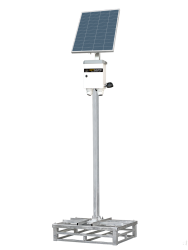
- Solar-battery power: Runs screen and speaker without a generator, avoiding engine noise on noise-sensitive sites.
- Trailer-mounted format: Places both channels at a chosen position rather than relying on fixed venue infrastructure.
Audible and Visible Emergency Notification Explains Why the Option Is Worth Buying
The speaker is a paid option on a message sign trailer, so the question is whether it earns its cost on the work you do. Emergency communication practice answers that clearly for pedestrian-facing deployments: neither channel is sufficient alone.
NFPA 72, the US standard for fire alarm and signaling systems, addresses emergency communications systems in Chapter 24 and organises them into indoor, outdoor, personal and public layers. Its model for mass notification pairs intelligible voice with visible notification, precisely because each covers the other’s failure mode. Visible notification reaches people who cannot hear, including in high ambient noise. Audio reaches people who are not looking.
The standard also draws a distinction worth carrying into any procurement conversation: audible is not the same as intelligible. A loud announcement that nobody can parse has failed. Intelligibility is measurable, and wide-area speaker arrangements are expected to maintain it across their notification zone.
US employers have a parallel obligation. OSHA 1910.165 requires an employee alarm system to provide warning for necessary emergency action, with enough reaction time for safe escape, and requires the signal to be distinguishable from other noise on site.
| Screen alone | Speaker alone | Both together | |
|---|---|---|---|
| Reaches people facing away | No | Yes | Yes |
| Reaches people who cannot hear | Yes | No | Yes |
| Works in high ambient noise | Yes | Only if intelligible | Yes |
| Holds the message for latecomers | Yes | No | Yes |
| Crosses language barriers | With pictograms | Poorly | Yes |
| Conveys urgency | Weakly | Strongly | Yes |
Audible and visible emergency notification is the established design pattern for reaching people on foot. That is the case for specifying the option on public safety and event units — and equally the reason not to specify it on a unit that will spend its life on a highway shoulder.
When a Message Sign Trailer Needs a Speaker: Four Scenarios That Qualify
The common factor across all four is a standing or walking audience receiving a time-critical instruction.
| Scenario | Audience state | Why audio earns its place |
|---|---|---|
| Evacuation and site clearance | On foot, moving, distracted | Instruction must reach people not looking at a screen |
| Event crowd direction | Standing, dense, sightlines blocked | Screen visibility fails behind other people |
| Work zone pedestrian conflict | Walking near plant movement | Warning must arrive faster than a glance |
| Flood, fire and severe weather warning | Vehicles and pedestrians mixed | Urgency carries better in voice than in text |
The evacuation announcement at outdoor events case is the strongest. A screen holds the instruction for anyone who looks up, and audio reaches everyone who does not. Emergency graphic content design sits in full-color message signs for emergency alerts, and Australian evacuation route deployments in solar VMS trailers for bushfire evacuation routes.
Three Cases Where an Add-On Speaker Adds Nothing
An add-on speaker for a message sign trailer is not universally useful. Skip it here:
- Highway and arterial roadside positions. Drivers sit inside vehicles with windows up and audio playing. They will not hear it, and audio is not a traffic control device.
- Sites with high ambient noise and no intelligibility planning. Adding volume against plant noise produces sound, not communication.
- Long-duration informational content. Nobody wants a six-week diversion explained aloud every ninety seconds. That content belongs on screen only.
Outdoor Event Noise Limits for PA Are the Real Constraint
Most deployments that go wrong go wrong here rather than technically. Outdoor event noise limits for PA are enforced locally, and the enforcement route is usually a complaint.
| Market | Governing route | Practical position |
|---|---|---|
| UK | Statutory nuisance under the Environmental Protection Act 1990, plus licensing conditions | Council can serve an abatement notice on noise it judges a nuisance |
| US | Local municipal noise ordinances; event permit conditions | Limits and curfews vary by city, not by state |
| AU | State environment protection authority noise regulations; council event approval | Event approval commonly sets hours and levels |
Four operational rules keep a deployment out of trouble:
- Check the permit before the specification. Noise conditions usually sit in the event or works approval, not with the equipment.
- Set curfews in the schedule, not in someone’s memory. Announcements after a cut-off time draw complaints reliably.
- Reserve audio for instructions. Using a speaker for sponsor content or general information invites objections that then restrict its use in an emergency.
- Keep emergency use exempt in writing. Confirm with the authority that a genuine safety announcement is not caught by the curfew.
That third rule matters more than it looks. A speaker the neighbours have learned to resent is a speaker the council will restrict, and the restriction will still be in place on the day it is needed.
Combined Screen and Speaker Crowd Messaging Only Works When the Two Agree
The most common field failure is not equipment. It is contradiction.
Audio says one thing, the screen still shows the previous message, and the crowd stops trusting either channel. Combined screen and speaker crowd messaging needs the two outputs managed as one message, not as two systems.
Practical rules Optraffic gives event and public safety clients:
- Change the screen first, then announce. The visual should already agree when the voice arrives.
- Use the same words. Not a paraphrase. “Exit via gate D” on screen, “exit via gate D” aloud.
- Repeat audio, hold the screen. Voice is momentary. The panel carries the instruction for latecomers.
- Assign one operator to both. Two people running two channels will diverge under pressure.
- Keep a pictogram on screen through the announcement. It carries the message across language barriers that voice will not.
Rule five links back to content design. Message and artwork preparation sits in preparing content for an outdoor LED message sign, and venue-side content planning across an event day in full-color message signs for venue wayfinding.
UK venue operators have a further reason to plan this properly. The Home Office statutory guidance for the Terrorism (Protection of Premises) Act 2025, published on 15 April 2026, sets out communication as one of four public protection procedures, covering alerting people to danger and giving instructions. The Act is not yet in force and specifies no equipment, but a screen and speaker managed as one channel is a credible way to deliver and document that capability.
Fleets specifying a first unit should start with how to choose a full-color LED message sign, and the wider allocation question sits in when a job needs a full-color message sign. Sector context is on our public safety page.
FAQ
Does every message sign trailer need a speaker?
No. When a message sign trailer needs a speaker depends on whether the audience is on foot and the message is time-critical. Roadside traffic messaging gains nothing from audio.
Why not rely on the screen alone during an evacuation?
Because people move while looking elsewhere. Audible and visible emergency notification pairs the two channels so that each covers the other’s failure mode.
Can we use the speaker for announcements at a festival?
Usually yes, within the event approval. Outdoor event noise limits for PA are set locally, commonly through licensing or council conditions rather than by the equipment.
Will a speaker breach a night-time noise curfew?
It can. Schedule audio to stop at the curfew, and confirm in writing with the authority whether a genuine emergency announcement is exempt.
Should audio and screen show the same message?
Yes, word for word. Combined screen and speaker crowd messaging fails when the two contradict each other, because the crowd then trusts neither.
Is a speaker useful in a noisy work zone?
Only with intelligibility planning. An add-on speaker for a message sign trailer competing with plant noise produces volume rather than a message people can act on.
Conclusion
The speaker is an option, and like any option it is worth buying on some units and wasted on others. What makes it worth buying is that emergency practice has paired audio with visual for decades: a screen cannot reach someone facing the other way, and a voice cannot reach someone who cannot hear.
The decision comes down to two questions. Is the audience on foot, and is the message time-critical? Where both are true — evacuations, crowd movement, pedestrian conflict, severe weather — audio earns its place. Where either is false, it adds cost and a noise complaint risk without adding reach.
Optraffic works with venue operators, councils, emergency services and hire companies across the US, UK and Australia. Contact Optraffic to discuss speaker configuration for a public safety deployment, or to review whether your current fleet mix covers pedestrian-facing work.
Facebook
Twitter
LinkedIn
Email
Newsletter
Subscribe to our Newsletter & Event right now to be updated.
Latest Posts




Latest Posts
Lighting First or Recording First? CCTV-Ready Light Tower vs Camera Trailer for Integrators and Hire Fleets
CCTV-ready light tower vs camera trailer: compare whose camera runs, which load gets night power, and how hire fleets use one unit for two jobs.
2026-10-09
VMS Trailers for Renewable Energy Zone Construction: Oversize Deliveries, Detours and Community Notice
How VMS trailers support renewable energy zone construction: oversize delivery warnings, detours, night moves and community notice on REZ routes.
2026-10-08
Imported vs Australian-Built VMS Trailers: Where Each Has the Edge
Imported vs Australian-built VMS trailers: where each has a real advantage, what compliance requires of both, and how to choose for your fleet.
2026-10-07
What Should a VMS Trailer Quote Include in Australia? Line Items to Compare Before You Sign
What should a VMS trailer quote include? Ten line items to compare, from delivery and registration to software fees, warranty and local spare parts.
2026-10-06
When to Order VMS Trailers for Bushfire Season: A Region-by-Region Guide for Australian Hire Fleets
When to order VMS trailers for bushfire season: a region-by-region guide for hire fleets, with order-by months, stock top-ups and pre-season checks.
2026-10-05
What Makes a VMS Trailer Mine-Spec? Site Entry Requirements for Western Australian Mine Sites
Mine-spec VMS trailer requirements under WA’s 2026 mine traffic code: visibility, ID, isolation, documents and how to order a unit that passes site entry.
2026-10-02