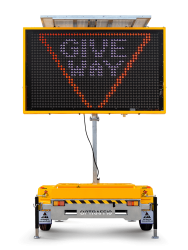
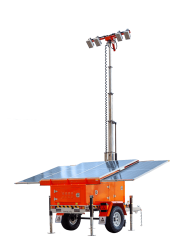
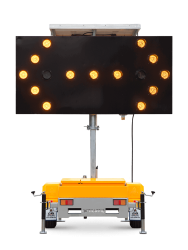
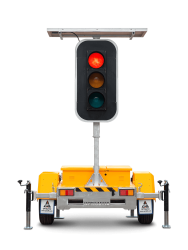
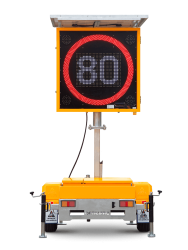
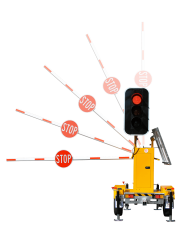



What should you check before buying a VMS trailer in Australia? Check seven things in order: compliance, size, colour, power, control, road registration and local support. Most costly mistakes come from checking them out of order. A fleet picks a screen first, then learns the council wants a different size. This guide sets the order and routes each step to a deeper article. It also shows where Optraffic VMS signs sit in the Australian supply chain.
Key Takeaways
- Distributor-held Australian stock: Puts standard VMS trailers on site in about one to two weeks, East Coast and WA.
- Factory custom builds: Deliver locked tender specifications, such as colour or radar, in about six weeks including sea freight.
- Bundled fleet software: Shows every trailer’s location, battery and message with no subscription fee, plus an open API.
- STREAMS register listing: Gives road agency buyers a sign already listed on Transmax’s STREAMS supported devices register.
- Regional service network: Supplies spare parts and servicing through Jaybro on the East Coast and OPTraffic WA in Western Australia.
VMS Trailers in Stock Across Australia
East Coast and WA stock in 1–2 weeks. Custom builds in about 6 weeks.
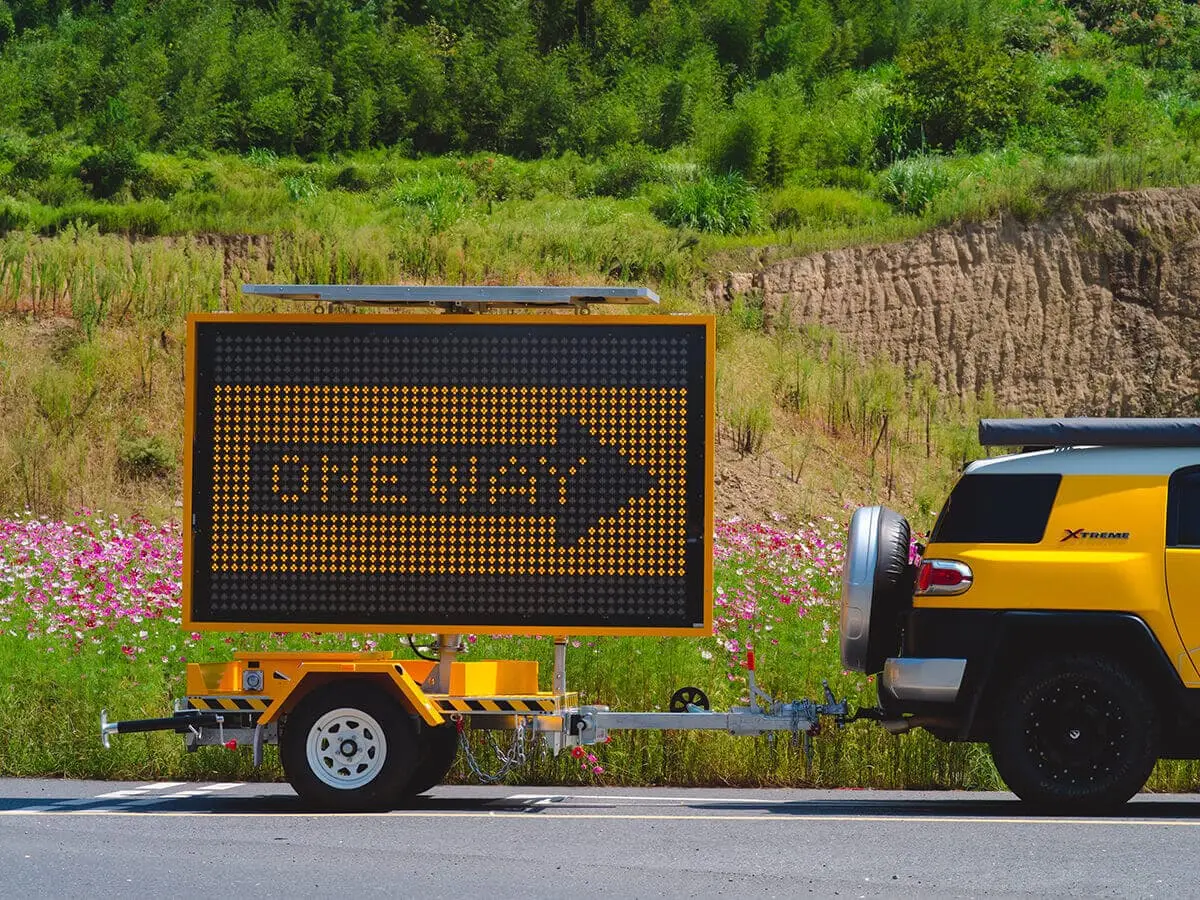
What to Check Before Buying a VMS Trailer in Australia, Step by Step
Settle the checks that can disqualify a unit first, then the checks that decide its earning days. This VMS trailer buyer’s guide for Australia follows that order.
| Step | Check | Question to settle | Evidence to request |
|---|---|---|---|
| 1 | Compliance | Does the sign meet AS 4852.2 and the state road authority’s rules? | Written conformity statement; state approval where required |
| 2 | Size class | Does the sign face suit the road speed and the site space? | Face dimensions and character height |
| 3 | Colour | Amber only, or colour for pictograms and symbols? | Colour capability and the council’s approval position |
| 4 | Power | Will solar and battery carry the job’s full load list? | Solar rating, battery capacity, add-on loads |
| 5 | Control | Who changes messages, from where, and at what ongoing cost? | Software fee terms, SIM and data arrangement, API access |
| 6 | Road legality | Is the trailer entered on the Register of Approved Vehicles? | RAV entry, VIN and compliance plate |
| 7 | Supply and support | Where do stock, spare parts and servicing sit? | Written lead time, local parts list, service territory |
Steps 1 and 6 decide whether the unit can work at all. Steps 4, 5 and 7 decide how many days it earns. The sections below take each step in turn.
Does the Sign Meet AS 4852.2 Portable VMS Requirements?
Confirm AS 4852.2 portable VMS requirements first, because a non-conforming sign cannot go on a state road. Everything else is secondary.
National Baseline and State Rules
AS 4852.2:2019 sets the national performance baseline for portable variable message signs. Each state then adds its own layer. In NSW, TfNSW TS 00198 requires every portable VMS on the State Road network to meet AS 4852.2. It also sets approximate face sizes and requires enough stored power for the job. See the TfNSW Portable Variable Message Signs specification for the detail.
Other states approve devices differently. The Australian portable VMS regulations by state set out each authority’s position. Fleets working across the eastern border should also read the NSW and VIC guidelines for portable VMS signs.
Where a Unit Is Built Matters Less Than the Evidence
Some buyers assume a locally built trailer is automatically compliant. The standard does not work that way. Conformity depends on test evidence for the sign as supplied, wherever the factory sits. Ask every supplier for written confirmation against AS 4852.2:2019, not an older edition.
When a Road Authority Needs STREAMS Integration
Agency and council buyers often need a second check. Signs that connect to a Traffic Management Centre must speak the STREAMS protocol. A sign can meet AS 4852.2 and still fail that connection. The STREAMS-compliant VMS procurement guide explains how to verify the register listing before a tender closes.
Which VMS Trailer Size and Colour Choice Fits the Work?
Match the sign face to the road speed and the site space, then decide whether colour earns its cost. The VMS trailer size and colour choice should follow the traffic guidance scheme, not the other way round.
Size Class Follows Road Speed and Site Space
Australian fleets buy A, B and C size classes. Larger faces serve faster roads and longer reading distances. Smaller faces suit footpaths, car parks and urban streets. TS 00198 shows the spread. It sets about 3.2 m by 2 m beside a road. Near a footpath or shared path, it sets about 1.15 m by 1.88 m.
Urban councils often need the smaller format. The guide to choosing a compact VMS trailer for city and municipal use covers that end of the range. Face size also limits message length, as the guide to message length on AU portable VMS shows.
Amber or Colour
Amber-only faces cover most roadwork messages. Colour faces add pictograms, symbols and event content. Colour also raises approval questions with councils and road authorities. The guide to portable LED message sign colour rules in Australia covers RGB boards under AS 4852.2. Buyers weighing full-colour screens for graphics should read how to choose a full-color LED message sign.
Trailer or Vehicle-Mounted
A trailer suits static worksites. Mobile works such as mowing or line marking need a sign that travels with the crew. That choice follows a different standard path, covered in how to choose a truck-mounted VMS for utility operations.
How Much Solar VMS Trailer Power Autonomy Does the Job Need?
Size the power system to the worst month and the full load list, not to the brochure figure. Solar VMS trailer power autonomy decides whether a sign runs unattended or needs battery swaps.
Three factors drive the answer:
- Latitude and season. A June deployment in Hobart gathers far less solar energy than one in Darwin.
- Display load. Colour faces, brightness and message animation all raise consumption.
- Add-ons. Speed radar, cameras and 4G modems draw power around the clock.
Radar changes the tender paperwork too. Councils buying radar-equipped units should read what procurement teams need before a VMS radar tender closes. Panel and battery matching sits in how to size a solar power system for a VMS trailer.
Autonomy matters most when nobody can reach the sign. Evacuation routes are the extreme case. See solar VMS trailers for bushfire evacuation routes in NSW and Victoria.
Can Remote VMS Fleet Management Software Run the Fleet Without Subscription Fees?
Yes, where the supplier bundles the software with the hardware. Check the fee terms before comparing unit prices. Remote VMS fleet management software is a recurring cost line at some suppliers and a zero line at others.
Three Questions on Software Cost
- Is there a per-sign fee? Some suppliers charge monthly or yearly for remote access. Across a hire fleet, that fee compounds every year.
- Who supplies the SIM and data plan? Remote control needs mobile data. Ask whether the SIM comes with the unit or sits with the buyer.
- Does it connect to your existing system? An open API feeds fleet data into your existing dispatch and billing platform.
Why Remote Visibility Matters More Under AGTTM Edition 1.2
Austroads released Edition 1.2 of nine Guide to Temporary Traffic Management parts in May 2026. The update revised traffic management planning requirements, including site inspection, registers and record-keeping. Crews answering those requirements benefit from seeing each sign’s status without a site visit. Remote software shows location, battery state and the live message from one screen.
Fleets running signs alongside arrow boards and portable signals should avoid three separate logins. The guide to managing a mixed traffic control equipment fleet covers the single-login approach.
Is the VMS Trailer Road-Legal Before It Leaves the Yard?
Only if the trailer is entered on the Register of Approved Vehicles. Sign compliance and trailer compliance are separate checks.
The Road Vehicle Standards Act 2018 covers trailers up to 4.5 tonnes ATM. Their manufacturers and importers need approval before supply. From 1 July 2023, every such trailer never previously registered must meet the new requirements, as Transport for NSW explains.
The practical rule is simple. Ask the supplier to confirm RAV entry before payment. A first-time importer who skips this step can own a sign that cannot be registered.
Choosing a VMS Trailer Supplier in Australia: Stock, Parts and Service
Choosing a VMS trailer supplier in Australia depends on where stock, parts and servicing sit when a sign fails. Optraffic supplies Australian buyers through two regional distributors.
| Distributor | Territory | Local stock | Lead time from stock | Spare parts and servicing |
|---|---|---|---|---|
| Jaybro Pty Ltd | East Coast | Yes, by branch | About 1–2 weeks | Yes |
| OPTraffic WA | Western Australia, Maddington | Yes | About 1–2 weeks | Yes, Perth workshop |
Custom factory builds take about six weeks, sea freight included. Large fleet orders can also be quoted factory-direct by Optraffic. Factory-direct orders ship on DDP (Delivered Duty Paid) terms. Optraffic arranges freight, customs clearance and import duties to your delivery address. The factory also provides after-sales support directly. Stock and custom routes are compared in how long it takes to get a VMS trailer in Australia.
Optraffic team tests every VMS trailer in-house before it leaves the factory. Distributor stock therefore reaches the buyer ready for handover. The Optraffic Web System ships with each trailer at no subscription fee. Its open API connects to existing fleet platforms. Optraffic signs also appear on Transmax’s STREAMS supported devices register.
Site damage is the most common repair on a hire fleet. Display durability reduces how often it happens, as covered in impact-resistant VMS display panels. When it does happen, locally held panels turn a sea-freight wait into a short workshop job.
Buyers comparing several brands can start from the 2026 list of VMS manufacturers in Australia.
VMS Trailer Buyer’s Guide for Australia: Matching the Checks to the Job
Different jobs weight the seven checks differently. Use this VMS trailer buyer’s guide for Australia matrix to find the check that matters most.
| Job type | Size and colour | Power priority | Control priority | Supply route |
|---|---|---|---|---|
| Highway and arterial roadworks | Large class, amber | Winter autonomy | Remote updates across shifts | Local stock or custom |
| Council and urban works | Compact class, amber or colour | Moderate | Council-visible status | Local stock |
| Events and venues | Compact or large, colour | High display load | Fast content changes | Local stock |
| Incident, flood and fire response | Large class, amber | Long unattended runs | Remote only | Local stock only |
| Mining and remote access roads | Large class, amber | Maximum autonomy | Remote, weak coverage | WA stock for WA sites |
Mine sites add their own traffic rules on haul roads. The guide to portable VMS for mining haul roads covers that setting. Broader work zone planning sits in the traffic safety industry guide.
FAQ
What is the first thing to check before buying a VMS trailer in Australia?
Check compliance first. The sign must meet AS 4852.2 portable VMS requirements and the state road authority’s rules. Ask for written confirmation against AS 4852.2:2019.
Which size class should an Australian hire fleet buy?
Match the class to the roads your clients work on. Large faces serve highways. Compact faces serve councils and footpaths. The VMS trailer size and colour choice should follow the traffic guidance scheme.
How long will a solar VMS trailer run without a battery swap?
It depends on season, latitude, display load and add-ons. Size solar VMS trailer power autonomy to the worst month and the full load list, including radar and modems.
Does remote VMS software cost extra in Australia?
At some suppliers, yes. The Optraffic Web System comes with each trailer at no subscription fee. Always compare remote VMS fleet management software terms before unit prices.
Where can I buy an Optraffic VMS trailer in Australia?
Jaybro supplies the East Coast. OPTraffic WA, Optraffic’s Western Australian distributor, supplies the state from Maddington. Both hold local stock and parts. Large fleet orders can go factory-direct on DDP terms, which simplifies choosing a VMS trailer supplier in Australia.
Does an imported VMS trailer need extra paperwork?
Yes. The trailer must be entered on the Register of Approved Vehicles before supply. Confirm RAV entry as part of any VMS trailer buyer’s guide for Australia checklist.
Conclusion
Buying a VMS trailer in Australia goes smoothly when the checks run in order. Confirm compliance and road legality first. Then match size, colour and power to the work. Finish with software cost and local support, because those decide the earning days. Optraffic supplies VMS trailers through Jaybro on the East Coast and OPTraffic WA in Western Australia. The Optraffic Web System comes included at no subscription fee. Contact your regional distributor for stock, or send Optraffic team your specification for a custom build.



Lighting First or Recording First? CCTV-Ready Light Tower vs Camera Trailer for Integrators and Hire Fleets
CCTV-ready light tower vs camera trailer: compare whose camera runs, which load gets night power, and how hire fleets use one unit for two jobs.
VMS Trailers for Renewable Energy Zone Construction: Oversize Deliveries, Detours and Community Notice
How VMS trailers support renewable energy zone construction: oversize delivery warnings, detours, night moves and community notice on REZ routes.
Imported vs Australian-Built VMS Trailers: Where Each Has the Edge
Imported vs Australian-built VMS trailers: where each has a real advantage, what compliance requires of both, and how to choose for your fleet.
What Should a VMS Trailer Quote Include in Australia? Line Items to Compare Before You Sign
What should a VMS trailer quote include? Ten line items to compare, from delivery and registration to software fees, warranty and local spare parts.
When to Order VMS Trailers for Bushfire Season: A Region-by-Region Guide for Australian Hire Fleets
When to order VMS trailers for bushfire season: a region-by-region guide for hire fleets, with order-by months, stock top-ups and pre-season checks.
What Makes a VMS Trailer Mine-Spec? Site Entry Requirements for Western Australian Mine Sites
Mine-spec VMS trailer requirements under WA’s 2026 mine traffic code: visibility, ID, isolation, documents and how to order a unit that passes site entry.