


Traffic Management for Tunnel Maintenance Closures: Approach Signing, Detours and Portal Access
Warn Drivers Before the Last Exit
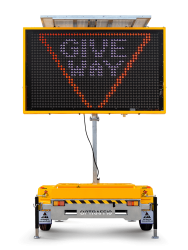
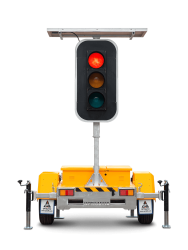
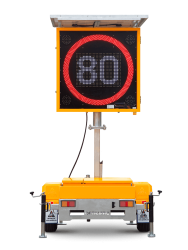
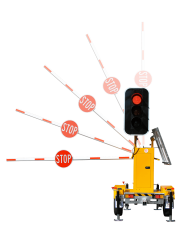
Solar message sign trailers and wireless portable traffic signals for night tunnel closures.

A driver who enters a closed tunnel approach has nowhere to go. There is no shoulder to turn on and no side street to take. Traffic management for tunnel maintenance closures must therefore work before the portal. It must reach drivers while they can still choose another route. Crews need variable message signs that announce closure times days ahead and switch to detour messages on the night. The Optraffic team builds solar message sign trailers and wireless portable traffic signals for these night programs. This guide covers sign placement, detour messaging, single-bore control, and site access for new tunnel builds.
Key Takeaways
- Remote message control: Changes closure times and detour messages without crews driving to each tunnel approach.
- Bundled fleet software: Tracks every sign on both approaches by GPS, with no subscription fee.
- Solar-powered message signs: Run multi-night closure programs without refuelling trips to remote approaches.
- Wireless portable traffic signals: Control two-way traffic through a single open bore from both portals.
- Auto-dimming LED display: Keeps night closure messages readable on dark tunnel approaches.
Why Traffic Management for Tunnel Maintenance Closures Is Different
Short answer: Tunnel closures need warnings before the last exit, because drivers past that point cannot turn back.
Tunnel approaches differ from open-road closures in four ways:
- No escape route: Drivers past the last exit must continue to the portal.
- Limited sight distance: Approaches often sit in cuttings or on curves.
- Recurring closures: Inspections and maintenance bring crews back on a schedule.
- Night-only windows: Most work happens overnight to limit delays.
The Last Decision Point Before the Portal
Every tunnel approach has a last decision point. This is the final exit or junction before the portal. Signs placed after it only tell drivers about a problem they cannot avoid. Signs placed before it let drivers divert early. That single location shapes the whole closure plan.
Tunnel Inspection Closures Come Back on a Schedule
Tunnel closures are not one-off events. US federal rules require each highway tunnel to be inspected at regular intervals. Under 23 CFR 650.511, the routine interval is 24 months. Some tunnels need more frequent checks based on risk. Lighting, drainage, and door repairs add further closures between inspections.
These tunnel inspection closures usually run overnight. Caltrans closed the three Caldecott Tunnel bores on SR-24 one at a time in July 2026. Work ran from 10 p.m. to 4:30 a.m. over three nights. Caltrans kept at least one bore open in each direction and posted changeable message signs. Hire fleets that serve tunnel owners see this pattern repeat every year.
| Closure type | Typical cause | Usual window | Traffic arrangement |
|---|---|---|---|
| Routine inspection | Federal or state inspection program | Overnight | One bore or lane at a time where possible |
| Planned maintenance | Lighting, drainage, doors, cleaning | Overnight, often several nights | Single-bore closure, or full closure with detour |
| Major rehabilitation | Structural or systems upgrades | Weeks or months of night work | Full closure with a signed detour |
| Unplanned closure | Crash, breakdown, fire or flooding | Any time | Rapid full closure at the approach |
Tunnel Closure Advance Warning Signs and Approach Placement
Short answer: Place the first message sign before the last exit to the tunnel. Add a closer sign and a portal sign for drivers who miss it.
Tunnel closure advance warning signs have one job. They must reach drivers before the last decision point. Queensland sets this out clearly. The QGTM Part 9 guideline on tunnel closures applies to tunnels with ramps off motorways. It calls for:
- A variable message sign before the last decision point, to encourage alternative routes.
- Advance warning signs typically 1 km and 500 m before the motorway exit to the tunnel.
- A second sign at the portal that tells drivers the tunnel is closed.
- A three-stage process: warning, physical closure, and reopening.
The guideline also warns against queues spilling back onto the motorway. Diverge operations must not create a second hazard upstream.
Tunnel Approach Message Sign Placement
Good tunnel approach message sign placement follows a simple order:
- Place the first sign upstream of the last decision point.
- Place a second sign where drivers can still read it before committing to the ramp.
- Keep the portal sign for drivers who missed the earlier warnings.
Check sight distance on curved approaches. Many tunnel approaches sit in cuttings or on bends. A sign hidden behind a bend loses most of its value.
| Framework | Market | Approach warning | Detour handling | Notes |
|---|---|---|---|---|
| MUTCD Part 6 (temporary traffic control) and 23 CFR 650 tunnel inspection rules | US | General Part 6 advance warning rules apply on tunnel approaches | Agency-designed detours; message signs guide drivers | No tunnel-specific closure chapter; state practice fills the gap |
| Traffic Signs Manual Chapter 8 and National Highways closure practice | UK | Chapter 8 temporary signing on approach roads | Fully signed diversion routes, as used for the A3 Hindhead Tunnel | Overnight closures are standard for tunnel maintenance |
| QGTM Part 9, Queensland TMR | AU | Message sign before the last decision point; advance signs about 1 km and 500 m before the exit | Message signs encourage alternative routes | Applies to tunnel ramps directly off motorways |
The UK example comes from the A3 Hindhead Tunnel maintenance closures. Those closures used a fully signed diversion via the A31 and A325.
Overnight Tunnel Closure Detour Messaging
Short answer: Announce the closure days ahead, show the detour on the night, and confirm the reopening.
An overnight tunnel closure detour fails when drivers learn about it too late. Message signs should change across the closure program.
| Closure phase | When | Sign location | Example message |
|---|---|---|---|
| Advance notice | Days before the first night | Approach, before the last exit | TUNNEL CLOSED / 10PM–5AM MON–WED |
| Closure night | From closure start | Before the last exit | TUNNEL CLOSED / USE EXIT 12 |
| Detour route | During the closure | Detour turns and rejoin point | DETOUR / FOLLOW SIGNS |
| Reopening | After crews clear the bore | Approach | TUNNEL OPEN / ALL LANES |
Drivers read a message sign in a few seconds at highway speed. Keep each message tight:
- Use no more than two phases per message.
- Give each phase one idea only.
- Name the exit number or road, not a vague direction.
- Avoid abbreviations that visitors may not know.
Detour Confirmation Signs Along the Route
Drivers on a detour need reassurance. A message sign at the first detour turn confirms they took the right route. A second sign near the rejoin point guides them back. For complex detours, a map often works better than text. See how full-color message signs show diversion maps for long-term roadworks.
Single-Bore Closure Traffic Control at the Tunnel Portal
Short answer: Close one bore, run two-way traffic through the other, and control both portals with synced signals.
Twin-bore tunnels give crews another option. They close one bore and run two-way traffic through the other. This keeps the route open but adds a new risk. Opposing traffic now shares one bore with no barrier between lanes.
Single-bore closure traffic control needs signals at both portals. Each portal holds traffic while the other side runs. The all-red time must clear the full bore length before the opposite side gets green. Long bores need long clearance times.
Portable Traffic Signals for Tunnel Works
Portable traffic signals for tunnel works must stay in step across the whole bore. A cable between portals is rarely practical. Wireless master-slave sync solves this. One unit acts as master and sets the cycle. The other follows by radio. Crews can then adjust timing from one end. For mode selection, compare shuttle, plant-crossing and other portable signal modes. For queue behaviour at signal-controlled closures, see how temporary traffic signals reduce congestion during single-lane closures.
Message signs still matter here. A sign before each portal should warn of signal control ahead. Drivers do not expect a red light inside a tunnel approach.
Use this checklist before the first night of a single-bore closure:
- Place signals at both portals, linked by wireless master-slave sync.
- Set an all-red time long enough to clear the full bore.
- Warn of signal control ahead before each portal.
- Block the closed bore with barriers and a closure message.
- Confirm the open bore suits two-way traffic, including lane width and lighting.
Tunnel portal traffic control also covers the closed bore. Crews block it with physical barriers and a clear closure message. A message sign at the closed portal can show TUNNEL CLOSED / FOLLOW SIGNALS.
Tunnel Construction Site Access Traffic Control
Short answer: Warn main-road drivers about trucks entering, and light the site entrance for night haul shifts.
New tunnel builds bring a different problem. The tunnel carries no public traffic yet. The risk sits at the site entrance on the existing road. Haul trucks leave the portal area loaded with spoil. They enter a public road, often at night and often slowly.
Tunnel construction site access traffic control protects that merge point. A message sign upstream of the entrance tells drivers what to expect. TRUCKS ENTERING / SLOW DOWN works well. Change it when the haul shift ends.
Haul Truck Entry Warning on the Main Road
Some drivers ignore text. A haul truck entry warning gains force when it reacts to speed. A radar-equipped message sign measures approaching speed. When a driver exceeds the set threshold, the sign shows an overspeed warning message. It does not display the driver’s speed. This keeps attention on the hazard ahead.
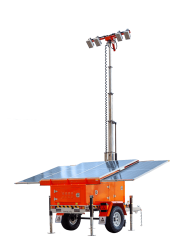
Night access points also need light. Drivers must see turning trucks early. For lighting choices at night sites, see LED lighting towers for night-time construction safety.
A site access setup usually includes:
- A message sign upstream of the entrance: TRUCKS ENTERING / SLOW DOWN.
- A radar overspeed warning for drivers who approach too fast.
- Lighting at the entrance for night haul shifts.
- A message change when each haul shift starts and ends.
Planning Portable Traffic Signals and Message Signs for Multi-Night Tunnel Programs
Short answer: Remote control, GPS tracking and solar power cut the trips crews make to each approach.
Tunnel programs often run for weeks. Crews return night after night. Small time savings on each shift add up fast.
Prepare each program in five steps:
- Walk both approaches and mark the last decision point.
- Test mobile coverage at each planned sign location.
- Load every phase message before the first night.
- Confirm each unit’s GPS position on the fleet screen.
- Agree a message change plan for each night.
Remote control saves trips. A 4G-connected sign accepts new messages from a phone or PC. A supervisor can switch from the advance notice to the closure message without driving to each approach. Mountain approaches sometimes have weak coverage. Check the signal at each sign location before the program starts.
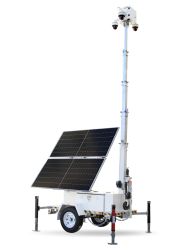
GPS shows where every unit sits. Signs on two approaches can sit kilometres apart. A fleet screen confirms each unit is in place and powered. This guide to web-based traffic device management for rental fleets covers the checks that matter. Many platforms charge a monthly fee per device. Some manufacturers bundle the software at no added cost. Rental fleets should compare five-year software costs before they buy.
Solar power removes refuelling runs. Tunnel approaches can be remote. Solar units keep running between shifts without fuel deliveries. Proven LED modules and sealed enclosures keep signs readable across long programs. These choices cut maintenance visits and keep units on hire.
The table below matches equipment to closure type.
| Closure type | Message signs | Portable traffic signals | Arrow board | Light tower |
|---|---|---|---|---|
| Full closure, single tunnel | 2 per approach plus detour route signs | No | At the closure taper | At the closure point |
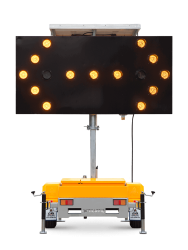
| Single-bore closure, twin tunnel | 1–2 per approach | 1 synced pair, one at each portal | At the bore closure | At both portals |
| Lane closure inside an open bore | 1 per approach | No | Yes, before the portal | Optional |
| New tunnel site access | 1–2 on the main road | Optional, for turning trucks | Optional | At the site entrance |
For night signing near active lanes, see how TMA message boards reduce reaction time in night work zones. The wider equipment range for these projects sits under construction traffic and site equipment.
FAQ
How far before a tunnel should closure warning signs be placed?
Place the first sign before the last decision point. Queensland’s QGTM Part 9 uses advance signs about 1 km and 500 m before the motorway exit. Local rules and sight distance decide the final spot.
Can portable message signs be used inside a tunnel?
Generally, no. Tunnels rely on fixed lane control signals and in-tunnel systems. Portable message signs work on the approaches, at the portals, and along the detour.
Does an overnight tunnel closure always need a detour?
Not always. Twin-bore tunnels can stay open with one bore carrying two-way traffic. Single-bore tunnels and full closures need a signed detour.
How often do US road tunnels close for inspection?
Federal rules set a routine inspection interval of 24 months. Higher-risk tunnels may need more frequent inspections. Maintenance work adds further closures between inspections.
Conclusion
Traffic management for tunnel maintenance closures succeeds or fails before the portal. Warn drivers ahead of the last decision point and guide them along the detour. Control both portals when one bore stays open. Optraffic supplies solar message sign trailers, radar-equipped signs, and wireless portable traffic signals for these programs. Every message sign connects to the Optraffic Web System at no added software cost. Hire fleets and contractors can contact the Optraffic team to plan equipment for their next tunnel closure program.
Facebook
Twitter
LinkedIn
Email
Newsletter
Subscribe to our Newsletter & Event right now to be updated.
Latest Posts


Latest Posts
What to Check Before Buying 500 Portable Changeable Message Signs: 7 Batch Delivery Checks for Rental Fleets
What to check before buying 500 portable changeable message signs: one build across batches, spares, DDP delivery and per-shipment tests.
2026-11-11
How to Plan Message Signs for Weekend Highway Closures: Lessons from Atlanta’s I-285 Westside Closures
How to plan message signs for weekend highway closures: 5 steps, a 48-hour checklist and fleet control lessons from Atlanta’s I-285 closures.
2026-11-11
Does EN 12966 Apply to LED Modules? What the Standard Covers and What a Datasheet Cannot Prove
Does EN 12966 apply to LED modules? See what the standard covers, what a module datasheet proves and 5 questions to ask a supplier.
2026-11-10
Build vs Buy a Vehicle-Mounted Message Sign: What Fleets and Integrators Should Check
Build vs buy a vehicle-mounted message sign? Compare compliance, controls, mounting and support before you choose.
2026-11-10
Work Zone Speed Feedback Trailer Placement: Where to Set It Up and When to Move It
Work zone speed feedback trailer placement explained: where DOT rules and research say to set the trailer, when to move it and what fleets must log.
2026-11-05
WZDx Device Feed Requirements: What Work Zone Contractors and Hire Fleets Must Supply
WZDx device feed requirements explained for contractors and hire fleets: what the feed holds, what DOT specs ask for and how to prepare equipment.
2026-11-04