


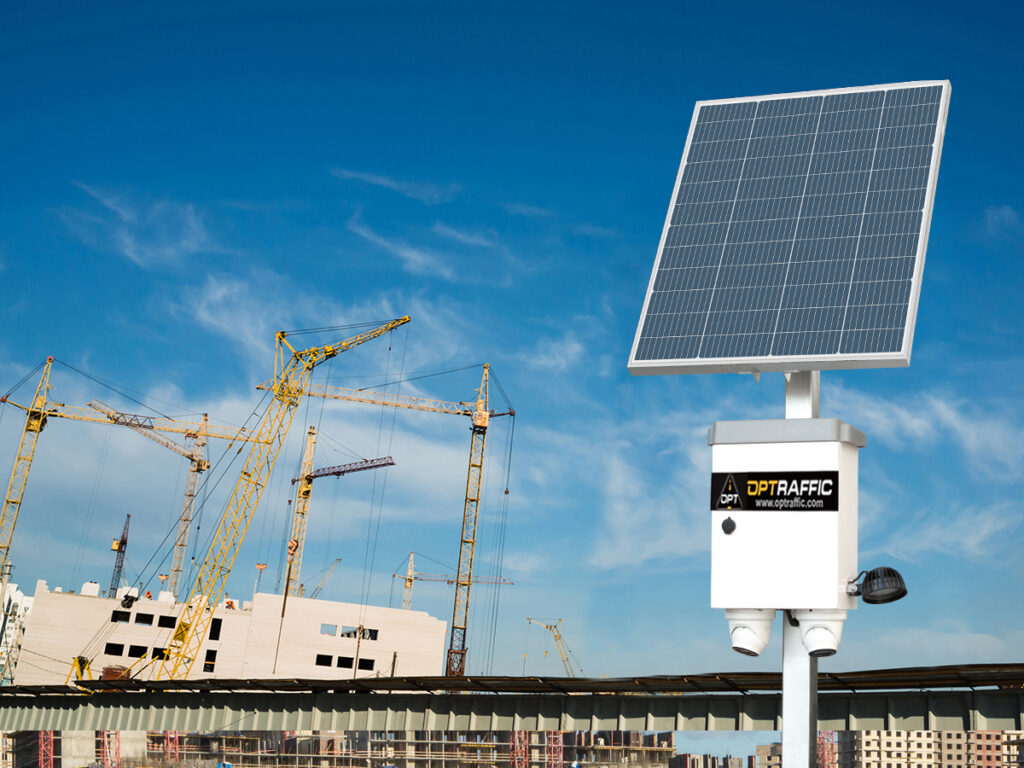
Rental fleets lose money on the wrong trailer, not the wrong site. A mobile solar security trailer that looks identical to a competitor on a spec sheet can behave very differently after 90 days in the field. Fleet managers and system integrators need a checklist that separates marketing language from field performance. This guide breaks down eight features to verify before you commit fleet budget to a solar powered surveillance trailer.
Key Takeaways
- Battery chemistry: Lithium-based systems in a lithium security trailer cut replacement cycles versus lead-acid packs.
- Software cost: Optraffic’s FREE WEB system removes the recurring subscription fee common on competing platforms.
- Weather rating: IP65 enclosures protect camera and control electronics from dust and low-pressure water jets.
- Connectivity: 4G/5G cellular access supports remote viewing without a satellite backup requirement.
- Deployment time: Telescopic mast and outrigger stabilization let one operator set up a unit without a crew.
1. Off-Grid Solar Autonomy in a Mobile Solar Camera Trailer
Rental customers rarely ask about panel wattage. They ask a simpler question: does the unit still record after three cloudy days?
What to verify before buying:
- Battery reserve rated in days, not just peak solar wattage
- Charge recovery time after a full battery drain
- Manufacturer data for winter or low-sunlight regions, not just summer conditions
Our team hears this question from rental customers before almost any other spec. An off-grid security trailer with undersized battery reserve fails precisely where customers need it most, so autonomy claims deserve a follow-up question about real-world runtime, not just a panel wattage figure.
2. Lithium vs. Lead-Acid Batteries in a Solar Security Trailer
Battery chemistry drives long-term cost more than any other line item on a solar cctv trailer.
| Factor | Lead-Acid | Lithium |
|---|---|---|
| Upfront cost | Lower | Higher |
| Partial-charge tolerance | Degrades faster | Holds up well |
| Behavior in storage between jobs | Loses charge, shortens lifespan | Retains charge longer |
| Weight | Heavier | Lighter |
A lithium security trailer tolerates the partial-cycling pattern typical of rental use, where units sit idle between jobs. Ask any supplier for expected service life under intermittent use, not just a headline battery figure.
3. Camera and Sensor Flexibility for a Solar Powered Security Trailer
A fixed single-camera setup works for a small parking lot. It fails at a multi-acre construction site or event perimeter.
Confirm the platform supports:
- Multiple camera types on the same trailer (fixed, PTZ, license plate capture)
- Camera swaps without a full hardware replacement
- Mixed configurations across different customer contracts
A flexible mobile solar security trailer lets one fleet asset serve several use cases, improving utilization for rental companies managing mixed-industry demand.
4. Weatherproofing and IP Rating on a Solar-Powered Mobile Surveillance Unit
Enclosure rating determines whether cameras and controllers survive a wet winter without a service call.
- Optraffic’s surveillance trailer platform carries an IP65 rating
- IP65 resists dust ingress and low-pressure water jets from any direction
- Some competing units only protect against light rain, not sustained exposure
Confirm this rating directly with any supplier before purchase — it is rarely called out clearly on spec sheets.
5. Software Cost: The Hidden Line Item in a Solar Surveillance Trailer
Every hardware quote looks similar until the software invoice arrives.
- Many competing platforms charge a recurring monthly fee for live viewing or alerts
- Optraffic’s FREE WEB system is proprietary software, developed in-house rather than licensed from a third party, and provides remote video access and control at no additional cost
- The savings compound across a multi-unit fleet, not just a single trailer
Fleet managers should ask any vendor for the exact monthly or annual software cost before signing, not after the first invoice.
6. Deployment Speed for a Mobile Solar Security Trailer
A unit that takes half a day to set up erodes the labor savings it was bought to deliver.
Check for:
- Mast raise time from arrival to operational
- Number of technicians required for stabilization
- Whether outriggers need manual leveling or adjust automatically
Faster setup reduces labor cost per site visit, which matters most for companies rotating trailers across short-term jobs.
7. Connectivity Limits on a Solar Powered Surveillance Trailer
Cellular-connected units depend entirely on local signal strength.
- Optraffic trailers use 4G/5G LTE connectivity for remote access
- No satellite backup option is included, which mirrors most platforms in this category
- Signal coverage should be confirmed in advance for genuinely remote sites, such as mining access roads or rural infrastructure corridors
8. Warranty and Local Support Behind a Solar Camera Trailer
A two-year warranty means little without a service contact who answers the phone.
- Confirm the manufacturer maintains authorized distributors in your operating region
- Ask what parts lead time looks like on a rented, revenue-generating asset
- Optraffic backs its surveillance trailer line with a two-year warranty, ISO 9001-certified manufacturing, and regional distributor support across the US, UK, and Australia
Rental customers who have evaluated Optraffic’s platform tend to flag the same thing: responsiveness when a question or issue comes up, not just the hardware spec sheet. That kind of follow-through is harder to verify upfront than a warranty term, so ask any supplier for a reference customer in your region before you sign.
Quick Comparison: Entry-Level Unit vs. Rental-Ready Solar Security Trailer
| Feature | Entry-Level Unit | Rental-Ready Solar Security Trailer |
|---|---|---|
| Battery type | Lead-acid | Lithium-based |
| Software cost | Monthly subscription | FREE WEB system, no fee |
| Enclosure rating | Basic weather resistance | IP65 dust/water-jet protection |
| Camera flexibility | Fixed single camera | Multi-camera, PTZ-capable |
| Connectivity | Cellular only, unverified coverage | 4G/5G LTE, coverage confirmed pre-deployment |
| Deployment | Multi-person setup | Single-operator mast and outriggers |
| Warranty support | Limited or distributor-dependent | Two-year warranty, regional distributor network |
Physical deterrence still matters alongside these eight criteria. The FBI’s May 2026 First Look release reported property crime fell 12.4% nationally in 2025, yet equipment left on unattended, remote sites remains a distinct exposure that national trends do not capture on their own. That gap is why rental fleets and system integrators keep adding a visible mobile solar security trailer to jobsite planning rather than relying on broad crime statistics alone.
OPTRAFFIC
Fleet-Ready Mobile CCTV Trailers
IP65-rated. Lithium-powered. No subscription software.

FAQ
How long does a solar powered security trailer run without direct sunlight?
Runtime depends on battery reserve, not panel size. Look for manufacturer data covering three or more consecutive low-sunlight days, not just peak-sun performance claims.
Is a lithium security trailer worth the higher upfront cost?
For rental fleets, usually yes. Lithium batteries tolerate the partial-charge cycling typical of intermittent rental use better than lead-acid, which reduces replacement frequency over the trailer’s service life.
Do mobile solar security trailers need a monthly software subscription?
Not always. Optraffic’s FREE WEB system provides remote access and control with no recurring fee, unlike several competing platforms that bill monthly per unit.
What connectivity do solar CCTV trailers use in remote locations?
Most units, including Optraffic’s, rely on 4G/5G LTE cellular connectivity. None include a satellite backup, so confirming cellular coverage before deployment is essential for remote sites.
Conclusion
Choosing the right mobile solar security trailer comes down to matching these eight features to how your fleet actually operates, not to a single spec sheet claim. Battery chemistry, software cost, and enclosure rating typically separate a unit that performs for years from one that generates service calls within its first season.
For a closer look at how solar-powered units perform in extended bad weather, see how solar surveillance trailers handle severe weather conditions. Construction and mining operators comparing options can also review how solar surveillance trailers improve security on active job sites. Teams securing sites with limited infrastructure may find it useful to compare remote site deployment options for solar CCTV trailers.


What Should a VMS Trailer Quote Include in Australia? Line Items to Compare Before You Sign
What should a VMS trailer quote include? Ten line items to compare, from delivery and registration to software fees, warranty and local spare parts.
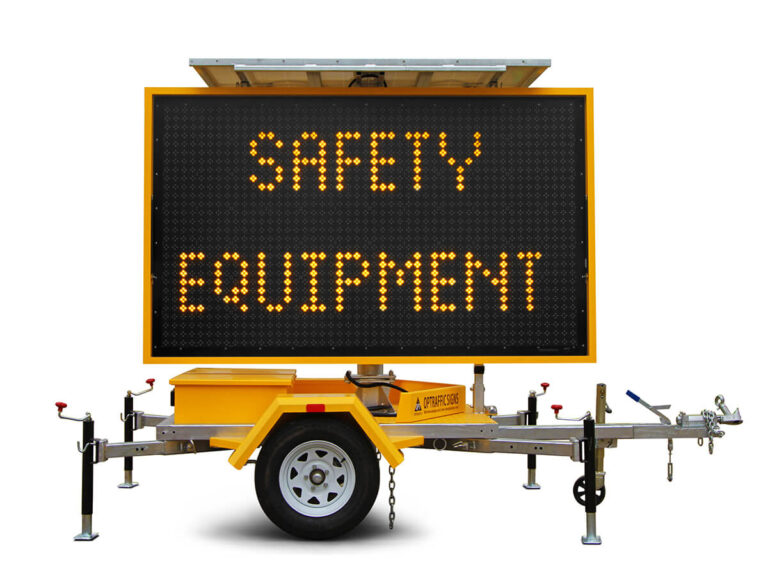
When to Order VMS Trailers for Bushfire Season: A Region-by-Region Guide for Australian Hire Fleets
When to order VMS trailers for bushfire season: a region-by-region guide for hire fleets, with order-by months, stock top-ups and pre-season checks.
What Makes a VMS Trailer Mine-Spec? Site Entry Requirements for Western Australian Mine Sites
Mine-spec VMS trailer requirements under WA’s 2026 mine traffic code: visibility, ID, isolation, documents and how to order a unit that passes site entry.
Portable VMS Requirements in Western Australia: Main Roads Rules, Remote Access and Local Supply
Portable VMS requirements in Western Australia: Main Roads character heights, colours, remote access rules and where WA fleets source VMS trailers locally.
How Long Does It Take to Get a VMS Trailer in Australia? Local Stock vs Custom Builds
How long does it take to get a VMS trailer in Australia? Local stock arrives in 1–2 weeks; custom builds take about 6 weeks. See what drives the gap.
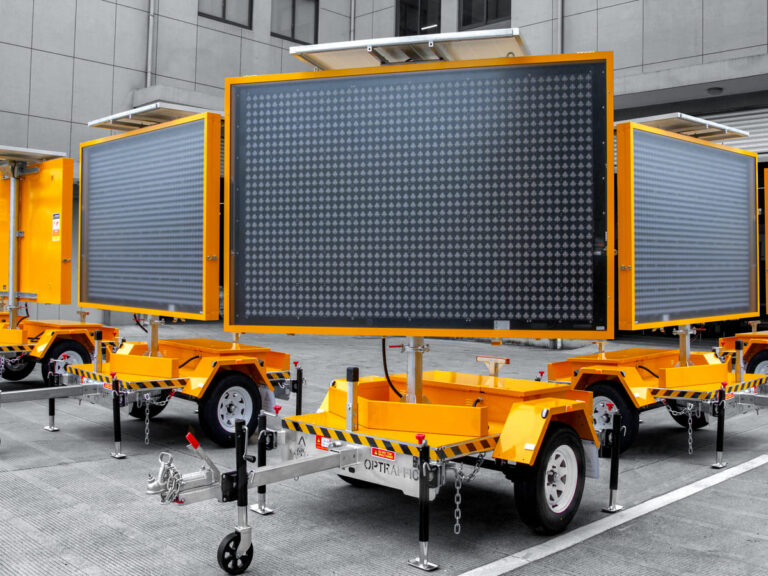
What to Check Before Buying a VMS Trailer in Australia: A Buyer’s Guide for Traffic Management and Hire Companies
What to check before buying a VMS trailer in Australia: AS 4852.2, size, colour, power, software fees, RAV registration and local stock, in order.