


Most buyers start a specification with cameras. Resolution, lens, pan and tilt. Those choices matter, but they come second.
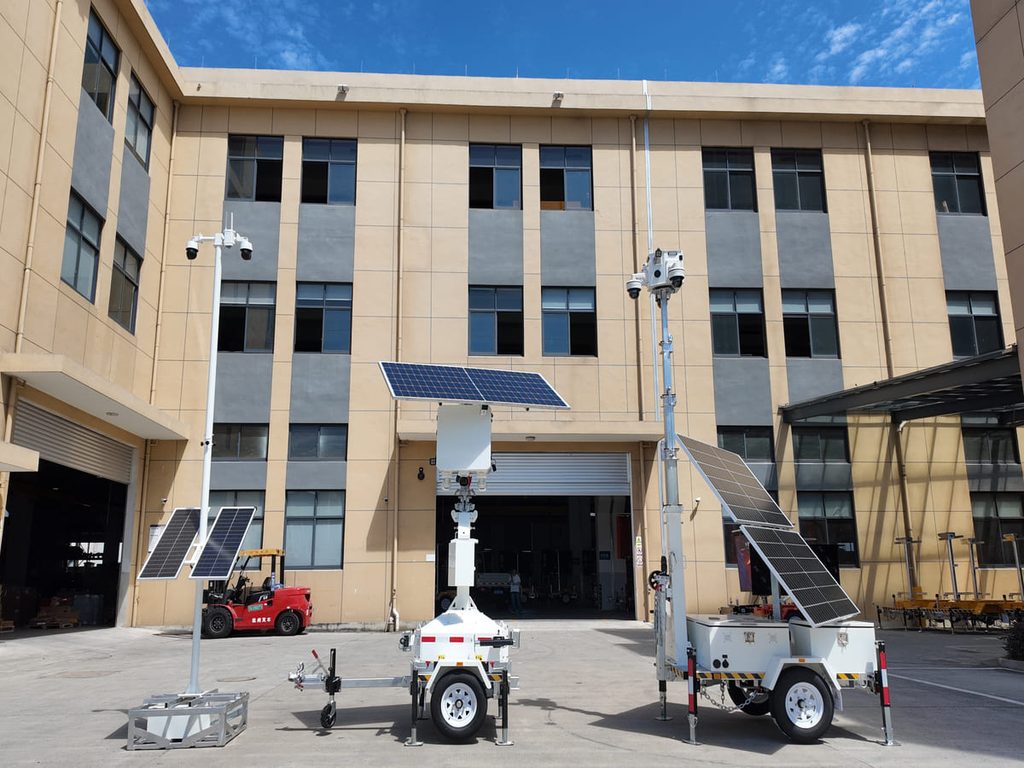
The first decision is unit class. A full-size trailer and a compact camera tower see the same scene when both are positioned correctly. They differ in what it takes to get them there, park them and move them again. This guide covers how to choose between a portable camera trailer and a compact tower before the camera question arises.
Key Takeaways
- Compact tower class: Fits gate widths and hardstand areas that a full-size trailer cannot enter.
- Full-size trailer class: Carries the larger battery bank and mast height that long off-grid deployments require.
- Lighter mass class: Widens the pool of vehicles and drivers that can legally redeploy a unit.
- Class-matched fleet mix: Keeps compact units on short rotations and full-size units on static long-stay sites.
- Class decision first: Sets the power, mast and camera options that remain available afterwards.
Why Unit Class Decides the Options You Still Have
Class sets the envelope. Everything specified afterwards fits inside it.
A larger chassis carries a larger battery bank, which supports a longer mast and a heavier camera load. A compact chassis limits all three. That is not a fault. It is the trade that buys site access.
Specifying cameras first inverts the process. Buyers commit to a camera package, then discover the site gate is too narrow for the class that carries it.
Portable Camera Tower Size Comparison: What Actually Separates the Classes
A useful portable camera tower size comparison ignores catalogue dimensions and compares operating constraints.
| Factor | Compact camera tower | Full-size surveillance trailer |
|---|---|---|
| Site access | Enters narrow gates, basements, car park decks | Needs standard vehicle access and turning room |
| Hardstand footprint | Small, fits against a boundary | Requires a dedicated parking position |
| Mast height available | Lower band | Higher band, clears stockpiles and hoarding |
| Power autonomy | Shorter, suits shorter deployments or partial grid | Longer, suits extended off-grid stays |
| Setup crew | Usually one person | One or two, depending on lift type |
| Redeployment effort | Low, suits frequent moves | Higher, suits static placement |
| Tow entitlement | Wider pool of vehicles and drivers | Narrower, depends on mass class |
The last row is the one buyers discover late, and the next section explains why.
Tow Entitlement Is a Fleet Constraint, Not a Detail
Mass class decides who can legally move a unit. That question hits hire fleets and contractors weekly.
In the UK, trailer mass determines both the braking requirement and the licence entitlement needed to tow the combination. The rules sit with DVLA towing entitlement, and the combination’s maximum authorised mass governs which category a driver needs. Australia and the United States apply their own thresholds through state registration and federal trailer equipment rules.
The practical consequence is simple. A unit inside the lighter mass class can be redeployed by more of the crew, using more of the vehicles already in the yard. A heavier unit may need a specific vehicle, a specific driver, or both.
For a fleet moving units weekly, that difference decides utilisation. A machine nobody available can tow sits in the yard.
Choosing a Camera Trailer for Tight Site Access
Choosing a camera trailer for tight site access starts with three measurements taken during the site walk, not from the specification sheet.
- Entry width and swing. The narrowest point on the route in, including the turn at the gate.
- Ground conditions. Soft ground, kerbs, ramps and deck loading limits on structures.
- Final position clearance. Whether the mast can rise clear of cables, canopies and branches.
Two site types fail full-size units regularly: multi-storey and underground car parks, and urban infill sites where the hoarding line leaves no parking bay.
Two site types defeat compact units: large open compounds needing mast height to see over stockpiles, and long off-grid deployments where the battery bank runs the show.
How Often a Camera Tower Is Redeployed Changes the Answer
Ask how many times the unit will move during the contract. How often a camera tower is redeployed separates two buying patterns that look identical at quote stage.
| Deployment pattern | Moves per month | Class that usually wins |
|---|---|---|
| Static long-stay site | Zero to one | Full-size trailer |
| Phased construction site | Two to four | Either, decided by mast need |
| Event and short hire rotation | Four or more | Compact tower |
| Emergency and incident response | Unplanned | Compact tower |
Redeployment cost compounds quietly. Each move consumes vehicle time, driver time and a coverage gap while the unit is off site.
Mixed Camera Trailer Fleet Composition for Hire Companies
Hire fleets rarely need one class. They need a ratio.
Mixed camera trailer fleet composition works best when the split follows the customer base rather than an even balance. Fleets serving events and urban infill weight toward compact. Fleets serving mining, utilities and long civil projects weight toward full-size.
Two rules keep a mixed fleet manageable:
- Standardise within each class. One compact model and one full-size model, not four variants. Spares, training and mounting hardware stay common.
- Keep both classes on one management platform. Mixed hardware with mixed software doubles the operating overhead that a mixed fleet was meant to avoid.
When Each Class Is the Wrong Choice
Compact is wrong when the site needs mast height to clear an obstruction, or when the deployment runs for months without grid power. Undersizing the power system to fit the chassis produces a unit that fails in winter.
Full-size is wrong when the unit moves weekly, when access is constrained, or when the only available tow vehicles and drivers cannot legally take it. Buying capability the fleet cannot deploy is the more expensive error, because it is invisible until the first redeployment.
Conclusion
Class is an access and logistics decision. Cameras are a coverage decision. Taking them in that order prevents the common failure, which is a well-specified machine that cannot reach its position.
Walk the site. Measure the narrowest entry. Count the expected moves. Check which vehicles and drivers can tow which mass class. The camera specification follows from what survives those four filters.
Optraffic manufactures both classes on shared mounting and power architecture, so a mixed fleet keeps common spares and one management platform. Contact the Optraffic team to match a class to a specific site before specifying cameras.
FAQ
Does a compact camera tower see less than a full-size trailer?
Not inherently. Camera capability is similar. The difference is mast height and power autonomy, which affect what the camera can be positioned to see and for how long.
Which class suits a hire fleet best?
Neither alone. Mixed camera trailer fleet composition should follow the customer base, weighted toward compact for events and urban work, and full-size for remote long-stay sites.
What is the most common class selection error?
Buying full-size capability that the available vehicles and drivers cannot redeploy. The unit then stays static regardless of what the contract needs.
Can a compact tower run off-grid for months?
Usually not without support. Shorter autonomy is the trade for the smaller chassis, so long off-grid stays generally need the full-size class.
When should the camera package be chosen?
After the class. Choosing a camera trailer for tight site access fixes the power and mast envelope that the camera package must fit inside.



Lighting First or Recording First? CCTV-Ready Light Tower vs Camera Trailer for Integrators and Hire Fleets
CCTV-ready light tower vs camera trailer: compare whose camera runs, which load gets night power, and how hire fleets use one unit for two jobs.
VMS Trailers for Renewable Energy Zone Construction: Oversize Deliveries, Detours and Community Notice
How VMS trailers support renewable energy zone construction: oversize delivery warnings, detours, night moves and community notice on REZ routes.
Imported vs Australian-Built VMS Trailers: Where Each Has the Edge
Imported vs Australian-built VMS trailers: where each has a real advantage, what compliance requires of both, and how to choose for your fleet.
What Should a VMS Trailer Quote Include in Australia? Line Items to Compare Before You Sign
What should a VMS trailer quote include? Ten line items to compare, from delivery and registration to software fees, warranty and local spare parts.
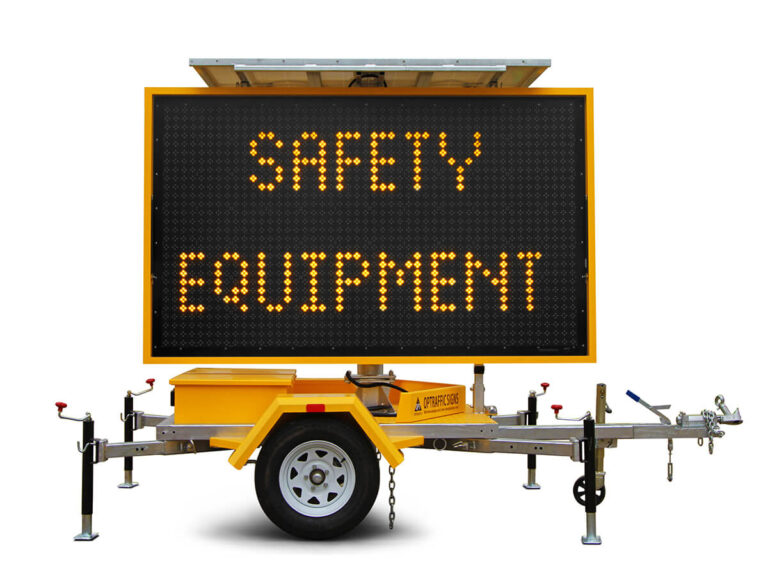
When to Order VMS Trailers for Bushfire Season: A Region-by-Region Guide for Australian Hire Fleets
When to order VMS trailers for bushfire season: a region-by-region guide for hire fleets, with order-by months, stock top-ups and pre-season checks.
What Makes a VMS Trailer Mine-Spec? Site Entry Requirements for Western Australian Mine Sites
Mine-spec VMS trailer requirements under WA’s 2026 mine traffic code: visibility, ID, isolation, documents and how to order a unit that passes site entry.