Security Camera Trailers for Truck Yards: Stopping Cargo Theft at Drop Yards, Gates and Overflow Lots
Truck Yard Security
Watch the gate, the trailer rows and the dark corners
Solar camera trailers cover drop yards and overflow lots without trenching or grid power. Automated event alerts and live 4G/5G video help staff act before a load leaves.
A loaded trailer sits in a yard overnight. The gate stays open for late arrivals. No one watches the back rows. By morning, the trailer is gone, or a driver with fake paperwork has already collected it. Security camera trailers for truck yards cover these gaps without trenching or wiring a new system. Logistics operators now hire surveillance trailers for drop yards, overflow lots and new distribution centers. The Optraffic team builds solar camera trailers for hire fleets and integrators that serve these sites. This guide covers theft methods, camera placement, plate capture, peak-season lots and monitoring.
Key Takeaways
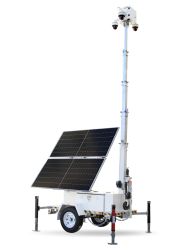
Solar camera trailers: Cover truck yards and overflow lots without trenching, cabling or grid power.
Automated event alerts: Flag activity at yard gates and trailer rows, so staff can respond before a load leaves.
4G/5G connectivity: Streams live video from remote yards to monitoring teams as incidents unfold.
VSMS management system: Shows live video from every unit across multiple yards through web browsers and mobile apps.
Winch-lifted camera mast: Raises cameras above parked trailers and containers for clear views down each row.
Why Truck Yard Security Fails Against Organized Cargo Theft
Short answer: Thieves now pick fewer, higher-value loads. Yards with open gates, dark rows and weak pickup checks become easy targets.
Cargo theft has changed shape. Verisk CargoNet recorded 677 supply chain theft incidents in the US and Canada in Q2 2026. That was 26% fewer than a year earlier. Losses still more than doubled, to about $304.6 million, according to its August 2026 report. The average reported loss reached $564,009. Metals and computer equipment drew the most attention.
Unattended loaded trailers: Full trailers wait overnight with no one nearby.
Open gates: Yards leave gates open for late arrivals and early departures.
Fictitious pickups: A driver with false paperwork collects a load in plain sight.
Temporary lots: Peak-season overflow yards often have no cameras at all.
Cargo Theft Prevention at Trailer Drop Yards
Short answer: Match each camera view to a known theft method, not just to the yard map.
Cargo theft prevention at trailer drop yards starts with how thieves actually work. Drop yards hold trailers for hours or days without drivers. That makes them prime targets.
Theft method
How it works
Camera priority
Response that helps
Trailer hook-up
Thief hooks a tractor to a loaded trailer and drives out
Gate exit and trailer rows
Live alert at the gate after hours
Fictitious pickup
Fake carrier collects a load with false documents
Gate entry, cab and plate detail
Plate log checked against the pickup order
Break-in and pilferage
Thieves cut seals and take part of a load
Trailer rows and rear doors
Footage of seal tampering
Fence breach
Thieves cut the fence at a dark corner
Perimeter and back corners
Lighting and visible camera presence
Fuel and parts theft
Thieves drain tanks or strip parts
Fuel area and parked tractors
Night coverage and warning lights
Verisk CargoNet counted 158 fictitious pickups in Q2 2026. Cameras at the gate give staff a record to check before a load leaves.
Trailer Yard Camera Placement
Short answer: Cover the gate first, then the trailer rows, then the dark edges.
Good trailer yard camera placement follows the flow of trucks and the habits of thieves. Use this order:
Cover the main gate, with views of the cab, plate and trailer number.
Cover each trailer row from the end, looking down the row.
Cover rear doors where high-value loads park.
Cover the fuel area and tractor parking.
Cover dark corners and the fence line furthest from the gate.
Test signal strength and night images before leaving the site.
Most yard theft happens after dark. Night footage must still show a person, a tractor and a plate. Check three points:
Ambient light: Yard lights often miss the back rows. Work lights on the unit light the area around it.
Glare: Truck headlights can wash out gate images. Angle cameras across the lane, not into it.
Visible presence: Red/blue warning lights show that someone is watching. An optional warning speaker adds a spoken warning.
How Many Units Does a Truck Yard Need?
Yard size alone does not decide the count. Layout matters more. A narrow yard with one gate may need two units. A large yard with several gates and long rows may need five or more. Start with the gate and the highest-value rows, then add units after the first two weeks.
License Plate Recognition at Yard Gates
Short answer: Plate capture at the gate creates a log that staff can check against every pickup.
License plate recognition at yard gates turns video into a searchable record. Each vehicle that enters or leaves gets a time-stamped plate entry. Staff can then:
Check the plate against the carrier named on the pickup order.
Flag vehicles that enter without a booking.
Search past visits when a load goes missing.
Share clips with police and insurers after an incident.
Confirm the camera setup supports plate recognition before planning around it. Place the camera where trucks slow down, such as a barrier. Keep it at an angle the plate faces directly. Check local rules on plate data before switching it on. Some states limit how long operators may keep it.
Peak-Season Overflow Yard Security
Short answer: Plan overflow lots before the peak, because they open fast and often have no cameras.
Freight volume peaks before the holidays. Distribution centers open overflow lots to hold extra trailers. These lots often sit on leased land, with temporary fencing and no power. Peak-season overflow yard security suits a hire model:
Fast setup: Solar camera trailers arrive and run the same day.
No wiring: Units need no trenching across a leased lot.
Short terms: Hires match the peak, often eight to twelve weeks.
Easy removal: Units leave when the lot closes, with no fixed equipment left behind.
New logistics buildings face theft before they open. Copper, cable and tools disappear from open sites. Camera trailers cover the build phase, then move to the overflow yard once the center opens.
Remote Video Monitoring for Logistics Yards
Short answer: Decide who watches the video before the first unit arrives. Cameras without a response plan solve little.
Remote video monitoring for logistics yards works in three common ways:
Monitoring model
Who watches
Best fit
Watch-out
Live monitoring
Operators watch feeds and call police or staff
High-value loads, open yards
Highest cost; needs clear response rules
Alert review
Analytics flag people or vehicles; staff review clips
4G/5G routers carry video from yards without wired networks. Live streaming uses far more data than event recording. Size data plans before deployment. See how much data a camera trailer uses.
One Screen for Every Yard
Logistics operators rarely run one yard. They run depots, cross-docks and overflow lots across a region. Monitoring staff need every unit in one view, with live video, battery status and GPS position. Some fleet platforms charge a monthly fee per device. Across many yards, those fees add up fast. Compare software costs per unit over a full year, not just the hire price.
Truck Yard Security Standards and Privacy Rules by Market
Short answer: Use TAPA FSR as a security benchmark, and follow local privacy rules for video and plate data.
The Transported Asset Protection Association publishes the Facility Security Requirements (FSR). TAPA released FSR 2026 in June 2026. New audits under it began on October 1, 2026, according to certification body DQS. The new version calls for priority CCTV coverage of loading, storage and transfer zones.
Market
Key framework
What it means for a yard camera trailer
Global
TAPA FSR 2026 (voluntary industry standard)
Cover loading, storage and transfer zones; remove blind spots
US
State privacy and recording laws; state LPR rules
Post signage; check limits on plate data retention
Clear purpose, signage and a documented retention period
AU
State surveillance devices legislation
State rules on recording, signage and data handling
Retention needs a plan. Insurers and police often ask for footage weeks after a theft. This guide to surveillance trailer footage retention explains how to set a period you can deliver.
Keeping Units Running Between Visits
Uptime decides whether a yard stays covered. A unit that goes dark on a peak weekend leaves loads exposed. Solar sizing, sealed electronics and remote status checks keep units running between visits. Moving units between yards also costs crew time. This guide to the real cost of relocating a surveillance tower breaks those costs down. Logistics sites sit within wider security and surveillance planning for commercial sites.
FAQ
Do security camera trailers stop cargo theft at truck yards?
They reduce risk but do not remove it. Cameras deter thieves, record evidence and support live response. Results depend on placement, monitoring and gate procedures.
Where should camera trailers go in a truck yard?
Start at the main gate, with views of cab, plate and trailer number. Then cover trailer rows from the end, the fuel area and dark corners.
Can camera trailers help stop fictitious pickups?
Yes, with plate capture at the gate where the camera setup supports it. Staff check each plate against the pickup order. Mismatches get flagged before the load leaves.
How long should a truck yard keep camera footage?
Set a period that matches insurer and police needs, and local law. UK operators must document their retention period under UK GDPR.
Are camera trailers suitable for peak-season overflow lots?
Yes. Solar units need no power or trenching. They arrive fast, run through the peak and leave when the lot closes.
Conclusion
Security camera trailers for truck yards close the gaps that organized cargo thieves exploit. They watch gates, trailer rows and overflow lots, and they log every vehicle that enters. Results depend on placement, a clear monitoring plan and gate checks. Optraffic supplies solar camera trailers through its FARADAY Surveillance Series, with 4G/5G connectivity, a winch-lifted mast and red/blue warning lights. Its VSMS Video Surveillance Management System streams live video and sends automated event alerts to web browsers and mobile apps. Hire fleets and integrators can contact the Optraffic team to plan units for the next freight peak.