


Coverage That Moves With the Problem
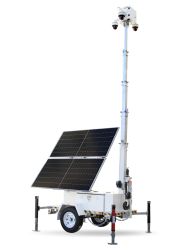
Solar camera trailers with 4G/5G live video and optional license plate recognition.

A city sees a spike in car break-ins or street crime on one block. A fixed camera network takes months to fund, permit and wire. By then, the problem has often moved. Security camera trailers for high-crime areas close that gap. A unit can arrive within days, run on solar power and stream live video over cellular networks. Cities now buy or lease surveillance trailers for exactly this reason. The Optraffic team builds solar camera trailers for integrators and hire fleets that serve these programs. This guide covers where units go, when to move them, and which privacy rules apply.
Key Takeaways
- Solar camera trailers: Reach a crime hotspot without trenching, grid power or a long permit cycle.
- 4G/5G connectivity: Streams live video to a real-time crime center from any deployment site.
- License plate recognition: Adds searchable vehicle evidence to investigations as an analytics option.
- Free Web System: Gives operators real-time video streaming and remote control across every deployed unit.
- Raised camera mast: Lifts cameras above parked vehicles and street furniture for wider, clearer views.
Why Cities Use Security Camera Trailers for High-Crime Areas
Short answer: Trailers reach a problem area in days and move when crime moves. Fixed cameras take months and stay put.
Fixed cameras still suit permanent hotspots. Many crime problems are not permanent, though. They shift between blocks, parks and parking lots. A mobile unit matches that pattern.
| Factor | Fixed camera network | Security camera trailer |
|---|---|---|
| Time to deploy | Months of design, permits and wiring | Days, once a site is agreed |
| Power | Grid connection required | Solar and battery |
| Connectivity | Fibre or wired network | 4G/5G cellular |
| Flexibility | Stays in one place | Moves to the next hotspot |
| Visible presence | Often discreet | Highly visible deterrent |
West Palm Beach shows this approach in practice. In July 2026, the city’s redevelopment agency and police introduced four portable CCTV trailers. They cover the Historic Northwest and downtown districts. Each unit cost about $62,000, funded through agency and police budgets. Live feeds reach the police Real Time Crime Center. Officials expect at least five units to rotate as the program grows.
Crime Hotspot Camera Placement
Short answer: Place each unit where it sees the problem clearly, resists tampering and keeps a strong signal.
Good crime hotspot camera placement starts with data, not guesswork. Follow these steps:
- Map recent incidents by type, time and exact location.
- Pick the point that sees the most incident locations at once.
- Check sight lines past trees, parked cars and signs.
- Confirm towing access and a stable, level surface.
- Test cellular coverage before the unit arrives.
- Plan night coverage, including any optional lighting.
A raised mast helps in busy streets. Cameras mounted high see over parked vans and street furniture. For a deeper method, see how to choose a security camera trailer position before the mast goes up. To match camera range to the task, read how far a security camera trailer can see.
| Hotspot type | Main threat | Camera priority | Placement note |
|---|---|---|---|
| Commercial strip | Burglary, robbery | Wide view plus storefront detail | Face the frontages, not the sky |
| Park parking lot | Vehicle break-ins | Lot coverage and entry lanes | Cover the entry to capture plates |
| Transit stop | Assault, theft | Close detail on waiting areas | Avoid glare from shelter lighting |
| Open-air drug market | Repeat dealing activity | Wide view and identification | Expect tamper attempts; mount high |
Night Coverage and Visible Deterrence
Most street crime peaks after dark. Night footage must still identify people and vehicles. Check three points before each night deployment:
- Ambient light: Street lighting may not reach the target area. Integrated lighting is available as an option on some units.
- Glare: Headlights and shop signs can wash out images. Angle cameras away from direct light sources.
- Visibility of the unit: A trailer works partly because people can see it. Strobe lights on some configurations make that presence obvious at night.
Visible presence alone does not solve crime. It works best with patrols, lighting fixes and community follow-up. Cities that treat the trailer as one tool tend to report steadier results.
Rotating Surveillance Trailers Between Hotspots
Short answer: Leave a unit long enough to change behaviour. Track the site after it leaves, then plan the next move.
Rotating surveillance trailers between hotspots is where mobile units earn their value. It is also where many programs go wrong. Austin offers a clear lesson.
Austin’s Parks and Recreation Department tested camera trailers in 15 park parking lots. Its February 2026 pilot summary reported that 9 of the 15 parks improved. At Mount Bonnell, vehicle break-ins dropped from 373 to 88 cases during the pilot. Local reporting later noted that reports rose again at some parks after the trailers left.
Crime Rebound After Camera Removal
That crime rebound after camera removal matters for planning. A trailer deters while it stands there. Remove it too early, and the problem can return. Plan each move with three questions:
- Has the incident rate stayed low for several weeks?
- Has the site gained other fixes, such as lighting or patrols?
- Does another hotspot now show a stronger need?
| Rotation decision | Trigger | What to measure |
|---|---|---|
| Stay | Incidents falling but not yet stable | Weekly incident count at the site |
| Move | Incidents low and stable; new hotspot emerging | Count at the old site for weeks after removal |
| Return | Incidents rebound after removal | Speed and size of the rebound |
| Replace with fixed cameras | Hotspot persists across rotations | Total months the site needed coverage |
Moving units costs crew time and towing. Plan moves in batches. This guide to the real cost of relocating a surveillance tower breaks those costs down.
Real-Time Crime Center Trailer Feeds and Connectivity
Short answer: A trailer helps most when its live video reaches the people who can act on it.
West Palm Beach sends trailer video to its Real Time Crime Center. Operators can then guide officers while an incident unfolds. Real-time crime center trailer feeds depend on three things:
- Reliable cellular links: 4G/5G routers keep video flowing from sites without wired networks.
- Enough data: Live streaming uses far more data than event-only recording. Size data plans before deployment. See how much data a camera trailer uses.
- One management screen: Operators need every unit in one view, not one app per device.
License Plate Recognition on Camera Trailers
License plate recognition on camera trailers turns video into searchable evidence. Investigators can search for a vehicle seen near several incidents. Place LPR cameras at entry lanes and chokepoints, where plates face the lens. Check local rules first. Some cities restrict LPR data sharing and retention.
Monitored and Unmonitored Programs
Some cities watch feeds live. Others record and review after incidents. Each model changes cost and police response. Compare the two in this guide to monitored versus unmonitored CCTV towers.
Surveillance Technology Ordinance and Privacy Rules by Market
Short answer: Check local surveillance policy before deployment, and switch off any feature the policy restricts.
Public cameras draw public scrutiny. West Palm Beach residents raised privacy concerns when its trailers arrived. Austin went further. In February 2026, council considered a proposed TRUST Act on surveillance technology. It would require council approval for new surveillance tools and public use policies. It would also ban facial recognition.
A surveillance technology ordinance like this changes how integrators configure units. Face capture or similar analytics may need to stay off. Data access terms may need to appear in the contract.
| Market | Framework | What it means for camera trailers |
|---|---|---|
| US | City surveillance technology ordinances, such as San Francisco Administrative Code Chapter 19B; state LPR laws | Approved use policies; limits on analytics and data sharing |
| UK | Surveillance Camera Code of Practice, amended 2021, for police and local authorities | Clear purpose, transparency and proportionate use |
| AU | State surveillance devices legislation | State rules on recording, signage and data handling |
Retention rules matter in every market. Set a period you can defend and actually deliver. This guide to surveillance trailer footage retention explains how. For UK programs, see mobile CCTV tower data protection compliance. For Victoria, see the Surveillance Devices Act guide for mobile CCTV trailers.
Running a Municipal Camera Trailer Pilot Program
Short answer: Start small, measure before and after, and publish the results.
Most cities begin with a pilot. A well-run municipal camera trailer pilot program builds the evidence for wider use. Use this checklist:
- Record a baseline of incidents for each site before deployment.
- Agree the pilot length and the review points in advance.
- Publish the use policy before units go live.
- Track incidents during deployment and after removal.
- Log uptime, data use and maintenance visits for each unit.
- Hold a community briefing at each new site.
Lease or Buy for a City Program
Pilots often lease units first. Leasing limits upfront cost while the city tests results. Programs that prove value often move to purchase or longer contracts. Integrators and hire fleets can serve both stages from one fleet. These programs sit within wider security and surveillance planning for public spaces.
Fleet uptime decides whether a pilot shows real results. A unit that goes dark on day ten breaks the data. Solar sizing, battery health and remote status checks keep units running. Watch for the common faults in why camera trailer footage is not usable when you need it.
FAQ
Do security camera trailers reduce crime?
Results vary by site. Austin’s 2026 pilot reported improvement at 9 of 15 parks. One site saw vehicle break-ins fall from 373 to 88 cases during the pilot. Results depend on placement, monitoring and how long units stay.
How long should a camera trailer stay at a hotspot?
Keep it until incidents stay low for several weeks. Then track the site after removal. If incidents rebound, return the unit or consider fixed cameras.
Do cities need approval to deploy surveillance trailers?
Many do. Some US cities require council approval and public use policies for surveillance technology. UK police and local authorities follow the Surveillance Camera Code of Practice. Check local rules before each deployment.
Can camera trailers read license plates?
Yes, with license plate recognition as an analytics option. Place LPR cameras where plates face the lens. Check state and city rules on LPR data.
Conclusion
Security camera trailers for high-crime areas give cities fast, visible coverage where crime concentrates. Results depend on careful placement, planned rotation and clear privacy rules. Optraffic supplies solar camera trailers through its FARADAY Surveillance Series, with 4G/5G connectivity and optional license plate recognition. Its free Web System streams live video and controls units remotely. Integrators and hire fleets can contact the Optraffic team to plan units for their next city program.


What to Check Before Buying 500 Portable Changeable Message Signs: 7 Batch Delivery Checks for Rental Fleets
What to check before buying 500 portable changeable message signs: one build across batches, spares, DDP delivery and per-shipment tests.
How to Plan Message Signs for Weekend Highway Closures: Lessons from Atlanta’s I-285 Westside Closures
How to plan message signs for weekend highway closures: 5 steps, a 48-hour checklist and fleet control lessons from Atlanta’s I-285 closures.
Does EN 12966 Apply to LED Modules? What the Standard Covers and What a Datasheet Cannot Prove
Does EN 12966 apply to LED modules? See what the standard covers, what a module datasheet proves and 5 questions to ask a supplier.
Build vs Buy a Vehicle-Mounted Message Sign: What Fleets and Integrators Should Check
Build vs buy a vehicle-mounted message sign? Compare compliance, controls, mounting and support before you choose.
Work Zone Speed Feedback Trailer Placement: Where to Set It Up and When to Move It
Work zone speed feedback trailer placement explained: where DOT rules and research say to set the trailer, when to move it and what fleets must log.
WZDx Device Feed Requirements: What Work Zone Contractors and Hire Fleets Must Supply
WZDx device feed requirements explained for contractors and hire fleets: what the feed holds, what DOT specs ask for and how to prepare equipment.