Security Camera Trailers for Airport Construction: Covering Fence Openings, Temporary Gates and Contractor Routes
Airport Construction Security
Keep every fence opening watched, day and night
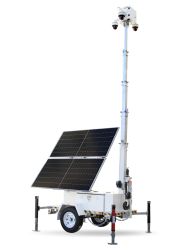
Solar camera trailers cover temporary gates and haul-road openings without trenching or grid power. Live 4G/5G video and the free Web System put every unit on one screen.
An airport fence works only while it stays closed. Construction opens it. Crews cut new gates, move fence lines and run trucks across the airfield. Each opening becomes a weak point in the security perimeter, often for months. Security camera trailers for airport construction watch those weak points without trenching or grid power. Contractors and airports now hire surveillance trailers to cover each opening while work runs. The Optraffic team builds solar camera trailers for hire fleets and integrators that serve these projects. This guide covers the rules, placement near runways, gate monitoring and hire planning.
Key Takeaways
Solar camera trailers: Cover temporary fence openings without trenching, cabling or grid power on the airfield.
4G/5G connectivity: Streams live video from each opening to the airport operations center or monitoring team.
License plate recognition: Records contractor vehicles at temporary gates as an analytics option.
Free Web System: Shows live video, power status and location for every unit across the project.
Winch-lifted camera mast: Raises cameras for long fence views and lowers on site without moving the trailer.
Why Airport Perimeter Security During Construction Breaks Down
Short answer: Construction creates new openings, new traffic and unattended night hours. The permanent system was not designed for any of them.
Airport perimeter security during construction fails in predictable places:
Fence openings: Crews remove fence panels for haul roads, utilities or new taxiways.
Temporary gates: New gates appear where no camera or sensor exists.
Contractor traffic: Dozens of trucks and workers cross the line every shift.
Night hours: Work stops, but the opening stays. No one stands at the gate.
Moving fence lines: Permanent cameras point at a fence that no longer exists.
Perimeter breaches remain a live concern. In May 2026, a trespasser climbed Denver International Airport’s 8-foot security fence and reached a runway. Police had responded to five other perimeter-fence breaches there since January 2023, AviationPros reported. Those breaches crossed an intact fence. A construction opening removes even that barrier.
Airport Construction Security Plan Rules by Market
Short answer: In the US, FAA AC 150/5370-2G requires contractors to keep the security fence intact and gates locked. The UK and Australia set rules through national aviation security law.
The FAA’s Advisory Circular 150/5370-2G covers operational safety on airports during construction. It sets out what an airport construction security plan must address:
Section 2.9.2.10.1: Temporary gates should securely close and lock. Security must continue when crews open the fence.
Section 1.4.3.7: Contractors must stop anyone entering the air operations area (AOA) from the site without authorization.
Section 2.4.2: The contractor’s safety plan must explain how it keeps the security fence intact.
Section 2.9.2.10.2: Airports under 49 CFR Part 1542 must meet access control and badging standards.
Market
Key framework
What it means for a construction opening
US
FAA AC 150/5370-2G; 49 CFR Part 1542 (TSA)
Keep the fence intact, lock temporary gates, control contractor access to the AOA
Protect airside and security zones under the airport’s approved security program
The details of each airport’s security program are not public. Ask the airport security manager which controls apply to each opening. Then size camera coverage to match.
What Cameras Can and Cannot Replace
Cameras do not replace a locked gate or a guard where the plan requires one. They watch the gate, record who passes and alert a monitoring team. Most plans use them as one layer, beside fencing, locks and escorts.
Covering Temporary Fence Openings at Airports
Short answer: Give every opening its own camera view, and make sure someone sees alerts in real time.
Temporary fence openings at airports need coverage from the first cut to the final repair. Follow these steps:
Map every planned opening with the airport and contractor before work starts.
Mark when each opening appears, moves and closes in the work schedule.
Place one camera trailer per opening, or one per pair if sight lines allow.
Aim cameras along the fence line and across the opening, not just at the gate.
Test live video and alerts with the monitoring team before the fence comes down.
Move units as fence lines shift, and record each new position.
Solar power suits these openings. Most sit far from power outlets, at the edge of the airfield. A solar trailer runs day and night without cables across haul roads.
Night Coverage at Fence Openings
Most work pauses overnight. The opening stays. Night footage must still show a person at the fence. Check three points:
Ambient light: Airfield lighting rarely reaches the outer fence. Integrated lighting is available as an option on some units.
Glare: Aircraft lights and apron floodlights can wash out images. Angle cameras away from them.
Visible presence: Strobe lights on some configurations show that someone is watching.
Camera Trailer Placement Near Runways
Short answer: Keep trailers out of the runway safety area and obstacle free zone. Report tall masts to the FAA through the airport.
Camera trailer placement near runways follows the same rules as other construction equipment. AC 150/5370-2G Section 2.9.1 bans equipment storage in the runway safety area (RSA) and obstacle free zone (OFZ). Section 2.9.2.2 adds that parked equipment must not block the control tower’s line of sight.
Height matters too. A raised camera mast can affect airspace near the runway. Section 2.13.5.1 requires notice for construction equipment that may affect navigable airspace under 14 CFR Part 77. The airport operator submits FAA Form 7460-1 for those cases. Plan this early, because the review takes time.
Some airports ask for lower masts during certain operations. A winch-lifted mast lowers on site without moving the trailer. Agree the mast height with the airport before deployment. Record it in the hire paperwork.
Airside Contractor Access Control at Temporary Gates
Short answer: Control who passes each temporary gate, and keep a video record of every entry.
Airside contractor access control depends on knowing who crossed the line, and when. AC 150/5370-2G limits contractors to approved haul roads and gates. Cameras help enforce that limit:
Live view: Monitoring staff see each vehicle and person at the gate.
Plate records: License plate recognition logs contractor vehicles as an analytics option.
Time-stamped footage: Investigators check entries against badge and escort records.
After-hours alerts: Analytics flag people or vehicles at a closed gate overnight.
Physical barriers still come first. A solar boom gate can control a temporary entry point without grid power. See how solar boom gates support perimeter security at remote access points.
Contractor Staging Yards
Staging yards hold fuel, tools and materials near the airfield. Thieves target them at night. A camera trailer at the yard gate covers theft and unescorted access at once. For theft patterns on building sites, read how mobile solar CCTV towers protect construction sites.
Monitoring Perimeter Intrusion Detection for Temporary Works
Short answer: Agree who watches the video before the fence opens. A camera nobody checks does not secure an opening.
Perimeter intrusion detection for temporary works needs a clear chain from alert to response:
4G/5G routers carry video from openings without wired networks. Live streaming uses far more data than event recording. Size data plans before the fence opens. See how much data a camera trailer uses.
One Screen for Every Opening
A large project may open ten or more points across the airfield. Monitoring staff need every unit in one view. They need live video, battery status and GPS position together. Some fleet platforms charge a monthly fee per device. On a two-year project, those fees add up. Compare software costs across the full project, not just the purchase price.
Footage retention also needs a plan. Airports often ask for footage after an incident or an audit. This guide to surveillance trailer footage retention explains how to set a period you can deliver.
Planning Security Camera Trailer Hire for Airport Construction Projects
Short answer: Plan units by work phase, not by project start date, because openings move as the project moves.
Hire fleets and integrators should plan security camera trailers for airport construction around the phasing plan. Use this checklist:
Get the phasing plan and list every opening per phase.
Count units per phase, plus one spare for faults or new openings.
Agree mast heights and locations with the airport before delivery.
Confirm escort and badging needs for crews who move units airside.
Check solar sizing for winter phases with short days.
Plan relocations in batches to cut escort and towing time.
Uptime decides whether the plan holds. A unit that goes dark leaves an opening unwatched. Proven solar sizing, sealed electronics and remote status checks keep units running between visits. Airport projects sit within wider security and surveillance planning for critical sites.
FAQ
Do airports require cameras at construction fence openings?
Rules differ by airport. In the US, FAA AC 150/5370-2G requires contractors to maintain security when they open the fence. Many airports use camera trailers to meet that duty alongside locks, guards and escorts.
Where can a camera trailer go near a runway?
Keep it outside the runway safety area and obstacle free zone. It must not block the control tower’s line of sight. Tall masts may need FAA Form 7460-1 review under 14 CFR Part 77.
How many camera trailers does an airport construction project need?
Count openings, not acres. Plan one unit per opening or temporary gate. Add one spare per phase for faults and new openings.
Who monitors airport construction camera trailers?
It depends on the project. The airport operations center, a contractor monitoring service or both may watch the feeds. Agree the response chain before the fence opens.
Can security camera trailers read contractor license plates?
Yes, with license plate recognition as an analytics option. Place the camera at the temporary gate, where vehicles slow and plates face the lens.
Conclusion
Security camera trailers for airport construction keep watch where the fence comes down. They cover openings, temporary gates and staging yards, phase by phase. Good results depend on clear rules, careful placement near runways and a defined monitoring chain. Optraffic supplies solar camera trailers through its FARADAY Surveillance Series, with 4G/5G connectivity and optional license plate recognition. Its free Web System shows live video, power status and location for every unit. Hire fleets and integrators can contact the Optraffic team to plan units for their next airport project.