


Mining and Remote-Site Lighting
Solar Light Towers for Remote Mining Operations
Fuel-free lighting with adjustable heads for pits, haul roads and stockpiles.

The right questions before renting a mining light tower cover seven areas: coverage, site entry, runtime, breakdown response, logistics, what the hire rate includes, and whether renting still suits the project’s length. The light tower market has shifted towards LED and solar units, so hire fleets now offer more choice than a few years ago. That makes a structured checklist more useful, not less.
The questions below follow the order in which risk shows up on a mine site. Performance comes first, then site acceptance, then everything that can stop the lights during a night shift.
Key Takeaways
- Size a mining light tower against the actual pit, haul road and stockpile area, and check it will not dazzle haul truck operators.
- Confirm the unit meets the mine’s own entry requirements before it leaves the hire yard.
- Match runtime to the full shift pattern and agree who handles refuelling or recharging.
- Agree breakdown response times and replacement-unit terms in writing before signing.
- Check whether delivery, relocation, servicing and fuel sit inside or outside the hire rate.
- On long mining projects, compare total hire cost with purchase and operating cost over the same period.
Will a Mining Light Tower Light the Work Area Without Glare?
Coverage is the first question because an under-lit area creates both a safety risk and a compliance risk. Ask the hire company how many towers the site needs, and how they calculated that number.
How Many Towers Does the Site Actually Need?
Map every area that operates after dark, then ask for a tower count against that map:
- Active pit floor and working benches
- Haul roads and intersections
- Loading and dumping points
- Stockpiles, crushers and conveyor transfer points
- Walkways, stairways and switch panels
A single “coverage area” figure rarely matches a mine layout. This guide explains how much area a lighting tower will cover and why layout matters as much as output.
Will the Light Reach the Task Without Dazzling Haul Truck Operators?
Enough light is only half the answer. A tower aimed at a loading point can dazzle the operators of approaching haul trucks. Ask whether the light heads rotate and tilt, and whether the hire company will check aiming at setup. For wider techniques, see this guide to reducing glare from LED light towers.
Will the Layout Meet the Site’s Safety Requirements?
Ask the hire company to show how their layout meets the site’s safety requirements, area by area. In the US, MSHA standard 30 CFR 56.17001 requires illumination sufficient for safe working conditions on surface structures, paths, walkways, stairways, switch panels, loading and dumping sites, and work areas. Surface coal mines follow an equivalent rule in 30 CFR 77.207. MSHA’s illumination toolbox guidance also covers weatherproof lamp sockets and guarding for lights that present a shock or burn hazard. Australian operations follow state mining safety legislation and each site’s own standards.
The MSHA standard sets no single lux figure. That places the judgement on site conditions, which is why a documented layout matters.
Will the Mining Light Tower Be Accepted on the Mine Site?
“Mine spec” describes equipment set up to meet a mine’s own entry requirements. These requirements vary from site to site, so no hire company can assume a standard build will pass. Ask for the site’s equipment checklist before the tower is dispatched, not at the gate.
Questions to Ask About Site Entry
- Has the unit been prepared against this site’s equipment checklist?
- Can the hire company supply current inspection and service records?
- Who completes the pre-start inspection on arrival?
- What happens if the unit fails site entry?
Will It Handle Dust, Water, Wind and Uneven Ground?
Mine sites combine fine dust, heavy rain, vibration and exposed ground. Ask about each condition directly:
- Dust and water: Ask for the IP rating of the light heads and control cabinet, and check that seals and connectors are intact.
- Wind: Open pits and benches are exposed. Confirm the unit’s operating wind limit with the supplier and agree who lowers the mast.
- Uneven ground: Ask how the stabilisers level the unit on benches and haul road shoulders. This guide covers common levelling jack mistakes.
- Temperature: Check the unit’s stated operating temperature range against the site’s seasonal extremes.
Will a Mining Light Tower Run Through the Entire Shift?
Runtime decides how often someone must drive to the tower during a shift. On a remote mine, every service trip adds cost, vehicle movement and exposure. Ask for runtime at the brightness the site will actually use, not at the lowest setting.
Who Handles Refuelling or Recharging, and How Often?
For fuel-powered units, ask how often each tower needs refuelling at the planned output. Then ask who carries the fuel, who records it and who pays for it. Fuel haulage on a remote site is a real operating cost, and spill management adds another task.
It is also worth asking whether the hire fleet offers solar units. They remove fuel haulage altogether, but their runtime depends on battery capacity and the previous day’s charging.
How Does a Solar Unit Perform After Overcast Days?
Ask for runtime after several overcast days and in the shortest days of the year, not only in summer. If a solar unit cuts out early, this guide explains why a solar light tower may shut off after a few hours.
What Happens If a Mining Light Tower Fails Mid-Shift?
Breakdown response matters more than most specifications. A failed tower during a night shift can stop work in that area and can leave it without sufficient illumination under MSHA standards. Pit & Quarry has reported an MSHA citation issued after two of twelve overhead lights at a loading area were out, based on the inspector’s observation rather than a light meter reading.
Questions to Ask About Breakdowns
- What is the guaranteed response time to a remote site, day and night?
- Will a replacement unit be dispatched, and how quickly?
- Are common spare parts, such as lamps, fuses and controllers, held locally?
- Who performs routine servicing during the hire, and how often?
- Is a technical contact available outside business hours?
Get the answers in writing. Verbal assurances do not help at 2 a.m. when a pit area goes dark.
Can the Towers Be Monitored Remotely?
Remote monitoring can flag low battery, fuel or fault conditions before the lights fail. Ask whether the hire fleet’s units support it, what it reports, and who watches the alerts. Routine mast and winch care also prevents breakdowns; this telescopic mast maintenance guide covers the main checks.
Who Handles Mining Light Tower Delivery, Setup and Relocation?
Mining work areas move as the pit face advances. A light tower that lights today’s bench may sit in the wrong place next week. Clarify every movement before signing.
- Who delivers to site, and is remote-location transport priced separately?
- Who sets up the unit and completes the first pre-start check?
- Who relocates the tower as work areas change, and how much notice is needed?
- Can the unit be towed on site, or does it need a vehicle with a specific hitch?
- Who collects the unit at the end of the hire, and in what condition must it be?
For how light towers are used across different mining and construction tasks, see this overview of top uses for mobile lighting towers.
What Does the Mining Light Tower Hire Rate Actually Include?
Hidden costs usually sit outside the headline hire rate. Ask each supplier for a written breakdown, so quotes can be compared line by line.
| Cost item | Question to ask |
|---|---|
| Delivery and collection | Is remote-site transport included or quoted separately? |
| Fuel | Is fuel supplied, and at what rate? |
| Servicing | Are scheduled services included during the hire? |
| Repairs | Who pays for repairs caused by site conditions? |
| Relocation | Is on-site moving charged per move? |
| Minimum period | What is the minimum hire term? |
| Extensions | What are the terms if the project runs late? |
Mining projects often run beyond their planned schedule. Agree extension terms at the start, when there is still room to negotiate.
Does Renting a Mining Light Tower Still Make Sense for the Project?
For short or uncertain projects, renting reduces the upfront commitment. For long-term projects, compare total hire cost with purchase and operating cost over the same period. That comparison depends on the hire rate, transport, fuel, servicing, utilisation, downtime, purchase price and resale value. Used light towers are another option, although condition and service history matter more than price.
This guide on whether to rent or buy portable light towers walks through the full comparison.
Where Solar Light Towers Fit on Remote Mine Sites
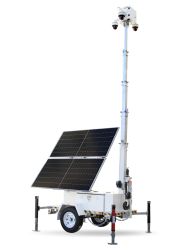
Several of the questions above point towards solar on remote sites. Solar light towers need no fuel haulage or refuelling, run silently and produce no exhaust. That removes a service trip from every shift and a fuel-handling task from the site. The trade-off is battery planning for overcast periods and short winter days.
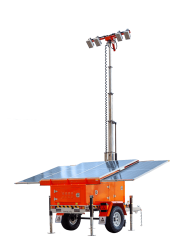
Optraffic manufactures solar lighting towers for mining and remote operations. The Super Solar Light Tower is built for wide open areas such as pits and stockpiles, and its adjustable light heads help keep glare off haul roads. More detail on the sector is available on the Energy & Mining industry page.
FAQ
What documents should a mine request before accepting a rented light tower?
Request current inspection and service records, the unit’s specifications, and confirmation that it has been prepared against the site’s equipment checklist.
What should be included in a mining light tower rental agreement?
The agreement should set out response times, replacement-unit terms, servicing, fuel, relocation, minimum hire period and extension terms.
Who is responsible for relocating a rented light tower on site?
It depends on the agreement. Some hire companies relocate units, while others leave it to site crews. Agree the notice period and any per-move charge in advance.
What should a mine do if a rented light tower fails during a night shift?
Make the area safe, contact the hire company’s after-hours line, and follow the agreed replacement process. Record the failure and the response time.
How should mining companies compare light tower rental quotes?
Compare total cost over the full project, not the headline rate. Include transport, fuel, servicing, relocation, repairs and extension terms in the comparison.
Conclusion
Renting a mining light tower goes well when the questions cover risk, not just specifications. Coverage and site acceptance decide whether the tower can work on site at all. Runtime, breakdown response and logistics decide whether it keeps working through every night shift. A line-by-line hire rate breakdown and an honest rent-versus-buy comparison decide what it really costs.
On remote sites, solar light towers answer several of these questions at once by removing fuel haulage, exhaust and generator noise. Asking these questions before signing turns a hire agreement into a lighting plan the site can rely on.


What to Check Before Buying 500 Portable Changeable Message Signs: 7 Batch Delivery Checks for Rental Fleets
What to check before buying 500 portable changeable message signs: one build across batches, spares, DDP delivery and per-shipment tests.
How to Plan Message Signs for Weekend Highway Closures: Lessons from Atlanta’s I-285 Westside Closures
How to plan message signs for weekend highway closures: 5 steps, a 48-hour checklist and fleet control lessons from Atlanta’s I-285 closures.
Does EN 12966 Apply to LED Modules? What the Standard Covers and What a Datasheet Cannot Prove
Does EN 12966 apply to LED modules? See what the standard covers, what a module datasheet proves and 5 questions to ask a supplier.
Build vs Buy a Vehicle-Mounted Message Sign: What Fleets and Integrators Should Check
Build vs buy a vehicle-mounted message sign? Compare compliance, controls, mounting and support before you choose.
Work Zone Speed Feedback Trailer Placement: Where to Set It Up and When to Move It
Work zone speed feedback trailer placement explained: where DOT rules and research say to set the trailer, when to move it and what fleets must log.
WZDx Device Feed Requirements: What Work Zone Contractors and Hire Fleets Must Supply
WZDx device feed requirements explained for contractors and hire fleets: what the feed holds, what DOT specs ask for and how to prepare equipment.