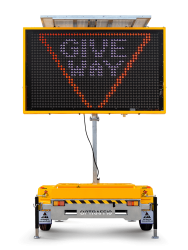
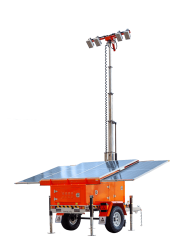
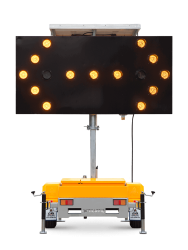
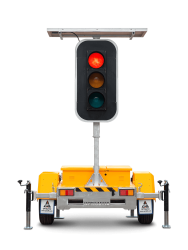
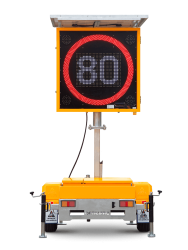
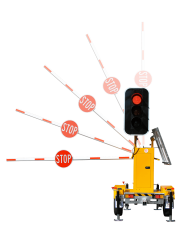
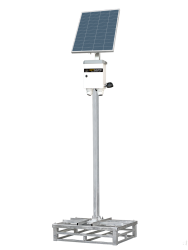



What are the portable VMS requirements in Western Australia? Main Roads WA sets them in Section 7 of its Guidelines for Variable Message Signs. Its works-on-roads code of practice adds a second layer. Those rules cover colours, character heights, placement, message approval and remote access. This guide turns them into a checklist for WA hire fleets and traffic management companies. It also shows where WA buyers source an Optraffic message board trailer locally, through OPTraffic WA in Maddington.
Key Takeaways
- WA distributor stock: Supplies VMS trailers from Maddington, Perth, in about one to two weeks.
- Remote and local control: Lets supervisors change messages over 4G, with an optional handheld tablet for on-site control.
- Bundled fleet software: Shows location, battery state and the live message for every WA unit, with no subscription fee.
- Multi-colour LED faces: Offer five-colour and full-colour options for pictograms beyond amber-only boards.
- Speed radar option: Adds speed feedback messages on work sites where drivers exceed the limit.
What Do the Main Roads WA Portable VMS Guidelines Require?
The Main Roads WA portable VMS guidelines sit in Section 7 of the June 2025 Guidelines for Variable Message Signs. Most of the document covers fixed freeway signs. Section 7 applies to portable signs at roadworks and events.
| Requirement | Main Roads position | What it means for the fleet |
|---|---|---|
| Device specification | pVMS must meet relevant parts of Main Roads Specification 707 | Ask the supplier which clauses the unit addresses |
| Work site rules | Read with the Traffic Management for Works on Roads Code of Practice | Approvals follow the traffic management plan |
| Approved messages | AS 1742.3 signs and the Appendix C library are pre-approved | New wording needs Main Roads approval first |
| Commercial content | Not permitted on work site pVMS | Keep sponsor or venue content off roadwork signs |
| Placement | About 300 m in advance of the work site | Crews need a stable, level position at that point |
Message Priorities on a WA Work Site
Main Roads ranks pVMS messages in six priorities. Incidents come first. Current roadworks follow, then traffic conditions and travel times. Planned works, speed feedback and worksite safety messages sit lower. During work hours, the default display is the current roadwork message.
Commercial Content Stays Off Roadwork Signs
The guidelines bar commercial or advertising messages on work site pVMS. Event organisers can still use full-colour screens for crowd and venue information away from traffic control. The guide to event traffic management equipment for Australian venues covers that split for WA and NSW.
pVMS Character Height and Colours: What the Sign Face Must Show
pVMS character height and colours decide whether a sign can carry the message Main Roads expects. Check both before choosing a face size.
- Colours: The multifunction pVMS in the guidelines shows yellow, red, green and white graphics.
- Layout: Up to four lines per frame and 14 characters per line.
- Priority 1 and 2 messages: Generally 320 mm characters, about 10 per line, readable from 200 m.
- Priority 3 and 6 messages: 200 mm characters, up to 14 per line, readable from 100 m.
- Conspicuity lights: Flashing lights at four corners, used only for Priority 1 messages.
The practical test is simple. The face must hold a three-line incident message at 320 mm. A face too small for that fails the most important job in the guidelines.
Colour carries its own approval questions across states. The guide to portable LED message sign colour rules in Australia covers how AS 4852.2 treats RGB boards.
Why a Remote Access to pVMS Procedure Matters on WA State Roads
A remote access to pVMS procedure is mandatory for some WA projects. Main Roads requires one for state-controlled metropolitan road projects running longer than three weeks. The procedure is developed with the Road Network Operations Centre (RNOC).
Section 7.9 of the guidelines sets the operating model:
- Remote and local control. The pVMS should generally support both at a construction site.
- RNOC takeover. During a major incident, RNOC may post messages or take full control temporarily.
- Authorised operators. Each site needs a designated operator and a backup at all times.
- Message records. Implementers must log every message change with date and time, unless the control system logs it automatically.
These rules turn software into a compliance question. Ask any supplier four things. Can the unit be controlled both remotely and on site? Does the system record message changes automatically? Can your operator list be restricted to approved staff? How could RNOC reach the sign during an incident?
Setting this up before units arrive saves a scramble on day one. The bulk VMS trailer purchase process guide covers software onboarding as a pre-delivery step.
How the 2026 Code of Practice Update Affects VMS Planning
The Traffic Management for Works on Roads Code of Practice adds Main Roads rules to AS 1742.3 and AGTTM. It changes often. Main Roads published proposed updates in January 2026 for a March 2026 edition. The stated aim includes better consultation before traffic management plan submission, to cut revisions and approval times.
Two points follow for VMS planning:
- Plan approvals drive sign use. Section 7.2 of the VMS guidelines ties pVMS use and detours to the approved traffic management plan.
- Speed feedback has a place. The May 2025 Code amendment record notes Main Roads moved to mandate speed feedback signs from early 2023. The VMS guidelines also allow “Your Speed” messages when a pVMS connects to a speed measuring device.
Councils and contractors weighing radar-equipped units should read what procurement teams need before a VMS radar tender closes.
Portable VMS for Remote WA Sites: Power, Heat and Distance
Portable VMS for remote WA sites face three problems that metropolitan jobs rarely meet.
| Challenge | Why it bites in WA | What to check |
|---|---|---|
| Power autonomy | Signs run unattended for long periods on regional roads | Solar rating and battery capacity against the full load list |
| Heat | Summer cabinet temperatures climb far above air temperature | Rated operating range and cabinet ventilation |
| Mobile coverage | 4G drops out on long regional corridors | On-site control when remote access fails |
| Distance from service | A failed part can mean days of travel | Spare parts held in WA, not interstate |
Mine access roads and haul routes add their own site rules. The guide to portable VMS for mining haul roads covers that setting. Broader work zone planning sits in the traffic safety industry guide.
VMS Trailer Supply in Western Australia: Stock, Service and Custom Builds
VMS trailer supply in Western Australia runs through OPTraffic WA, Optraffic’s Western Australian distributor, in Maddington, Perth. It distributes Optraffic VMS trailers across the state and holds local stock and spare parts. Its Perth workshop combines fabrication, auto-electrical and electronics work.
| Route | Typical lead time | Best fit |
|---|---|---|
| OPTraffic WA local stock | About 1–2 weeks | Urgent jobs, incident response, first project stage |
| Factory custom build through OPTraffic WA | About 6 weeks, sea freight included | Locked tender specs, colour or radar options, fleet expansion |
WA stock removes interstate freight from the timeline. The full comparison sits in how long it takes to get a VMS trailer in Australia.
Optraffic team tests every VMS trailer in-house before it leaves the factory. The Optraffic Web System ships with each unit at no subscription fee. It shows location, battery state and the live message for the whole fleet. An open API connects units to a fleet’s own dispatch platform. An optional handheld tablet gives crews on-site control where 4G coverage fails.
For the national picture, start with the buyer’s guide to what to check before buying a VMS trailer in Australia. Buyers in WA can contact OPTraffic WA in Maddington directly.
FAQ
Which document sets portable VMS rules in Western Australia?
Section 7 of the Main Roads Guidelines for Variable Message Signs (June 2025) sets them. Read it with the Traffic Management for Works on Roads Code of Practice and AS 1742.3.
What character height does a WA portable VMS need?
Incident and roadwork messages generally need 320 mm characters, readable from 200 m. Lower-priority messages use 200 mm. Check pVMS character height and colours before choosing a face size.
When does a WA project need a remote access to pVMS procedure?
State-controlled metropolitan road projects longer than three weeks need one, developed with RNOC. The remote access to pVMS procedure covers operators, control and incident takeover.
Can a WA roadwork VMS show advertising?
No. The Main Roads WA portable VMS guidelines bar commercial or advertising messages on work site pVMS.
Where can I buy a VMS trailer in Perth?
OPTraffic WA, Optraffic’s Western Australian distributor, supplies VMS trailers from Maddington, Perth. Local stock arrives in about one to two weeks, which simplifies VMS trailer supply in Western Australia.
Conclusion
WA runs its own layer of portable VMS rules on top of the national standards. Main Roads sets the sign face, message priorities, placement and remote access requirements. Buyers who check those rules first avoid signs that cannot carry an approved incident message. Optraffic supplies VMS trailers in Western Australia through OPTraffic WA in Maddington, with local stock and parts. The Optraffic Web System comes included at no subscription fee. WA buyers can contact OPTraffic WA for stock, or send Optraffic team a specification for a custom build.



Lighting First or Recording First? CCTV-Ready Light Tower vs Camera Trailer for Integrators and Hire Fleets
CCTV-ready light tower vs camera trailer: compare whose camera runs, which load gets night power, and how hire fleets use one unit for two jobs.
VMS Trailers for Renewable Energy Zone Construction: Oversize Deliveries, Detours and Community Notice
How VMS trailers support renewable energy zone construction: oversize delivery warnings, detours, night moves and community notice on REZ routes.
Imported vs Australian-Built VMS Trailers: Where Each Has the Edge
Imported vs Australian-built VMS trailers: where each has a real advantage, what compliance requires of both, and how to choose for your fleet.
What Should a VMS Trailer Quote Include in Australia? Line Items to Compare Before You Sign
What should a VMS trailer quote include? Ten line items to compare, from delivery and registration to software fees, warranty and local spare parts.
When to Order VMS Trailers for Bushfire Season: A Region-by-Region Guide for Australian Hire Fleets
When to order VMS trailers for bushfire season: a region-by-region guide for hire fleets, with order-by months, stock top-ups and pre-season checks.
What Makes a VMS Trailer Mine-Spec? Site Entry Requirements for Western Australian Mine Sites
Mine-spec VMS trailer requirements under WA’s 2026 mine traffic code: visibility, ID, isolation, documents and how to order a unit that passes site entry.