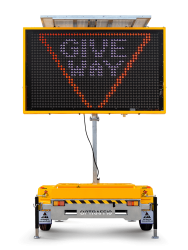
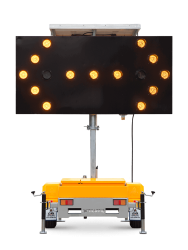
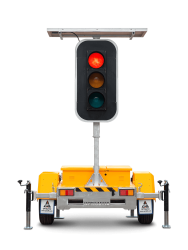
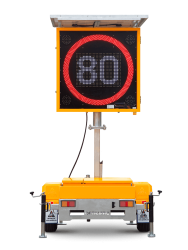
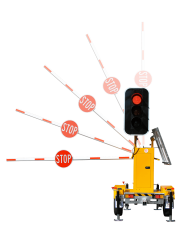
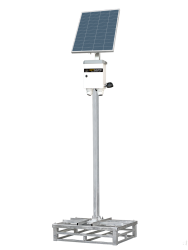



Hire companies running a fleet of portable traffic signals spend real money every time a technician drives out to check or top up a battery. Optraffic’s team has heard this cost come up directly in inquiries from safety equipment providers managing multi-unit deployments — one recent buyer specified maintenance-free AGM batteries as a hard requirement before placing an order. That preference reflects a real operating cost: every site visit for battery service is a truck roll, a technician’s time, and in many cases a worker standing near live traffic. See Optraffic’s portable traffic signal range for models built with sealed AGM battery systems.
Key Takeaways
- AGM batteries: Run sealed and spill-proof, removing the need for water top-ups in the field.
- Fewer site visits: Reduce how often crews return to a deployed unit for routine battery checks.
- Solar-powered portable traffic signals: Recharge AGM batteries automatically, extending intervals between depot visits.
- Sealed battery design: Lowers the chance of a mid-project failure that forces an unplanned callout.
- Optraffic Web System: Flags battery status remotely, so crews visit only when a unit actually needs attention.
What Makes AGM Batteries Maintenance-Free
An AGM (Absorbed Glass Mat) battery holds its electrolyte in a fiberglass mat instead of free-flowing liquid. This sealed design removes the routine task that flooded lead-acid batteries require: checking and topping up water levels.
A flooded battery in a portable traffic signal typically needs:
- Periodic water level checks
- Manual top-ups with distilled water
- Terminal cleaning to prevent corrosion from electrolyte residue
A sealed AGM battery in the same unit needs:
- A periodic voltage or charge-status check
- No water top-ups
- No electrolyte-related terminal corrosion
This difference matters most on a portable traffic signal deployed for weeks at a remote site, where a scheduled top-up visit isn’t a five-minute task — it’s a dedicated trip.
AGM vs. Flooded Batteries for Traffic Signal Fleets
| Factor | Flooded lead-acid | AGM (sealed) |
|---|---|---|
| Water top-ups | Required periodically | Not required |
| Spill risk during transport | Present | Sealed, minimal risk |
| Field maintenance visits | More frequent | Reduced |
| Vibration/impact tolerance | Lower | Higher, due to mat construction |
| Typical use case | Fixed, easily accessed sites | Remote or rotating deployment sites |
Hire companies running units across multiple job sites benefit most from the reduced maintenance visit column. A maintenance-free battery setup lets a fleet manager schedule fewer routine trips, and reserve site visits for units that actually flag a problem. This matters even more once a deployment scales past a single unit — see this guide on sizing a portable traffic signal setup for a complex intersection for how unit count affects total fleet maintenance load.
How Solar Charging Extends the Interval Between Visits
A solar-powered portable traffic signal with an AGM battery recharges automatically during daylight hours, which extends the time between any depot or site visit even further. The battery only needs attention when charge status drops outside expected range, not on a fixed calendar schedule.
Optraffic’s Web System reports battery status remotely, so a fleet manager can check charge levels across every deployed unit without visiting each site. This turns battery maintenance from a scheduled routine into a status-triggered task — crews go out when a unit needs it, not on a fixed rotation regardless of actual condition.
Fewer Site Visits Also Means Less Roadside Exposure
Reducing routine battery visits carries a safety benefit alongside the cost benefit. OSHA’s guidance on highway work zones notes that workers face ongoing risk from vehicles and equipment moving through active roadway sites. Every unnecessary trip to a deployed traffic signal near live traffic adds exposure that a maintenance-free battery design avoids.
What to Check Before Choosing AGM for a Fleet
- Confirm battery capacity matches runtime needs. AGM batteries come in various Ah ratings — match capacity to the unit’s expected daily cycle and any nighttime operation.
- Check charge controller compatibility. Solar charge controllers should be rated for AGM charging profiles to avoid under- or over-charging.
- Review manufacturer runtime specs for winter conditions. Cold weather reduces usable battery capacity, which affects how long a unit runs between sunny days.
- Confirm remote monitoring coverage. Not every unit reports battery status remotely — verify this before assuming a visit-free maintenance cycle. If a unit does show a fault, see this portable traffic signal troubleshooting guide before dispatching a technician.
FAQ
Do AGM batteries need any maintenance at all?
AGM batteries need periodic voltage or charge-status checks, but not water top-ups. This is the main difference from flooded lead-acid batteries in a portable traffic signal.
How much does an AGM battery reduce site visits compared to a flooded battery?
The exact reduction depends on deployment length and site access, but removing water top-up visits typically cuts the routine maintenance schedule to status-triggered checks only, rather than a fixed calendar rotation.
Can a fleet manager check battery status without visiting the site?
Yes, with a connected portable traffic signal. Optraffic’s Web System reports battery charge status remotely, so crews can confirm condition before deciding whether a visit is needed.
Are AGM batteries suitable for solar-powered portable traffic signals?
Yes. AGM batteries pair well with solar charging as long as the charge controller is rated for AGM charging profiles, which most solar portable traffic signal trailers include.
Conclusion
Choosing a maintenance-free battery for a portable traffic signal fleet comes down to how the equipment gets deployed. A single unit checked daily on an accessible site may not need AGM’s advantages. A fleet spread across multiple remote or long-duration sites benefits directly — fewer water top-up visits, fewer unplanned callouts, and fewer technician trips near live traffic.
For hire companies and system integrators managing portable traffic signal fleets across the US, UK, and Australia, this translates into a lower total cost of ownership per unit over a project’s lifespan, not just a lower purchase price. Pairing a maintenance-free AGM battery with solar charging and remote status monitoring through the Optraffic Web System shifts battery care from a fixed calendar task to a status-triggered one — crews visit a unit because it needs attention, not because a schedule says so.
Before specifying batteries for a new deployment, match capacity and charge controller compatibility to the site’s actual conditions, and confirm which units report status remotely. Getting these details right upfront reduces the maintenance burden for the full life of the fleet, not just the first few weeks after setup.
For help specifying the right battery configuration for a multi-site fleet, Optraffic’s team can review deployment plans and suggest a setup. Buyers weighing whether to own this equipment outright can also see the renting vs. buying portable traffic signals guide for the full cost comparison.



Lighting First or Recording First? CCTV-Ready Light Tower vs Camera Trailer for Integrators and Hire Fleets
CCTV-ready light tower vs camera trailer: compare whose camera runs, which load gets night power, and how hire fleets use one unit for two jobs.
VMS Trailers for Renewable Energy Zone Construction: Oversize Deliveries, Detours and Community Notice
How VMS trailers support renewable energy zone construction: oversize delivery warnings, detours, night moves and community notice on REZ routes.
Imported vs Australian-Built VMS Trailers: Where Each Has the Edge
Imported vs Australian-built VMS trailers: where each has a real advantage, what compliance requires of both, and how to choose for your fleet.
What Should a VMS Trailer Quote Include in Australia? Line Items to Compare Before You Sign
What should a VMS trailer quote include? Ten line items to compare, from delivery and registration to software fees, warranty and local spare parts.
When to Order VMS Trailers for Bushfire Season: A Region-by-Region Guide for Australian Hire Fleets
When to order VMS trailers for bushfire season: a region-by-region guide for hire fleets, with order-by months, stock top-ups and pre-season checks.
What Makes a VMS Trailer Mine-Spec? Site Entry Requirements for Western Australian Mine Sites
Mine-spec VMS trailer requirements under WA’s 2026 mine traffic code: visibility, ID, isolation, documents and how to order a unit that passes site entry.