


Traffic surveillance cameras play a crucial role in modern traffic management. These devices enhance road safety by monitoring and recording traffic activities. Effective traffic management ensures smoother traffic flow and reduces accidents. Traffic surveillance cameras serve as a deterrent to dangerous driving behaviors, such as speeding and running red lights. The purpose of this blog is to explore the key advantages of traffic surveillance cameras.
Introduction of Traffic Surveillance Cameras
Traffic surveillance cameras have become indispensable tools in modern traffic management. These devices monitor and record traffic activities, providing valuable data for various applications. Pelco Traffic Monitoring Cameras offer advanced features and high-definition video, enhancing situational awareness. The integration of AI-powered analytics allows for actionable insights and proactive monitoring.
TrafficCamera by DataFromSky provides advanced traffic statistics, including category counts and gap times. This tool supports traffic control and offers an open API for integration with third-party systems. The ability to collect and analyze data in real-time makes these cameras essential for effective traffic management.
WCCTV’s 4G Multi-Sensor Dome Camera is designed for surveillance at highway intersections. This camera features an 8 MP multi-sensor, providing four different video streams from a single device. Such capabilities ensure comprehensive coverage and detailed monitoring of traffic conditions.
Adaptive Recognition Traffic Monitoring Cameras serve a wide range of functionalities, from small streets to highways. These cameras are used for safety reasons, tolling, and maintaining smooth passenger flow. Continuous collection of real-time and accurate traffic data helps optimize transportation systems.
Traffic surveillance cameras contribute significantly to managing traffic flow, ensuring safety, and reducing congestion. These devices provide more than mere surveillance; they offer substantial advantages in optimizing transportation systems.
Enhancing Road Safety with Traffic Surveillance Cameras
Accident Prevention through Traffic Surveillance Cameras
Monitoring High-Risk Areas
Deploying intelligent traffic monitoring & real-time alert systems at high-risk intersections is increasingly proving its value. These systems not only continuously capture video of critical junctions and accident-prone zones, but actively detect violations such as red-light running or speeding and issue alerts or capture evidence immediately.
Recent data reinforce their effectiveness: for example, intersections in cities with red-light safety cameras experienced a ~21% reduction in fatal red-light-running crashes, and an overall ~14% decrease in fatal crashes at signalized intersections.
In another instance, the New York City DOT reported that at camera-equipped intersections the average daily red-light violation count dropped from ~30.8 in 1994 to ~8.18 in 2023 — a 73% reduction.
These results show that modern traffic-surveillance deployments are not simply passive recorders. Through smart detection + real-time enforcement, they serve as behavior-shaping tools, significantly reducing dangerous infractions and helping make intersections safer.
Immediate Response to Incidents
Traffic surveillance cameras enable immediate response to incidents. Authorities receive real-time alerts when accidents occur. Quick intervention minimizes the severity of accidents and prevents secondary collisions. Enhanced emergency response saves lives and reduces traffic disruptions. Data collected from cameras assists in post-incident analysis. This information helps improve future traffic management strategies.
Pedestrian Safety and Traffic Surveillance Cameras
Crosswalk Surveillance
Traffic surveillance cameras enhance pedestrian safety at crosswalks. Cameras monitor pedestrian crossings and ensure vehicles yield appropriately. Footage from cameras provides evidence for enforcing pedestrian right-of-way laws. The presence of cameras encourages drivers to exercise caution near crosswalks. Improved compliance with traffic laws reduces pedestrian accidents. Enhanced crosswalk safety promotes a safer environment for all road users.
School Zone Monitoring
Traffic surveillance cameras play a crucial role in school zone monitoring. Cameras ensure that drivers adhere to speed limits in school zones. The presence of cameras deters speeding and reckless driving near schools. Enhanced monitoring protects children and reduces the risk of accidents. Authorities use camera footage to enforce traffic laws and penalize violators. Improved safety in school zones fosters a secure environment for students.
Traffic Management Using Traffic Surveillance Cameras

Real-Time Traffic Monitoring with Traffic Surveillance Cameras
Congestion Management
Traffic surveillance cameras play a pivotal role in managing congestion. These devices capture real-time data on traffic flow and bottlenecks. Authorities use this information to identify and address problem areas. Traffic cameras help reduce congestion by monitoring street conditions and traffic behavior. Cities with traffic cameras experience fewer traffic violations, leading to smoother traffic flow. The ability to monitor and manage congestion in real-time enhances overall road efficiency.
Dynamic Traffic Signal Control
Deploying intelligent traffic surveillance cameras at intersections doesn’t stop at passive video capture. These systems feed real-time data into a coordinated traffic control ecosystem—linking cameras, signal controllers (via NTCIP / SCATS / SCOOT style architectures), SCADA platforms, and traffic management centres. The cameras continuously monitor vehicle movement, queue lengths and density; this live feed is analysed and used by adaptive controllers to adjust signal phases, green times, cycle lengths and offsets dynamically. In short: the system is no longer “monitor and wait” but “sense → analyse → act” in real time.
For example, a 2023 deployment in Los Angeles integrated 40,000 detectors (including cameras) across some 4,500 intersections into its automated traffic surveillance and control system—yielding about a 10% reduction in travel time.
Another study of adaptive signal control technology across eight corridors in Florida reported a 9.36% average reduction in travel time, and decreases in major‐street queue lengths by ~15.6% after deployment.
These real-world examples show how linking video-based surveillance, signal controllers and traffic management platforms enables real-time adaptive control, which in turn improves flow, reduces delays and enhances overall efficiency at signalised intersections.
Data Collection and Analysis from Traffic Surveillance Cameras
Traffic Flow Optimization
Traffic surveillance cameras collect vast amounts of data on traffic patterns. Authorities analyze this data to optimize traffic flow. Insights from traffic cameras help identify peak travel times and high-traffic areas. This information guides the implementation of measures to improve traffic efficiency. Traffic flow optimization reduces delays and enhances road safety. Continuous data collection ensures that traffic management strategies remain effective.
Infrastructure Planning
Infrastructure planning benefits significantly from data collected by traffic surveillance cameras. Detailed traffic data informs decisions on road expansions and improvements. Authorities use this data to plan new infrastructure projects and upgrade existing ones. Traffic cameras provide insights into traffic volumes and patterns, guiding infrastructure investments. Improved infrastructure planning leads to better road networks and enhanced transportation systems. The use of traffic surveillance cameras ensures that infrastructure development meets current and future needs.
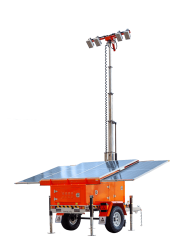
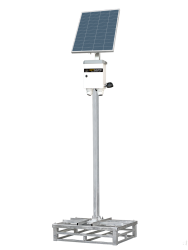
Besides, nowadays, there are many traffic infrastructures now that are equipped with surveillance cameras, like the solar light plant, ensuring road safety.

Law Enforcement and Traffic Surveillance Cameras
Traffic Law Enforcement via Traffic Surveillance Cameras
Speed Limit Compliance
Traffic surveillance cameras ensure speed limit compliance. These devices monitor vehicle speeds on various roadways. Authorities use this data to identify and penalize speeding drivers. The presence of cameras acts as a deterrent to speeding. Studies show that areas with speed cameras experience fewer speeding violations. Reduced speeding contributes to lower accident rates and enhanced road safety.
Red Light Violations
Traffic surveillance cameras also address red light violations. These devices capture images of vehicles running red lights at intersections. Authorities review the footage to issue fines to violators. The fear of penalties encourages drivers to obey traffic signals. Research indicates a significant drop in red light running incidents where cameras are installed. This reduction leads to fewer intersection-related accidents and improved traffic order.
Crime Prevention with Traffic Surveillance Cameras
Identifying Stolen Vehicles
Traffic surveillance cameras play a crucial role in identifying stolen vehicles. These cameras continuously record license plates and vehicle characteristics. Law enforcement agencies use this data to track and recover stolen cars. Advanced analytics can match captured images with databases of stolen vehicles. This capability enhances the efficiency of vehicle recovery operations. The use of surveillance cameras has led to an increase in the recovery rate of stolen vehicles.
Monitoring Suspicious Activities
Traffic surveillance cameras assist in monitoring suspicious activities. These devices provide continuous surveillance of public roads and intersections. Authorities analyze footage to detect unusual behavior or potential criminal activities. Real-time monitoring allows for quick intervention by law enforcement. The presence of cameras deters criminal activities and enhances public safety. Improved surveillance contributes to a safer environment for all road users.
Other Benefits of Smart Traffic Surveillance
Accident Analysis and Scene Documentation
Intelligent traffic-surveillance cameras play a crucial role in post-incident investigation. By continuously recording intersections and high-risk corridors, these cameras capture unbiased, time-stamped footage of every event. When accidents occur, video data assists law-enforcement agencies and insurance investigators in reconstructing collision dynamics—clarifying fault, verifying eyewitness statements, and expediting claims.
In recent studies, cities that implemented AI-enabled video analysis reported up to 35% faster investigation resolution due to immediate access to digital evidence.
Coordinated Emergency Response
Beyond documentation, traffic cameras are now integral to emergency-response networks. Integrated with SCADA systems and intelligent traffic-management platforms, camera feeds instantly detect crashes, fires, or stalled vehicles and transmit alerts to emergency-service dispatch centers. In Seoul’s 2023 Smart Mobility project, such integration cut emergency-response times by 18%, allowing faster ambulance and fire-truck routing.
Promoting Safe and Law-Abiding Driving Behavior
Visible surveillance infrastructure naturally deters reckless behavior. When drivers know intersections are equipped with real-time monitoring and automatic violation detection, they tend to comply with traffic laws more consistently. A 2024 study by the U.S. Federal Highway Administration (FHWA) found a 27% decline in red-light running after the deployment of AI-enabled enforcement cameras across 200 intersections.
Building Public Confidence and Transparency
Modern surveillance systems are increasingly designed with transparency in mind. Cities share anonymized traffic-flow data, publish safety dashboards, and ensure footage is stored securely under data-protection regulations. This open approach fosters community trust—citizens see that the goal is safer, smoother roads rather than punitive surveillance. According to the Urban Mobility Report 2023, public approval for smart traffic monitoring rose by over 40% when cities demonstrated clear safety and efficiency outcomes.
Environmental Benefits of Traffic Surveillance Cameras
Reducing Emissions & Improving Traffic Flow
By deploying intelligent traffic-surveillance cameras that feed live vehicle movement and queue data into adaptive traffic-signal systems, cities gain much more than simply better flow—they gain measurable environmental benefit. These systems monitor and manage traffic patterns in real time, enabling longer green phases or smoother offsets, reducing “stop-and-go” driving, vehicle idling and repeated accelerations. The downstream effect: lower fuel consumption, fewer pollutants, and improved air quality.
For example:
- A pilot of an adaptive-signal-control corridor in Peterborough, Ontario reduced fuel usage by ~106,700 litres per year and cut ~273 tons of CO₂ emissions annually.
- A simulation study of signal-coordination on arterial roads found that optimised coordination reduced emissions by ~14% under lower-cycle-time scenarios.
Thus, the use of surveillance-camera data to dynamically optimise traffic signals not only enhances flow—it supports sustainable mobility by lowering emissions and fuel waste.
Promoting Sustainable Transportation through Traffic Surveillance Cameras
Encouraging Public Transit Use
Traffic surveillance cameras support public transit systems. Cameras provide data on traffic congestion and transit routes. Authorities use this data to improve public transit efficiency. Efficient public transit systems attract more users. Increased public transit use reduces the number of private vehicles on the road. Fewer private vehicles lead to lower overall emissions. The Rutgers Study emphasizes that automated traffic safety cameras can increase public support by reducing racially divisive interactions with police.
Supporting Bicycle Lanes
Traffic surveillance cameras promote the use of bicycle lanes. Cameras monitor traffic patterns and identify areas for new lanes. Authorities use this data to plan and implement bicycle lanes. Dedicated bicycle lanes encourage cycling as a mode of transportation. Increased cycling reduces reliance on motor vehicles. Reduced motor vehicle use lowers emissions and promotes a healthier environment. The Surveillance Video journal notes that traffic cameras drive data-driven safety improvements, which can extend to non-motorized transport infrastructure.
Traffic surveillance cameras offer numerous advantages for modern cities. These devices enhance road safety by deterring dangerous driving behaviors and enabling immediate incident response. Pedestrian safety improves with crosswalk and school zone monitoring. Traffic management benefits from real-time data collection, optimizing traffic flow and infrastructure planning. Law enforcement gains a powerful tool for ensuring compliance with traffic laws and preventing crime. Environmental benefits include reduced emissions and support for sustainable transportation. Cities should continue to implement and research traffic surveillance technologies to maximize these benefits.
Your Reliable Traffic Safety Equipment Partner
One-Stop Solution for Traffic Safety Equipment, since 2008, at OPTRAFFIC, we are more than just a manufacturer, we are your all-in-one for traffic safety solutions. We focus on innovation through our dedicated R&D team and uphold strict quality controls to ensure the durability and reliability of our products. Our equipment has been used in major global events, including the Beijing and London Olympic Games, and projects like the Sydney New Airport.
To serve our international customers effectively, we have established a network of local distributors in countries such as Canada, New Zealand, Australia, Ireland, and the Netherlands, ensuring prompt and efficient service worldwide.
FAQ
What types of areas benefit most from installing traffic surveillance cameras?
Traffic surveillance cameras are especially effective in high-risk zones such as busy intersections, school zones, pedestrian crossings, highway merge points and accident-prone stretches. They allow continuous monitoring of vehicle/pedestrian behaviour and support proactive intervention.
How do traffic cameras support real-time incident response?
Modern systems feed live video and analytics into traffic management centres. When an incident (e.g., crash, stalled vehicle, pedestrian intrusion) is detected, alerts are triggered, enabling emergency services or traffic operations teams to respond quickly — thus reducing secondary collisions and traffic disruption.
Can traffic surveillance cameras integrate with dynamic signal control systems?
Yes. Cameras provide data on queue lengths, vehicle densities and arrival patterns, which can be fed into adaptive signal controllers, SCADA platforms, or traffic-management systems. This enables the signal phases, green times or offsets to adjust in real-time for smoother flow and reduced delays.
Are there privacy concerns with deploying traffic surveillance cameras?
As with any video-surveillance system, privacy and data security are important. Best practices include: anonymising or blurring identifiable faces, encrypting data, limiting access to authorised personnel, complying with local privacy regulations and clearly communicating the purpose of surveillance (safety & flow, not just enforcement).
What are the pros and cons of surveillance cameras in public places?
Pros:
- Crime deterrence: Visible cameras discourage theft, vandalism, and unsafe driving.
- Accident investigation: Provide accurate footage for incident reconstruction.
- Traffic management: Enable real-time monitoring and adaptive signal control.
- Public safety: Support emergency response and law enforcement.
- Data collection: Provide valuable information for planning and improving infrastructure.
Cons:
- Privacy concerns: Potential misuse of personal data or constant monitoring.
- High costs: Installation, maintenance, and storage of video data can be expensive.
- False sense of security: Cameras alone don’t prevent all incidents.
- Technical limitations: Poor lighting, weather, or camera angle can reduce effectiveness.
- Data management challenges: Requires secure storage, analysis, and compliance with regulations.



Lighting First or Recording First? CCTV-Ready Light Tower vs Camera Trailer for Integrators and Hire Fleets
CCTV-ready light tower vs camera trailer: compare whose camera runs, which load gets night power, and how hire fleets use one unit for two jobs.
VMS Trailers for Renewable Energy Zone Construction: Oversize Deliveries, Detours and Community Notice
How VMS trailers support renewable energy zone construction: oversize delivery warnings, detours, night moves and community notice on REZ routes.
Imported vs Australian-Built VMS Trailers: Where Each Has the Edge
Imported vs Australian-built VMS trailers: where each has a real advantage, what compliance requires of both, and how to choose for your fleet.
What Should a VMS Trailer Quote Include in Australia? Line Items to Compare Before You Sign
What should a VMS trailer quote include? Ten line items to compare, from delivery and registration to software fees, warranty and local spare parts.
When to Order VMS Trailers for Bushfire Season: A Region-by-Region Guide for Australian Hire Fleets
When to order VMS trailers for bushfire season: a region-by-region guide for hire fleets, with order-by months, stock top-ups and pre-season checks.
What Makes a VMS Trailer Mine-Spec? Site Entry Requirements for Western Australian Mine Sites
Mine-spec VMS trailer requirements under WA’s 2026 mine traffic code: visibility, ID, isolation, documents and how to order a unit that passes site entry.