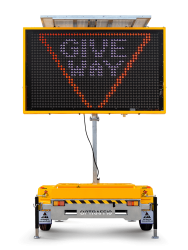
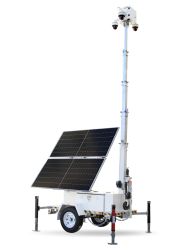
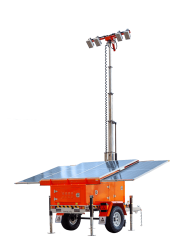
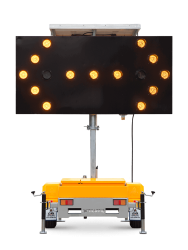
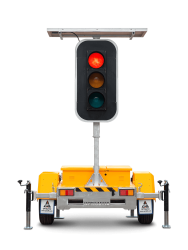
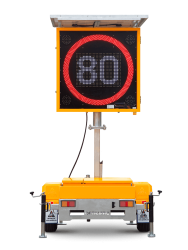



Imported vs Australian-Built VMS Trailers: Where Each Has the Edge

Should an Australian fleet buy a locally built VMS trailer or an imported one? Both routes can deliver a compliant, durable sign. Each has real strengths and real risks. Australian-built units offer a direct relationship with the maker and faster design changes. Imported units often offer a lower price and, when stocked locally, similar delivery times. This guide shows where each route has the edge, what the law requires of both, and how to decide.
Key Takeaways
- Australian-built trailers: Offer direct access to the maker, faster engineering changes and no reliance on sea freight.
- Imported trailers: Often cost less upfront, and deliver quickly only when a distributor holds Australian stock.
- RVSA approval: Applies equally to local manufacturers and importers of trailers up to 4.5 tonnes ATM.
- AS 4852.2:2019 evidence: Proves sign performance for either route; country of origin proves nothing on its own.
- Local parts and servicing: Decide downtime for both routes, so confirm where parts are held before you buy.
Where Australian-Made VMS Trailers Have a Genuine Advantage
An Australian-made VMS trailer has several advantages an importer cannot fully match. Buyers should weigh them honestly.
- Direct relationship with the maker. You deal with the people who design and build the unit. No distributor sits in between.
- Faster engineering changes. A local maker can often modify a design mid-order or adapt it for one site. An overseas factory needs longer for the same change.
- No sea freight on custom builds. A made-to-order local unit avoids shipping schedules and port delays.
- Factory visits and inspection. You can inspect units at the factory before delivery.
- Local content in tenders. Some government tenders weight local content in their evaluation. Check the tender criteria before choosing a route.
For fleets that need frequent custom work, or tenders that score local content, these points can outweigh a price difference.
Where Imported VMS Trailers Have an Advantage, and Where They Carry Risk
Imported trailers bring different strengths.
- Price. Overseas manufacturing costs often lower the upfront price for a comparable specification.
- Scale. Larger overseas producers can offer a wider range of sizes and options.
- Local stock, when it exists. A distributor holding units in Australia can deliver within about one to two weeks.
The risks are just as real:
- Dependence on the distributor. Support is only as good as the local distributor’s stock, workshop and staff.
- Custom orders take longer. A factory build plus sea freight takes weeks, not days.
- Design changes are slower. Modifying an imported design means working through an overseas factory.
- Quality varies between makers. Build quality depends on the manufacturer’s own quality control.
The fair conclusion: imported quality varies, so buyers must check the manufacturer’s testing and the local support behind it.
Imported VMS Trailer Compliance: The Same Rules Apply to Both
Imported VMS trailer compliance follows the same rules as local compliance. Two checks apply, and neither depends on origin.
The Sign: AS 4852.2:2019
Road authorities expect portable signs to meet AS 4852.2:2019. Local and overseas makers both need test evidence against it. Some supplier material still quotes the older 2009 edition. Ask for written confirmation against the 2019 text.
The Trailer: RVSA Approval for Low ATM Trailers
RVSA approval for low ATM trailers applies to local manufacturers and importers alike. The Road Vehicle Standards Act 2018 covers trailers of 4.5 tonnes ATM or less. Both need approval before supplying a trailer type. The Department notes that the old system let makers and importers self-certify. That path has ended.
VSB1 Revision 6 summarises the Australian Design Rules for these trailers. The Department published an August 2026 edition of VSB1 Revision 6. It lists ADRs for lamps, markings, couplings and tyres, among others.
The practical point: neither “Australian-made” nor “imported” proves approval. Ask every supplier whether the trailer type is approved and entered on the Register of Approved Vehicles.
State Operating Rules: On-Site Programming in NSW
Some state rules add operating requirements that apply to both routes. TfNSW TS 00198 says portable VMS should sit where mobile coverage allows remote access. Where coverage is poor or absent, the sign must accept messages programmed on site. Check that any unit, local or imported, supports on-site programming.
Durability Depends on Build Specification
Durability comes from how the trailer is built and tested, on either route. Check three things on any quote:
- Corrosion protection. Ask which coating method the chassis uses, such as hot-dip galvanising or paint.
- Cabinet sealing. Ask for the ingress protection rating of the sign cabinet.
- Testing before dispatch. Ask whether each unit is tested before it ships, and whether records are available.
Both routes should answer these in writing. For display damage on site, see impact-resistant VMS display panels.
VMS Trailer Lead Time and Local Stock: Check Where the Unit Sits
VMS trailer lead time and local stock depend on where the unit sits when you order. Origin matters mainly for made-to-order units.
| Sourcing route | Where the unit is | Typical lead time |
|---|---|---|
| Australian-built, from stock | In Australia | Short, if stock exists |
| Australian-built, made to order | Not yet built | The maker’s build time; no sea freight |
| Imported, from distributor stock | In Australia | About 1–2 weeks |
| Imported, built to order | Not yet built | Build time plus sea freight |
For urgent jobs, ask any supplier whether the unit is in Australia today. For custom work, a local maker may be faster. The trade-offs are set out in how long it takes to get a VMS trailer in Australia.
Compare Total Cost of Ownership, Not Purchase Price
The total cost of ownership for a VMS trailer decides the real comparison. A lower purchase price can shrink once every other cost is added.
Total cost = purchase price + freight + compliance + spare parts + maintenance + downtime + software
| Cost line | Where the routes tend to differ |
|---|---|
| Purchase price | Often lower for imported units, and lower again on factory-direct fleet orders |
| Freight | Sea freight applies to imported units built to order; DDP terms fold freight and duties into one delivered price |
| Compliance | Both need AS 4852.2 evidence and trailer approval; ask who handles it |
| Spare parts | Depends on whether parts are held in Australia, on either route |
| Maintenance | Depends on local workshop access |
| Downtime | A unit waiting weeks for a part earns nothing |
| Software | Depends on the supplier’s fee model, not the route |
Downtime is the line buyers most often leave out. A small saving at purchase disappears if one failed controller keeps a sign off hire for weeks.
Choosing Between Local and Imported VMS Trailers
Choosing between local and imported VMS trailers comes down to what your fleet needs most.
| If your priority is… | Lean towards | Why |
|---|---|---|
| Frequent custom or site-specific builds | Australian-built | Faster engineering changes, no sea freight |
| Tenders that score local content | Australian-built | Meets the evaluation criteria directly |
| Lowest upfront cost for standard units | Imported | Lower manufacturing cost |
| Fast delivery of standard units | Either, from local stock | Stock location decides speed |
| Long-term support | Either, with local parts | Parts and workshop location decide downtime |
| Large fleet order | Imported, factory-direct, if evidence holds | Unit savings multiply across many trailers |
A simple rule follows. Buy locally when uptime, local support and simple compliance matter more than purchase price. Consider imported units when fleet size makes savings meaningful, and the supplier proves compliance, parts and support.
Whichever route you choose, compare quotes line by line. The template in what a VMS trailer quote should include works for both. To compare named suppliers, including Australian manufacturers, see our list of VMS manufacturers in Australia.
Where Optraffic Fits
Optraffic is one imported option. We design and build trailer-mounted VMS units in our own factory in China. Australian buyers can reach us two ways.
- Regional distributors, for stock and smaller orders. Jaybro covers the East Coast. OPTraffic WA, Optraffic’s Western Australian distributor, covers WA from Maddington, Perth. Both hold local stock and spare parts.
- Factory-direct, for large fleet orders. Fleets buying many units can request a factory-direct quote from Optraffic. That removes a margin layer, which matters most at fleet volume. Factory-direct orders ship on DDP (Delivered Duty Paid) terms. Optraffic arranges freight, customs clearance and import duties to your delivery address. The factory also provides after-sales support directly.
Our position fits the imported column above. Standard units from local stock arrive in about one to two weeks. Factory-direct and custom builds take about six weeks, sea freight included. That is slower than a local maker for design changes. Optraffic team tests every unit in-house before dispatch. The Optraffic Web System comes with each trailer at no subscription fee. An optional handheld tablet allows on-site programming where coverage fails.
Hold us to the same standard as any supplier. Ask for our AS 4852.2:2019 evidence, test records and trailer approval status in writing. The national checklist sits in the buyer’s guide to what to check before buying a VMS trailer in Australia. Broader work zone planning sits in the traffic safety industry guide.
FAQ
Are imported VMS trailers legal in Australia?
Yes, when the sign meets AS 4852.2:2019 and the trailer type holds RVSA approval. Imported VMS trailer compliance follows the same rules as local builds.
Do Australian-built trailers need RVSA approval too?
Yes. Local manufacturers and importers of trailers up to 4.5 tonnes ATM both need approval before supply. RVSA approval for low ATM trailers replaced self-certification.
When is an Australian-made VMS trailer the better choice?
When you need frequent custom builds, fast design changes or a tender that scores local content. An Australian-made VMS trailer avoids sea freight on made-to-order units.
Is an imported VMS trailer slower to get?
Only when built to order. VMS trailer lead time and local stock depend on where the unit sits. Imported units from Australian stock arrive in about one to two weeks.
How should I compare the cost of local and imported VMS trailers?
Add freight, compliance, parts, maintenance, downtime and software to the purchase price. The total cost of ownership for a VMS trailer shows the real gap between routes.
Can Australian fleets buy VMS trailers factory-direct?
From some manufacturers, yes. Optraffic quotes factory-direct for large fleet orders on DDP terms, with after-sales support from the factory. Include compliance and parts in the total cost of ownership for a VMS trailer.
What is VSB1 Revision 6?
It is the Department of Infrastructure’s guide to ADR requirements for trailers of 4.5 tonnes ATM or less. VSB1 Revision 6 was republished in August 2026.
Conclusion
Neither route wins on every count, and purchase price alone decides nothing. Australian-built trailers lead on custom work, design changes and local-content tenders. Imported trailers often lead on upfront price, and match local delivery when stock is held in Australia. Compliance, durability and support depend on evidence, not origin, and the same checks apply to both. Decide on your fleet’s priorities, then ask every supplier, including Optraffic, for the proof.
Facebook
Twitter
LinkedIn
Email
Newsletter
Subscribe to our Newsletter & Event right now to be updated.
Latest Posts


Latest Posts
What to Check Before Buying 500 Portable Changeable Message Signs: 7 Batch Delivery Checks for Rental Fleets
What to check before buying 500 portable changeable message signs: one build across batches, spares, DDP delivery and per-shipment tests.
2026-11-11
How to Plan Message Signs for Weekend Highway Closures: Lessons from Atlanta’s I-285 Westside Closures
How to plan message signs for weekend highway closures: 5 steps, a 48-hour checklist and fleet control lessons from Atlanta’s I-285 closures.
2026-11-11
Does EN 12966 Apply to LED Modules? What the Standard Covers and What a Datasheet Cannot Prove
Does EN 12966 apply to LED modules? See what the standard covers, what a module datasheet proves and 5 questions to ask a supplier.
2026-11-10
Build vs Buy a Vehicle-Mounted Message Sign: What Fleets and Integrators Should Check
Build vs buy a vehicle-mounted message sign? Compare compliance, controls, mounting and support before you choose.
2026-11-10
Work Zone Speed Feedback Trailer Placement: Where to Set It Up and When to Move It
Work zone speed feedback trailer placement explained: where DOT rules and research say to set the trailer, when to move it and what fleets must log.
2026-11-05
WZDx Device Feed Requirements: What Work Zone Contractors and Hire Fleets Must Supply
WZDx device feed requirements explained for contractors and hire fleets: what the feed holds, what DOT specs ask for and how to prepare equipment.
2026-11-04