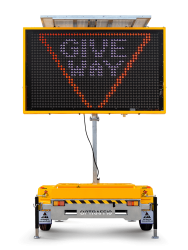
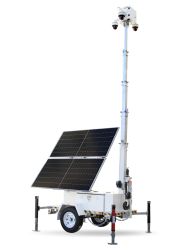
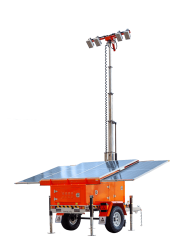
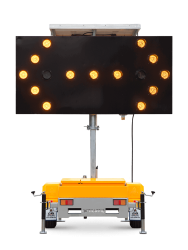



A well pad does not stop at sunset. Crews still service pumps, haul water and fix leaks after dark. Thieves work the same hours. This guide explains how to light and secure a remote well pad as one plan, not two separate orders. It is written for rental fleets and integrators who supply Permian Basin operators. It also shows where Optraffic solar light towers and surveillance towers fit that plan.
The Optraffic team has solved this problem on a live oil field. Optraffic supplied 24 customized Super Solar Light Towers and 10 CCTV surveillance towers to one of Oman’s largest oil producers. The site needed 10 hours of light every night, with no fuel and no grid. Depending on configuration, the light towers run over 35 hours per full charge. The customer watched every key function tested by live video before shipment. The full project sits in the Oman oil field lighting and surveillance case.
Key Takeaways
- Super Solar Light Tower: Runs over 35 hours per full charge, covering a 10-hour night three times over.
- 360° rotatable and tiltable LED heads: Aim light onto the wellhead and work area, away from the sky.
- Solar CCTV surveillance towers: Watch tanks, gates and laydown yards off-grid with PTZ cameras and IR night vision.
- FREE WEB system: Controls light towers and surveillance towers from one login, with no subscription fee.
- Remote video inspection: Shows overseas buyers every key function working live before the units ship.
Why Oilfield Theft Prevention at Remote Well Sites Now Starts After Dark
Oilfield theft prevention at remote well sites used to mean a locked gate and a padlocked tool box. That no longer holds in West Texas. Theft has become organized, and it targets sites with no people and no light.
What the 2026 Theft Data Shows
The Federal Reserve Bank of Dallas asked energy executives about theft in its third-quarter 2026 Energy Survey. Among firms focused on the Permian Basin, 46 percent reported theft affecting their operations. Only 14 percent of firms in other basins said the same.
Enforcement data points the same way. In August 2026, the Railroad Commission of Texas reported a multistate oil theft bust. Investigators made six arrests and seized assets worth more than $12 million. The same release cites an FBI-led task force estimate. Permian operators lose up to $300,000 per month to stolen tools, pipe and valves.
Texas has also changed the law. Senate Bill 494 created the State Task Force on Petroleum Theft, known as STOPTheft. The task force studies theft and recommends prevention measures.
Most affected firms in the Dallas Fed survey rated the direct financial impact as low. The larger cost often sits elsewhere. A missing valve stops production, and a crew loses a shift waiting for parts.
Why Separate Lighting and Camera Orders Leave Gaps
Many operators buy lighting from one rental house and cameras from another. The two plans rarely match. Typical gaps include:
- Cameras that face an unlit tank battery and record dark, grainy footage.
- Light towers that flood the gate but leave the laydown yard dark.
- Two suppliers, two service contacts and two software logins.
- No single party responsible when an incident goes unrecorded.
The Oman customer named this exact problem. It wanted one partner who understood the whole site. A combined plan removes the gaps before the trailers arrive.
Building a Well Pad Lighting and Surveillance Plan Zone by Zone
A well pad lighting and surveillance plan starts with a site map, not a product list. Split the pad into zones. Then decide what each zone needs at night.
| Pad zone | Main night risk | Lighting need | Camera need |
|---|---|---|---|
| Wellhead and pump area | Crew injury during night service | High, aimed down at the work area | Overview camera for incident review |
| Tank battery | Crude and condensate theft | Moderate, for truck identification | PTZ camera with plate capture |
| Laydown yard | Tool, pipe and valve theft | Low to moderate, for deterrence | AI human and vehicle detection |
| Lease road gate | Unauthorized vehicles | Low, focused on the gate | Plate recognition and alerts |
| Frac or workover spread | Crew safety, high activity | High, several towers | Wide coverage for safety review |
Not every zone needs both. A lease road gate may need a camera and only a little light. A wellhead under night service needs strong light first.
Plan this way and every tower has a job. The well pad lighting and surveillance plan then becomes the quote. Each line on the quote maps to a zone on the map.
For more on spacing light towers, see how much area a lighting tower will cover.
Setting Light Levels for Night Work on the Pad
Construction work on a pad falls under OSHA 29 CFR 1926.56. Building a location or laying flowline counts as construction. Table D-3 sets minimum illumination levels:
- 5 foot-candles for general construction area lighting.
- 3 foot-candles for access ways, active storage areas, refueling and field maintenance areas.
- 10 foot-candles for general construction plant and shops.
These are minimums, not targets. Night work near rotating equipment usually needs more. Measure with a light meter after setup, not from a spec sheet.
Glare matters too. A tower aimed at a truck driver’s eyes creates a new hazard. The guide on reducing glare from LED light towers covers aiming in detail.
Placing Camera Towers Where Thieves Actually Enter
Thieves rarely cross open caliche in full view. They use the lease road, the pipe rack side and the tank load line. Place camera towers to cover those routes first.
A taller mast helps on flat Permian ground. It lets one PTZ camera see further over trucks and tanks. Infrared night vision then covers the dark gaps between light zones.
The security camera trailer positioning guide explains sight lines and mounting height. Cameras-only planning for remote fields sits in remote surveillance for isolated oil and gas fields.
Light Tower to Camera Tower Ratio: Combined Units vs Separate Towers
The light tower to camera tower ratio is the first question in most quotes. The answer depends on whether you use combined units or separate towers.
A combined unit carries cameras and lights on one mast. Separate towers split the jobs. Each choice suits a different pad.
| Factor | Combined light-and-camera unit | Separate light tower + CCTV tower |
|---|---|---|
| Placement | Camera sits wherever the light sits | Each tower goes where its job is |
| Power budget | Lights and cameras share one battery | Each tower has its own power system |
| Night coverage | Good for one compact area | Better for spread-out pads and long fences |
| Rental flexibility | One unit, one ticket | Towers can split across jobs after the project |
| Best fit | Small pads, gates, single laydown yards | Multi-zone pads, frac spreads, tank farms |
The CCTV surveillance light tower explainer covers how combined units work.
Using One Field Ratio as a Starting Point
The Oman oil field order used 24 light towers and 10 surveillance towers. That is roughly 2.4 light towers per camera tower. Work areas there needed broad light, while cameras covered the wider asset spread.
Treat that as one reference point, not a rule. A Permian pad with a large laydown yard may need more cameras. A frac spread at night may need more light. Start with the zone table, then count towers.
Shared power is the hidden risk in combined units. Strong LED heads draw heavily at night. Cameras then compete for the same battery. The guide on how camera load sets solar CCTV trailer runtime shows how to budget that power.
Off-Grid Well Site Lighting That Lasts the Whole Night
Off-grid well site lighting has one hard test. It must still run at 5 a.m. on the third cloudy day. Diesel towers pass that test, but they need fuel runs to every pad.
Fuel logistics add trucks, drivers and spill risk to remote leases. The 30-day runtime comparison of solar and diesel light towers works through those costs for remote crews.
Runtime Reserve for Dust, Heat and Cloud
Size solar towers for reserve, not for a sunny day. The Oman site needed 10 hours of light per night. Runtime varies by configuration, but these towers run over 35 hours on a full charge. That gives a reserve of more than three nights.
Reserve covers three common losses:
- Dust on panels. Blowing sand cuts solar charging until someone cleans the panels.
- Heat on batteries. High battery temperatures reduce usable capacity.
- Cloud and short winter days. Charging drops for days at a time.
Ask any supplier for runtime per full charge at your light setting. Then compare it with your nightly hours. A reserve below two nights leaves little margin on a remote lease.
Heat and Dust Ratings to Check
West Texas summers push trailer components hard. Check three points before you sign:
- Operating temperature rating. The Oman towers are rated for operating temperatures up to 74°C.
- Corrosion protection. Hot-dip galvanized, anti-corrosion and anti-UV coated steel resists sun, sand and produced-water spray.
- Sealed electronics. Look for IP-rated enclosures on the camera and control cabinets.
The Alberta oil sands night lighting guide covers the opposite extreme: cold-weather runtime.
Dark-Sky Lighting on Oil and Gas Sites in West Texas
Dark-sky lighting on oil and gas sites is a real requirement in part of the Permian. The McDonald Observatory sits near Fort Davis. Operators in seven nearby counties follow shared lighting guidance.
The guidance is called Recommended Lighting Practices. The McDonald Observatory Dark Skies Initiative developed it with the American Petroleum Institute and Texas industry groups. It covers Brewster, Culberson, Hudspeth, Jeff Davis, Pecos, Presidio and Reeves counties.
Key points for night crews:
- Portable light towers are preferred over permanent lighting for night maintenance.
- Aim lights toward the ground, never upward or horizontally.
- Fit hoods or louvers where possible.
- Use white light at 3,500 K or lower where white light is needed.
Tiltable LED heads make the aiming rule easy to follow. Crews tilt each head down onto the work area. That cuts skyglow and also cuts glare for truck drivers. The same practice helps outside the seven counties.
Running a Mixed Lighting and Surveillance Rental Fleet
A mixed lighting and surveillance rental fleet earns more per ticket. One operator call can fill four light towers and two camera towers. The challenge is managing both on one budget and one schedule.
Remote Monitoring Without Per-Camera Subscriptions
Remote video is now the expected service. Many surveillance tower suppliers charge a monthly fee per unit for remote access. Across a 30-tower fleet, that fee adds up every month.
A free web platform removes that line from the budget. The FREE WEB system runs light towers and surveillance towers on one login, at no cost. Fleet managers check cameras, receive motion alerts and review footage from a phone or PC. The same dashboard covers every light tower on the lease.
One login also simplifies training. Dispatchers learn one system, not one per product line.
Connectivity still matters on remote leases. Weak cell coverage limits live viewing. The guide on remote security towers without Wi-Fi explains the options.
Fleet Identification and Tracking
Rental towers move between leases every few weeks. Two features keep them traceable:
- Custom nameplates. The Oman order carried nameplates made to the customer’s fleet requirements.
- GPS on surveillance towers. Dispatchers confirm each unit’s location at the end of a hire.
LED reliability protects margin as well. A tower waiting for repair earns nothing. LED heads with long service life and modular parts keep units on rent. That supports the wider energy and mining goal: fewer site visits and more uptime.
Remote Video Inspection Before Shipment: What to Watch For
Most US rental fleets cannot fly to an overseas factory. Remote video inspection before shipment closes that gap. The buyer watches finished units work in real time, then approves shipment.
The Oman buyer followed this sequence:
- Check the exterior. Look at welds, coating, nameplates and trailer fittings.
- Raise the mast. Confirm smooth extension to full height.
- Switch on the light heads. Check every LED head lights evenly.
- Rotate and tilt the heads. Confirm full rotation and locking at each angle.
- Deploy the solar panels. Check panel movement and secure stowage.
- Test the software. Watch the web system control the unit live.
Record the call and keep it with the order file. It becomes a dated reference if a unit arrives damaged. The article on what buyers should know about factory inspections covers on-site inspection as well.
Conclusion
Learning how to light and secure a remote well pad starts with one map and one plan. Split the pad into zones. Match light and cameras to each zone’s risk. Size solar towers with several nights of reserve. Aim every head down, especially near the McDonald Observatory.
The Optraffic team builds solar light towers, surveillance towers and the web software in-house. Buyers deal with one supplier, so no third-party markup sits between the parts. Light towers and surveillance towers both run on the FREE WEB system, with no software subscription fee. Remote video inspection lets buyers see every function working before the units leave the factory.
Contact the Optraffic team to plan lighting and surveillance for your next lease.
FAQ
How do I light and secure a remote well pad without grid power?
Use solar light towers for work areas and solar surveillance towers for perimeter routes. Plan both from one zone map. Knowing how to light and secure a remote well pad off-grid comes down to runtime reserve and camera placement.
What is a good light tower to camera tower ratio for a well pad?
No single ratio fits every pad. One oil field order used 24 light towers and 10 camera towers, about 2.4 to 1. Build your light tower to camera tower ratio from the zone table, not from a fixed rule.
How many hours should off-grid well site lighting run per charge?
Aim for at least two nights of reserve beyond one night’s hours. Off-grid well site lighting that runs over 35 hours per charge covers three 10-hour nights. Runtime varies by tower configuration. That reserve absorbs dust, heat and cloudy days.
What does dark-sky lighting on oil and gas sites require?
The Recommended Lighting Practices ask crews to aim lights down and shield them. They prefer portable towers for night maintenance. Dark-sky lighting on oil and gas sites also favours white light at 3,500 K or lower.
Does oilfield theft prevention at remote well sites need monitored cameras?
Not always. AI detection and motion alerts can flag intruders without a 24/7 guard. Oilfield theft prevention at remote well sites works best when light, cameras and alerts cover the same entry routes.
Can I check equipment before shipment without visiting the factory?
Yes. Remote video inspection before shipment lets you watch the mast, lights, solar panels and software tested live. Record the call and keep it with the order file.
Plan lighting and security for your next lease with OPTRAFFIC’s
Super Solar Light Tower
or
request a factory-direct quote
today!


What to Check Before Buying 500 Portable Changeable Message Signs: 7 Batch Delivery Checks for Rental Fleets
What to check before buying 500 portable changeable message signs: one build across batches, spares, DDP delivery and per-shipment tests.
How to Plan Message Signs for Weekend Highway Closures: Lessons from Atlanta’s I-285 Westside Closures
How to plan message signs for weekend highway closures: 5 steps, a 48-hour checklist and fleet control lessons from Atlanta’s I-285 closures.
Does EN 12966 Apply to LED Modules? What the Standard Covers and What a Datasheet Cannot Prove
Does EN 12966 apply to LED modules? See what the standard covers, what a module datasheet proves and 5 questions to ask a supplier.
Build vs Buy a Vehicle-Mounted Message Sign: What Fleets and Integrators Should Check
Build vs buy a vehicle-mounted message sign? Compare compliance, controls, mounting and support before you choose.
Work Zone Speed Feedback Trailer Placement: Where to Set It Up and When to Move It
Work zone speed feedback trailer placement explained: where DOT rules and research say to set the trailer, when to move it and what fleets must log.
WZDx Device Feed Requirements: What Work Zone Contractors and Hire Fleets Must Supply
WZDx device feed requirements explained for contractors and hire fleets: what the feed holds, what DOT specs ask for and how to prepare equipment.