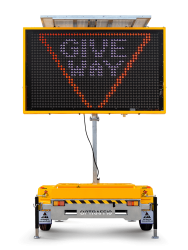
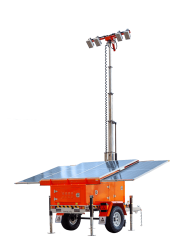
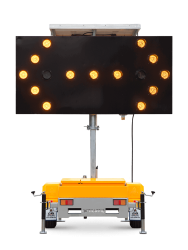
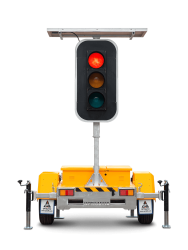
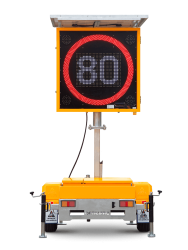
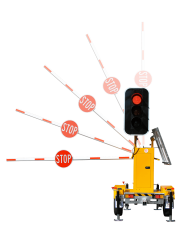
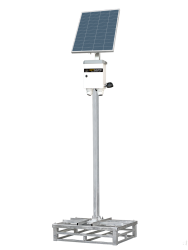



How do you buy VMS trailers in bulk without creating a mixed, hard-to-support fleet? Freeze one specification and pilot a single unit. Then agree acceptance checks, stage deliveries, set up software early and hold spares. That order keeps twenty units behaving like one. Optraffic team builds and tests every variable message board trailer in-house before dispatch. The steps below show what the buyer’s side of a bulk order needs.
Key Takeaways
- Single fleet specification: Keeps LED panels, controllers and batteries interchangeable across every trailer in a bulk order.
- Local stock plus custom batches: Covers urgent jobs from Australian stock while custom units follow in about six weeks.
- Bundled fleet software: Adds each new trailer to one login with no subscription fee as the fleet grows.
- Open API connection: Feeds new trailers into a fleet’s existing dispatch platform instead of creating another system.
- Regional parts holding: Keeps spare panels and controllers with Jaybro or OPTraffic WA.
Why a Bulk VMS Trailer Order Process Matters More in 2026
A bulk VMS trailer order process protects the fleet from problems that single-unit purchases never expose. Demand pressure makes those problems more expensive now.
Infrastructure Australia’s 2025 Infrastructure Market Capacity Report puts the five-year Major Public Infrastructure Pipeline at $242 billion. That figure rose 14% on the year before. The same report estimates a shortfall of 141,000 workers across the pipeline.
More work with fewer crews changes how a fleet must run. Every avoidable site visit costs labour the market does not have. Four problems appear when bulk orders skip a process:
- Mixed configurations. Units bought in separate batches carry different parts.
- Parts sprawl. The workshop stocks three controller types instead of one.
- Idle arrivals. Trailers land before the software, SIMs or crews are ready.
- Compounding fees. Per-sign software charges multiply with every unit added.
How to Buy VMS Trailers in Bulk: The Six-Step Process
Run the six steps in order. Each one produces an output the next step depends on.
| Step | What to do | Output | Common mistake |
|---|---|---|---|
| 1 | Freeze the fleet specification | One signed-off configuration sheet | Letting each branch pick its own options |
| 2 | Run a pilot unit on a live site | Field notes on legibility, power and signal | Testing in the yard instead of on a road |
| 3 | Agree acceptance checks | A written checklist attached to the order | Checking only that the sign lights up |
| 4 | Plan staged delivery | A batch schedule tied to project start dates | Taking all units at once, then storing them |
| 5 | Onboard fleet software early | Accounts, unit names and SIMs ready before arrival | Setting up software after the first job starts |
| 6 | Size a spares kit | An agreed parts list and holding location | Waiting for the first failure to order parts |
The choice of size, colour and power comes before step 1. The buyer’s guide to what to check before buying a VMS trailer in Australia covers that selection.
Step 1: Freeze a Standardised VMS Trailer Fleet Specification
A standardised VMS trailer fleet specification is the single biggest saving in a bulk order. One configuration means one parts list, one training course and one set of settings.
What to Lock Before Ordering
- Sign face size class and colour capability
- Solar panel rating and battery capacity
- Modem type and SIM arrangement
- Add-ons such as speed radar or cameras
- Trailer options such as locks and jockey wheels
Allow One Exception, Not Five
Some fleets genuinely need two variants, such as a compact urban unit and a large highway unit. Keep it to two. Every extra variant adds a parts line and a training gap.
Step 2: Run a VMS Trailer Pilot Unit on a Live Site
A VMS trailer pilot unit tests the frozen specification where it will actually work. A yard test proves the sign lights up. A site test proves it does the job.
Run the pilot for at least one full work week. Record four things:
- Legibility at the approach distance your traffic guidance schemes use.
- Power across the week, including overcast days and night running.
- Signal strength for remote control at that location.
- Crew set-up time from arrival to live message.
Pick a pilot site the state road authority will accept. Approval rules differ between states, as the guide to Australian portable VMS regulations by state sets out.
Step 3: Agree VMS Trailer Acceptance Checks on Delivery
Write the VMS trailer acceptance checks on delivery into the purchase order. Checks agreed after arrival turn into arguments.
A practical delivery checklist covers:
- Display: every module lit, no dead rows, brightness adjusting to ambient light.
- Power: battery charged on arrival, solar input reading correctly.
- Remote control: unit online in the fleet software, location showing on the map.
- Mechanical: mast raise and lower, locks, lights and brakes working.
- Documents: AS 4852.2 conformity statement, Register of Approved Vehicles entry and VIN.
Delivery checks sit on top of the manufacturer’s own testing. The article on factory acceptance testing for optical lens VMS explains what a factory test should already cover.
Step 4: Plan a Staged VMS Trailer Delivery
A staged VMS trailer delivery ties each batch to a project start date. It avoids paying for trailers that sit in a yard.
| Batch | Source | Typical timing | Use |
|---|---|---|---|
| First batch | Australian distributor stock | About 1–2 weeks | Pilot, urgent jobs, first project stage |
| Second batch | Factory custom build | About 6 weeks, sea freight included | Main fleet expansion to the frozen spec |
| Later batches | Custom build, same spec | Scheduled against the project pipeline | Replacement and growth |
The first batch buys time. The custom batch delivers the exact fleet specification. For large fleet orders, request a factory-direct quote from Optraffic. Factory-direct orders ship on DDP (Delivered Duty Paid) terms. Optraffic arranges freight, customs clearance and import duties to your delivery address. The factory also provides after-sales support directly. The trade-off is set out in how long it takes to get a VMS trailer in Australia.
Step 5: Complete VMS Fleet Software Onboarding Before Units Arrive
VMS fleet software onboarding should finish before the first trailer lands. Then each unit goes live on day one.
Prepare these items in advance:
- Accounts. Create logins for dispatch, workshop and site supervisors.
- Unit naming. Use a naming rule that matches your asset register.
- SIMs. Activate data plans and confirm coverage for your main work areas.
- Message library. Load standard messages so crews start from approved wording.
- Integration. Map units into your own platform if you connect through an API.
Check the fee model at this stage too. Some suppliers charge per sign, per month. On a thirty-unit fleet, that line grows every year the units stay in service.
Fleets that also run arrow boards and portable signals should aim for one login across all three. The guide to managing a mixed traffic control equipment fleet covers that set-up. Units reporting to a traffic management centre need a STREAMS check. See the STREAMS-compliant VMS procurement guide.
Step 6: Size a Spares Kit for a VMS Trailer Fleet
A spares kit for a VMS trailer fleet turns a failure into a short workshop job. Without one, a single broken part can idle a trailer for weeks.
What the Kit Should Hold
- LED display modules in the fleet’s size and colour
- A sign controller and a modem
- A solar charge controller
- Lifting mast parts and trailer lights
Where the Kit Should Sit
Decide who holds the parts: your own yard or the regional distributor. Fleets spread across several depots often split the kit. Fast-moving parts stay in the yard. Larger items stay with the distributor.
Site damage causes more repairs than component failure on most hire fleets. Plan the kit around the damage your sites actually produce. Broader work zone planning sits in the traffic safety industry guide.
FAQ
What is the first step when buying VMS trailers in bulk?
Freeze one fleet specification before requesting a quote. A standardised VMS trailer fleet specification keeps parts, training and settings the same across every unit.
Should a bulk order start with a pilot unit?
Yes. Run a VMS trailer pilot unit on a live site for a week. It exposes legibility, power and signal problems early.
Can a bulk order mix local stock and custom builds?
Yes. A staged VMS trailer delivery takes the first batch from Australian distributor stock in about one to two weeks. Custom batches follow in about six weeks.
Does adding more trailers increase software costs?
With per-sign subscription software, yes. The Optraffic Web System adds each trailer to one login with no subscription fee. That simplifies VMS fleet software onboarding.
Where should a hire fleet hold spare parts in Australia?
Split the spares kit for a VMS trailer fleet between your yard and the regional distributor. For Optraffic units, Jaybro covers the East Coast and Safetek Solutions covers Western Australia.
Conclusion
A bulk order succeeds when the fleet behaves like one unit repeated. Freeze the specification, prove it on a live site, and write the acceptance checks into the order. Stage the deliveries, finish software set-up early and hold the right spares. Optraffic supplies VMS trailers through Jaybro on the East Coast and OPTraffic WA in Western Australia. Every trailer joins the Optraffic Web System at no subscription fee. An open API connects it to existing fleet platforms. Contact your regional distributor to plan the first batch. For the main fleet order, send Optraffic team the fleet specification for a factory-direct DDP quote.



Lighting First or Recording First? CCTV-Ready Light Tower vs Camera Trailer for Integrators and Hire Fleets
CCTV-ready light tower vs camera trailer: compare whose camera runs, which load gets night power, and how hire fleets use one unit for two jobs.
VMS Trailers for Renewable Energy Zone Construction: Oversize Deliveries, Detours and Community Notice
How VMS trailers support renewable energy zone construction: oversize delivery warnings, detours, night moves and community notice on REZ routes.
Imported vs Australian-Built VMS Trailers: Where Each Has the Edge
Imported vs Australian-built VMS trailers: where each has a real advantage, what compliance requires of both, and how to choose for your fleet.
What Should a VMS Trailer Quote Include in Australia? Line Items to Compare Before You Sign
What should a VMS trailer quote include? Ten line items to compare, from delivery and registration to software fees, warranty and local spare parts.
When to Order VMS Trailers for Bushfire Season: A Region-by-Region Guide for Australian Hire Fleets
When to order VMS trailers for bushfire season: a region-by-region guide for hire fleets, with order-by months, stock top-ups and pre-season checks.
What Makes a VMS Trailer Mine-Spec? Site Entry Requirements for Western Australian Mine Sites
Mine-spec VMS trailer requirements under WA’s 2026 mine traffic code: visibility, ID, isolation, documents and how to order a unit that passes site entry.