


Book Your Holiday Coverage Before the Rush
Solar camera trailers with 4G/5G live video for retail parking lots.
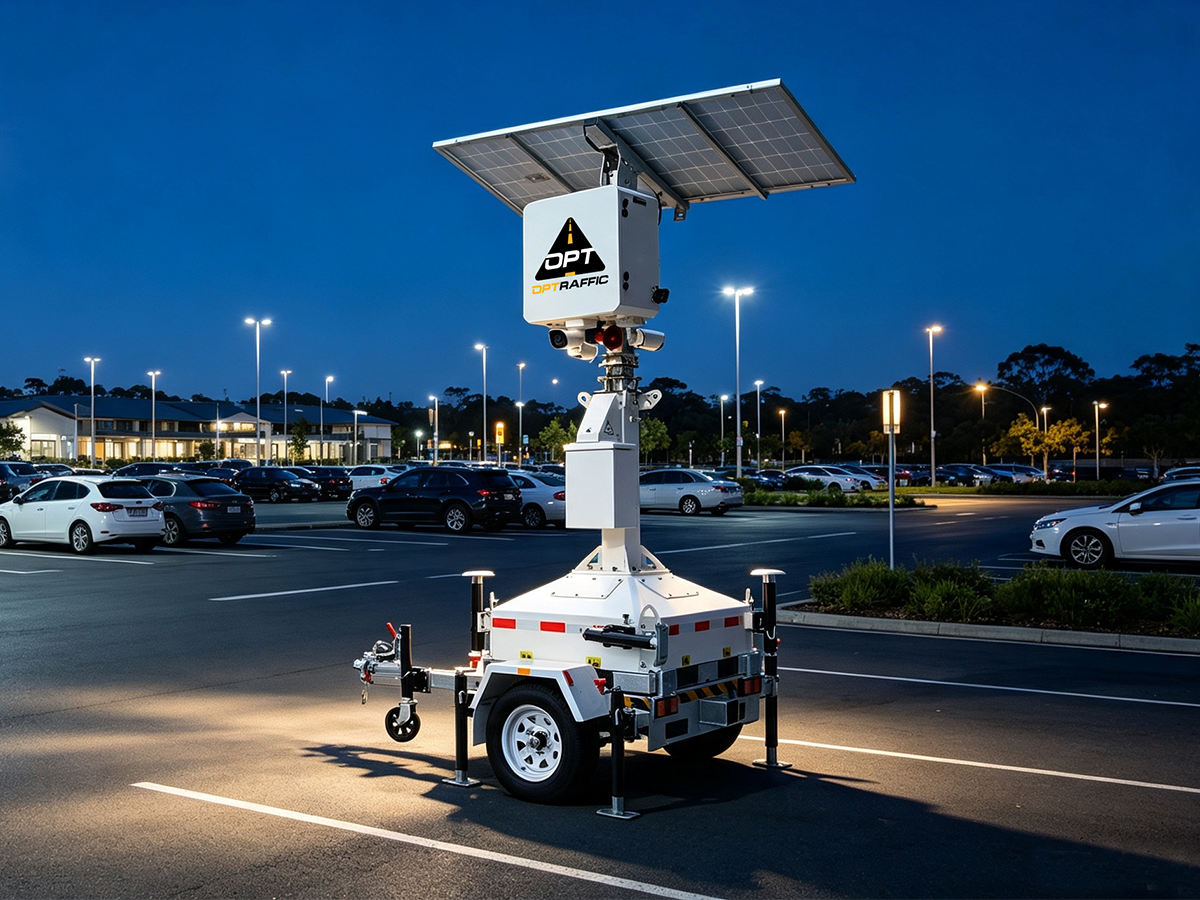
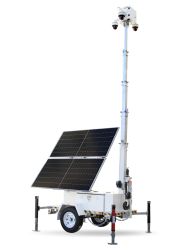
Every December, retail parking lots fill with distracted shoppers and cars full of gifts. Police warn about vehicle break-ins, and retailers call for extra cover. Then every retailer calls at the same time. Holiday-season parking lot security is a capacity problem for hire fleets before it is a security problem for retailers. Fleets that plan early book their units, place them well and keep them running through short winter days. Fleets that wait run out of surveillance trailers in the first week. The Optraffic team builds solar camera trailers for hire fleets that serve these seasonal peaks. This guide covers booking, placement, power and the post-holiday turnaround.
Key Takeaways
- Solar camera trailers: Cover a retail parking lot without trenching, grid power or a long install.
- 4G/5G connectivity: Streams live video from any lot, so monitoring teams see incidents as they happen.
- License plate recognition: Captures vehicles at lot entrances as an analytics option for later investigations.
- Free Web System: Gives fleet operators real-time video and remote control across every unit on hire.
- Raised camera mast: Lifts cameras above parked SUVs and vans for clear views across busy rows.
Why Holiday-Season Parking Lot Security Peaks in Demand
Short answer: Theft risk and retailer demand rise together in November and December, so fleet capacity runs out fast.
Police see the same pattern each year. In December 2025, Georgia’s Muscogee County Sheriff’s Office warned that vehicle break-ins historically rise during the holidays. Officers advised parking in well-lit areas and avoiding the back of the building. In Ohio, the Franklin County Sheriff’s Office said it was bracing for a holiday break-in uptick at shopping centers.
Retailers respond in three ways at once:
- They add guards, who are scarce and costly in peak season.
- They extend opening hours, which stretches lots into the dark.
- They ask hire fleets for camera trailers, often with only days of notice.
That third request lands on every fleet in the same weeks. A fleet with ten units and twenty requests must choose who gets cover.
Seasonal Camera Trailer Rental: The Booking Timeline
Short answer: Lock in holiday bookings by early November, and prepare every unit before the first delivery.
Seasonal camera trailer rental rewards fleets that plan backwards from the peak. Use this timeline as a starting point.
| Window | Fleet action | Retailer action |
|---|---|---|
| September–October | Review last season’s demand and unit condition | Confirm sites and opening hours |
| Early November | Confirm bookings and assign units to sites | Approve placement plans and signage |
| Mid-November | Service units, test batteries and connectivity | Brief store teams on monitoring contacts |
| Late November | Deliver and commission units before peak weekends | Start live monitoring or alert review |
| December | Monitor uptime and respond to faults fast | Report incidents and request adjustments |
| January | Collect units and inspect for damage | Review incident data for next season |
Fleets often price peak weeks differently from the rest of the year. Whatever the pricing, set the minimum hire period early. Short hires that end mid-December leave units stranded far from depots.
Prioritising Requests When Units Run Short
Not every request carries the same value. Rank them before the rush:
- Existing customers with multi-site contracts.
- Sites with known incident history.
- Large lots where one unit covers a lot of ground.
- One-off requests with short notice.
Parking Lot Camera Trailer Placement
Short answer: Cover the entrances, the far rows and the dark corners, because that is where theft concentrates.
Good parking lot camera trailer placement follows where thieves work, not where shoppers walk. Police advice points to the same spots. Shoppers face the most risk in dark areas and at the back of the building.
| Lot zone | Main risk | Camera priority | Placement note |
|---|---|---|---|
| Entrances and exits | Getaway vehicles | Plates and vehicle detail | Angle cameras to face plates, not headlights |
| Far rows | Vehicle break-ins | Wide view across rows | Mount high to see over parked vehicles |
| Back of building | Assaults, loading dock theft | Wide view plus lighting | Check light levels after dark |
| Cart return areas | Opportunistic theft | Wide view | Keep clear of vehicle paths |
| Store frontage | Snatch theft, loitering | Detail on walkways | Coordinate with fixed store cameras |
Follow these steps on site:
- Walk the lot after dark with the store manager.
- Mark incident hotspots from past seasons.
- Place each unit where it sees the most hotspots at once.
- Keep units out of traffic lanes and emergency access routes.
- Test signal strength before leaving the site.
For a full method, see how to choose a security camera trailer position before the mast goes up. To size camera range to the lot, read how far a security camera trailer can see.
License Plate Recognition at Parking Lot Entrances
License plate recognition at parking lot entrances turns video into searchable evidence. Investigators can link a vehicle to several incidents across one shopping center. Place LPR cameras where cars slow down, such as entry lanes and speed humps. Check local rules on plate data before switching it on.
How Many Units Does a Lot Need?
Lot size alone does not decide the count. Layout matters more. A long, narrow lot may need units at both ends. A square lot with one entrance may need only one. Start with one unit per main zone, then adjust after the first week.
Winter Solar Runtime for Camera Trailers
Short answer: Size solar and batteries for the shortest days of the year, not for average conditions.
December brings the shortest days in the Northern Hemisphere. Stores also stay open later, so cameras run longer in the dark. Winter solar runtime for camera trailers must account for both.
Check these points before each unit leaves the depot:
- Battery health: Test capacity. Replace weak batteries before peak season.
- Panel position: Tilt and face panels toward the sun at each site.
- Shading: Avoid parking behind buildings, trees or tall signs.
- Snow and dirt: Plan for panel cleaning after storms.
- Camera load: Extra cameras and lighting draw more power.
For a full sizing method, see whether a solar camera trailer will run through winter.
Night Visibility in Retail Lots
Parking lot lighting varies widely. Some lots have bright poles. Others leave the far rows dark. Integrated lighting is available as an option on some units. Strobe lights on some configurations make the unit’s presence obvious after dark. Both help footage and deterrence.
Monitoring and Connectivity for Retail Peak Deployment
Short answer: Agree who watches the video, and size data plans for live streaming before the first delivery.
A camera that nobody checks deters some theft but solves little. Agree the monitoring model with each retailer:
- Live monitoring: Operators watch feeds and alert store staff or police.
- Alert review: Analytics flag people or vehicles, and staff review clips.
- Record and review: Teams pull footage only after an incident.
Each model changes cost and response time. Compare them in monitored versus unmonitored CCTV towers.
Connectivity drives every model. 4G/5G routers keep video flowing from lots without wired networks. Live streaming uses far more data than event-only recording. Size data plans before peak weeks. See how much data a camera trailer uses.
One Screen for the Whole Seasonal Fleet
A seasonal fleet may spread across dozens of lots. Operators need one view of every unit. They need live video, power status and location in the same place. Some fleet platforms charge a monthly fee per device. For units that only work a few weeks a year, those fees add up. Compare software costs per unit across a full year, not just the peak months.
Commissioning Each Unit on Delivery
A unit that arrives but never streams is a wasted booking. Commission every unit before the crew leaves the lot:
- Confirm live video reaches the monitoring team.
- Check each camera view in daylight and after dark.
- Record the unit’s GPS position against the site plan.
- Give the store manager a contact for faults.
- Photograph the setup for the hire record.
Privacy and Signage Rules for Parking Lot Surveillance
Short answer: Post clear camera signage and set a retention period before recording starts.
Retail lots are private property, but shoppers still have privacy rights. Rules differ by market.
| Market | Key framework | What it means for a parking lot unit |
|---|---|---|
| US | State privacy and recording laws; local LPR rules | Post signage; check rules on plate data and audio |
| UK | UK GDPR and the ICO’s video surveillance guidance | Clear purpose, signage and a documented retention period |
| AU | State surveillance devices legislation | State rules on recording, signage and data handling |
Set a retention period the retailer can actually deliver. This guide to surveillance trailer footage retention explains how. UK fleets should also read mobile CCTV tower data protection compliance.
Post-Holiday Fleet Turnaround
Short answer: Collect, inspect and redeploy units fast in January, because idle trailers earn nothing.
The holiday peak ends abruptly. Dozens of units come back within days. A clear post-holiday fleet turnaround plan keeps them earning:
- Schedule collections by area to cut towing trips.
- Inspect each unit for damage, tampering and battery wear.
- Export any footage the retailer requested before wiping storage.
- Service panels, batteries and cameras.
- Redeploy units to winter construction sites or other year-round work.
Moving units costs crew time and fuel. This guide to the real cost of relocating a surveillance tower breaks those costs down. For the wider security picture, see security and surveillance planning by industry.
Reliability decides whether a seasonal fleet pays off. A unit that fails in mid-December loses its peak weeks. Watch for the common faults in why camera trailer footage is not usable when you need it.
FAQ
When should retailers book camera trailers for the holidays?
Book by early November. Fleets assign units, service them and deliver before the busiest weekends. Late requests often go unfilled.
Where should a camera trailer go in a retail parking lot?
Cover entrances, far rows and dark areas behind the building. Police warnings point to these spots. Mount cameras high to see over parked vehicles.
Will a solar camera trailer run through December?
It can, if sized for the shortest days. Check battery health, panel position and shading before deployment. Extra cameras and lighting raise power demand.
Do parking lot camera trailers need signage?
In most markets, yes. UK operators follow UK GDPR and ICO guidance. US and Australian rules vary by state. Clear signage also adds to deterrence.
Conclusion
Holiday-season parking lot security starts months before shoppers arrive. Hire fleets that book early, place units well and size power for winter keep retailers covered through the peak. Optraffic supplies solar camera trailers through its FARADAY Surveillance Series, with 4G/5G connectivity and optional license plate recognition. Its free Web System gives operators real-time video and remote control across the whole fleet. Hire fleets can contact the Optraffic team to prepare units before the next holiday peak.


What to Check Before Buying 500 Portable Changeable Message Signs: 7 Batch Delivery Checks for Rental Fleets
What to check before buying 500 portable changeable message signs: one build across batches, spares, DDP delivery and per-shipment tests.
How to Plan Message Signs for Weekend Highway Closures: Lessons from Atlanta’s I-285 Westside Closures
How to plan message signs for weekend highway closures: 5 steps, a 48-hour checklist and fleet control lessons from Atlanta’s I-285 closures.
Does EN 12966 Apply to LED Modules? What the Standard Covers and What a Datasheet Cannot Prove
Does EN 12966 apply to LED modules? See what the standard covers, what a module datasheet proves and 5 questions to ask a supplier.
Build vs Buy a Vehicle-Mounted Message Sign: What Fleets and Integrators Should Check
Build vs buy a vehicle-mounted message sign? Compare compliance, controls, mounting and support before you choose.
Work Zone Speed Feedback Trailer Placement: Where to Set It Up and When to Move It
Work zone speed feedback trailer placement explained: where DOT rules and research say to set the trailer, when to move it and what fleets must log.
WZDx Device Feed Requirements: What Work Zone Contractors and Hire Fleets Must Supply
WZDx device feed requirements explained for contractors and hire fleets: what the feed holds, what DOT specs ask for and how to prepare equipment.