


End-of-Queue Warning at Traffic Incidents: How to Place and Update Message Signs as the Queue Grows
Keep the Warning Ahead of the Queue
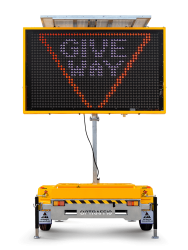
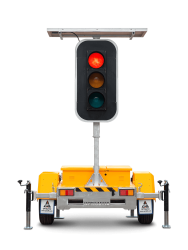
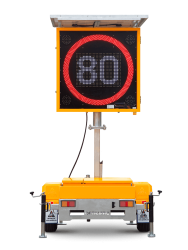
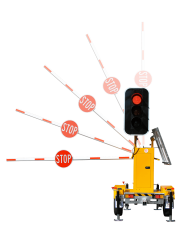
Solar trailer and truck-mounted message signs with radar speed warning and free remote control software.
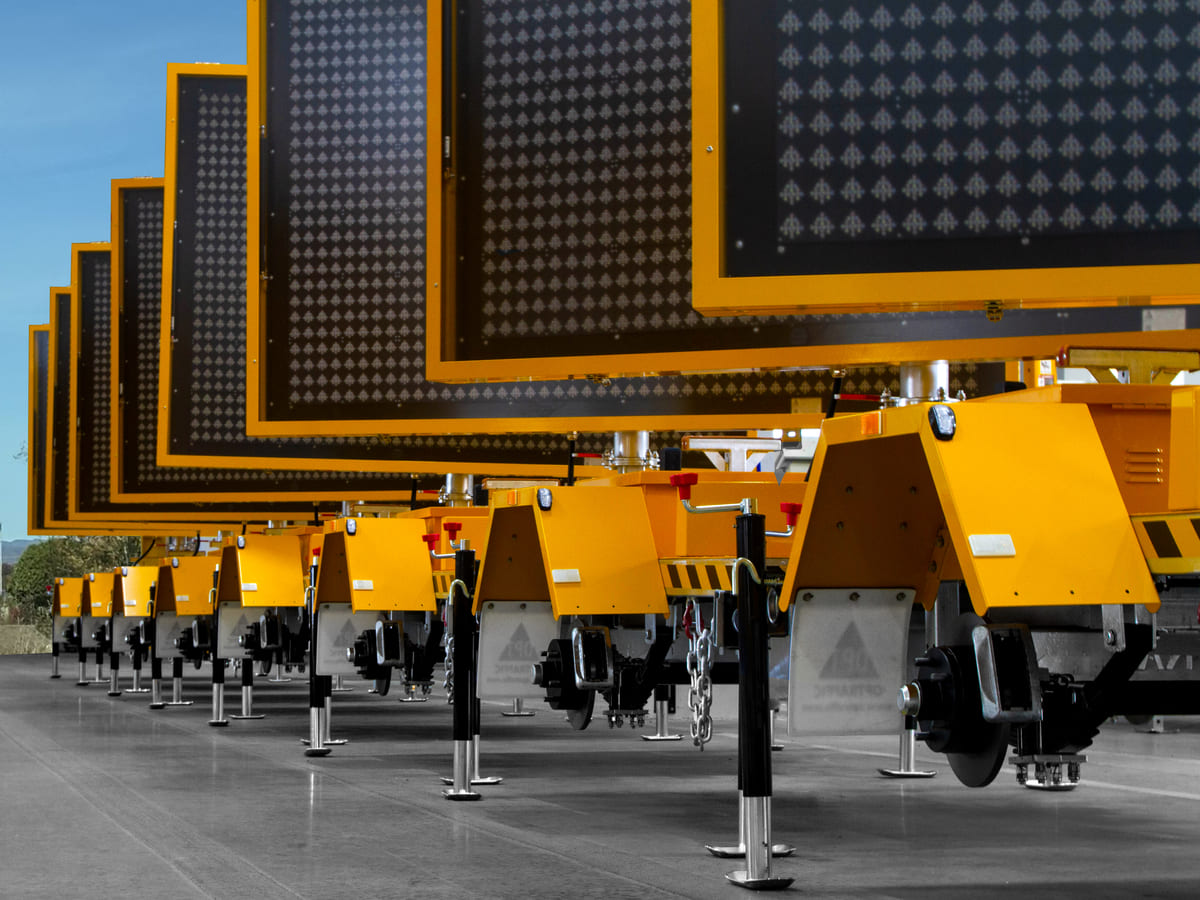
A highway crash blocks one lane. Within minutes, stopped traffic stretches back past the first warning sign. Drivers then crest a hill and meet a wall of brake lights with no notice. End-of-queue warning at traffic incidents solves this specific gap. It keeps a warning ahead of the queue tail as the tail moves upstream. Hire fleets and responders need variable message signs they can place fast and update without driving back into traffic. The Optraffic team builds solar message sign trailers and truck-mounted boards for these callouts. This guide covers where the signs go, what they say, and how fleets keep them current.
Key Takeaways
- Remote message control: Updates queue warnings from a phone as the queue moves, without sending crews upstream.
- Radar speed warning: Displays an overspeed message to drivers who approach stopped traffic too fast.
- Bundled fleet software: Shows every deployed sign’s GPS location and status with no subscription fee.
- Solar-powered message signs: Keep queue warnings running through multi-hour closures without refuelling trips.
- Auto-dimming LED display: Keeps night queue warnings readable without glaring approaching drivers.
Why Secondary Crash Prevention Starts at the Back of the Queue
Secondary crash prevention depends on one location: the upstream end of the queue. The primary crash scene usually has responders, flares, and an arrow board. The queue tail often has nothing.
The FHWA studied verified secondary crashes across 10 states. Its 2023 multistate secondary crash analysis found three patterns that matter for sign placement:
- About 66% of verified secondary crashes were front-to-rear crashes. The report links these to back-of-queue collisions.
- About half occurred within 20 minutes of the primary crash.
- About 84% occurred within half a kilometre of the primary crash.
These numbers point to a clear problem. The risk peaks early, and it sits at the queue tail. A back-of-queue crash warning must therefore arrive fast and stay at the tail.
The Queue Moves, the Warning Sign Doesn’t
Responders often place one advance warning sign during the first minutes. Traffic then keeps arriving. The incident queue grows upstream and swallows that sign. Drivers now see the warning while already stopped. The sign has lost its purpose.
The First 20 Minutes Decide the Risk
Half of secondary crashes happen before many scenes reach full setup. A truck-mounted board can reach the queue tail first. A trailer sign can follow for longer incidents. Speed of deployment matters more than sign size in this window.
What MUTCD Chapter 6O Expects from Incident Traffic Control
US incident traffic control now sits in MUTCD Chapter 6O of the 11th Edition. The 2009 Edition placed the same topic in Chapter 6I. States had to adopt the 11th Edition by January 18, 2026. FHWA then issued Revision 1 of the 11th Edition, effective March 5, 2026. Check your state manual before you finalise a deployment plan.
The incident chapter sorts incidents by expected duration:
- Minor: under 30 minutes.
- Intermediate: 30 minutes to 2 hours.
- Major: more than 2 hours.
For intermediate and major incidents, the guidance calls for upstream warning devices that alert traffic approaching the queue. It also tells responders to watch the upstream end of the traffic queue. Responders should estimate the expected queue length and size their controls to match.
Incident Duration Tiers and Where Message Signs Fit
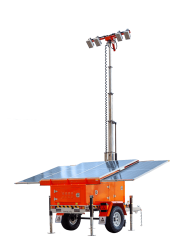
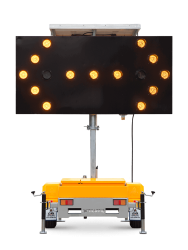
The duration tier decides which equipment rolls out. Arrow boards and scene lighting have their own guide: how arrow boards and light towers protect night incident scenes. This guide stays focused on the queue tail.
| Framework | Scope | What it says about the queue tail | Message sign role |
|---|---|---|---|
| MUTCD Chapter 6O (formerly 6I), US | Traffic incident areas | Provide upstream warning for traffic approaching the queue; estimate expected queue length | Upstream warning and diversion information |
| NCDOT Incident Management queue guidance, US | Incident response on state highways | Adjust advance warning so it stays before the end of queue | Warn of closures, travel times and alternate routes |
| Main Roads WA end-of-queue fact sheet, AU | Traffic control on high-speed roads (works) | Place PREPARE TO STOP signing a set distance before the queue end; add signing where queues run long | Advance warning variable message signs where practicable |
The Main Roads WA end-of-queue fact sheet targets planned works, not incidents. Its queue logic still transfers well to long incident closures.
Queue Warning Message Sign Placement as the Incident Grows
Good queue warning message sign placement follows the queue, not the crash. The NCDOT queue management guidance puts it simply. Advance warning must be adjusted to stay before the end of queue.
First 20 Minutes: A Truck-Mounted Sign at the Queue Tail
The first unit on scene should head for the tail, not the crash. A truck-mounted board shows the warning while the vehicle stays mobile. As the tail moves, the truck moves with it. Compare the two formats in this guide to truck-mounted versus trailer-mounted message signs.
Indiana tested this approach with queue warning trucks. The Purdue and INDOT pilot report found hard braking fell by about 80% with trucks and digital alerts present. Traffic began slowing roughly 1,500 to 2,000 feet before the trucks.
Intermediate Incidents: A Trailer Sign Plus an Upstream Advisory
Once the scene passes 30 minutes, a trailer sign frees the truck for other work. Crews park it on the shoulder, upstream of the current tail. A second sign further upstream can carry diversion or delay information. The two signs then do different jobs:
- The tail sign warns of stopped traffic.
- The upstream sign helps drivers choose another route.
Long Closures: Leapfrogging Two Signs as the Queue Grows
Major incidents can hold traffic for hours. The queue tail may move a mile or more. Crews then leapfrog signs. They place a new sign beyond the tail, then retrieve the one the queue swallowed. Main Roads WA uses a similar rule for long works queues. It adds signing at the predicted end of long queues. It also asks crews to monitor queue length.
| Incident phase | Queue state | Sign position | Example message |
|---|---|---|---|
| First 20 minutes | Short, growing fast | Truck-mounted board at the tail | STOPPED TRAFFIC AHEAD / BE PREPARED TO STOP |
| 30 minutes to 2 hours | Stable or slowly growing | Trailer sign beyond the tail; second sign upstream | CRASH AHEAD / LEFT LANE CLOSED |
| Over 2 hours | Long, shifts with demand | Two signs leapfrogged beyond the tail | DELAYS 30 MIN / USE EXIT 42 |
| Clearance | Shrinking | Move tail sign downstream, then remove | TRAFFIC SLOWING / USE CAUTION |
Place each message sign so drivers see it before any curve or crest. Sight distance to the sign matters as much as distance to the queue.
Writing Back-of-Queue Warning Messages Drivers Can Read in Time
Drivers read a message sign in a few seconds at highway speed. MUTCD guidance limits portable changeable message signs to two phases per message. Each back-of-queue warning should do one job:
- Phase 1 states the hazard: STOPPED TRAFFIC AHEAD.
- Phase 2 states the action: BE PREPARED TO STOP.
Skip crash details, vehicle counts, and agency names. They slow reading and add nothing at the tail. For more wording patterns, see these safety messages that improve driver compliance.
Speed Warning Signs for Queue Protection
Some drivers ignore text and keep their speed. Speed warning signs for queue protection add a second layer. A radar module measures approaching speed. When a driver exceeds the set threshold, the sign switches to an overspeed warning message. The sign shows a warning, not the driver’s speed. This keeps the message clear and avoids drivers treating the number as a challenge.
Radar here acts as a warning trigger, not an enforcement tool. The sign does not detect the queue itself. Crews still decide where the tail is and move the sign.
Remote Message Updates for Incident Queues
Every trip back into traffic exposes a crew member. Remote message updates cut those trips. A 4G-connected sign accepts new messages from a phone, tablet, or PC. The supervisor changes STOPPED TRAFFIC AHEAD to TRAFFIC SLOWING as the queue clears. Nobody walks to the sign. See how 4G-connected portable traffic signs use GPS and remote control.
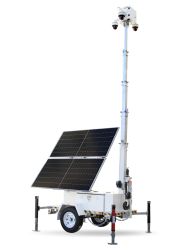
GPS adds a second benefit. The control screen shows where each sign sits. Supervisors can check that the tail sign still sits beyond the queue. They can also confirm that a leapfrogged sign arrived at its new spot.
Fleet Software Without Subscription Fees
Many fleet platforms charge a monthly fee per device. Incident units may sit idle for weeks between callouts. A per-device fee then costs money for no use. Some manufacturers bundle the fleet software with the hardware at no added cost. Rental fleets should compare five-year software costs before they buy. This guide to web-based traffic device management for rental fleets covers the key checks.
Traffic Incident Management Equipment for Rental Fleets
Hire companies that serve incident callouts need the right mix on the yard. The table below matches traffic incident management equipment to incident type.
| Incident type | Truck-mounted message board | Trailer message sign with radar | Arrow board | Light tower |
|---|---|---|---|---|
| Minor, daytime | Yes, at queue tail | Optional | If lane closed | No |
| Intermediate, daytime | First response | Yes, beyond tail | Yes | No |
| Intermediate, night | First response | Yes, beyond tail | Yes | Yes |
| Major, any time | First response | Two units to leapfrog | Yes | Yes, at night |
| Multi-day closure | Released after setup | Two or more units | Yes | Yes |
Long closures stress power systems. Solar trailers keep running without fuel runs to the queue tail. For arrow board power choices on long callouts, compare solar and battery hybrid arrow boards for multi-day incidents.
Uptime also depends on the LED display. A sign with failed modules cannot deliver a clear warning. Fleets should favour proven LED modules, sealed enclosures, and low-maintenance designs. These choices keep units ready between callouts. The wider toolkit includes rapid deployment of portable traffic signals. It also covers message boards for emergency road closures.
These portable message signs for traffic incident management belong to a wider set of traffic safety equipment.
FAQ
How far before an incident queue should a warning sign be placed?
No single distance fits every road. MUTCD guidance asks responders to estimate the expected queue length and warn traffic approaching the queue. NCDOT guidance says advance warning must stay before the end of queue. Main Roads WA ties sign spacing to the speed limit on high-speed roads. Check sight distance to the sign, and move it as the tail moves.
Can a portable message sign detect the end of a queue automatically?
A standard message sign does not detect queues on its own. Automated systems, such as TxDOT’s I-35 end-of-queue warning system, pair speed sensors with signs. A radar-equipped sign measures approaching vehicle speed and can show an overspeed warning. Crews still track where the queue ends.
What should a queue warning sign display?
Keep it to two short phases. State the hazard first, such as STOPPED TRAFFIC AHEAD. State the action second, such as BE PREPARED TO STOP. Change the message as the incident moves into clearance.
Who sets up end-of-queue warning at highway incidents?
It depends on the state and agency. Service patrols, state DOT crews, and contracted traffic control companies all handle it. Many rely on hire fleets for message signs during longer incidents.
Conclusion
Secondary crashes cluster at the back of the queue, and most happen early. End-of-queue warning at traffic incidents works only when the warning moves with the tail. Fast first response, clear two-phase messages, and remote updates make that possible. Optraffic supplies solar message sign trailers, truck-mounted boards, and radar-equipped signs for this work. Optraffic message signs connect to the Optraffic Web System at no added software cost. Hire fleets and responders can contact the Optraffic team to match units to their incident callout plans.
Facebook
Twitter
LinkedIn
Email
Newsletter
Subscribe to our Newsletter & Event right now to be updated.
Latest Posts


Latest Posts
What to Check Before Buying 500 Portable Changeable Message Signs: 7 Batch Delivery Checks for Rental Fleets
What to check before buying 500 portable changeable message signs: one build across batches, spares, DDP delivery and per-shipment tests.
2026-11-11
How to Plan Message Signs for Weekend Highway Closures: Lessons from Atlanta’s I-285 Westside Closures
How to plan message signs for weekend highway closures: 5 steps, a 48-hour checklist and fleet control lessons from Atlanta’s I-285 closures.
2026-11-11
Does EN 12966 Apply to LED Modules? What the Standard Covers and What a Datasheet Cannot Prove
Does EN 12966 apply to LED modules? See what the standard covers, what a module datasheet proves and 5 questions to ask a supplier.
2026-11-10
Build vs Buy a Vehicle-Mounted Message Sign: What Fleets and Integrators Should Check
Build vs buy a vehicle-mounted message sign? Compare compliance, controls, mounting and support before you choose.
2026-11-10
Work Zone Speed Feedback Trailer Placement: Where to Set It Up and When to Move It
Work zone speed feedback trailer placement explained: where DOT rules and research say to set the trailer, when to move it and what fleets must log.
2026-11-05
WZDx Device Feed Requirements: What Work Zone Contractors and Hire Fleets Must Supply
WZDx device feed requirements explained for contractors and hire fleets: what the feed holds, what DOT specs ask for and how to prepare equipment.
2026-11-04